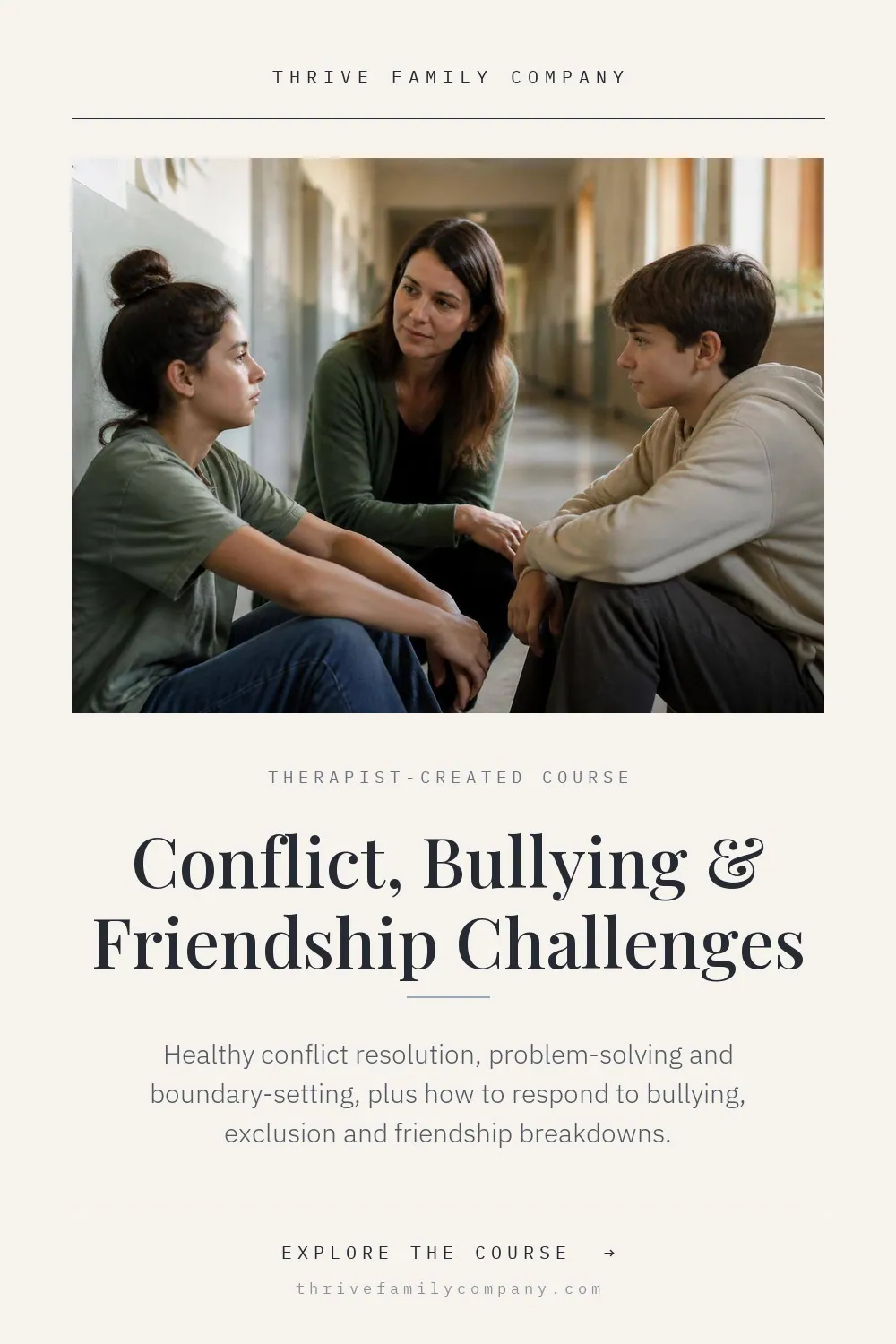
Conflict, Bullying & Friendship Challenges
Telling ordinary conflict apart from meanness and bullying, teaching your child to disagree and repair, and knowing when — and how — to step in.

Inside this course
Most parents feel a jolt of alarm the moment a child says 'nobody likes me' or comes home in tears about a friend, and that alarm often pulls us toward one of two unhelpful extremes: either brushing it off as 'kids being kids,' or escalating straight to the word bullying and marching into school demanding action. Neither serves the child well, because the right response depends entirely on what is actually happening, and the three categories — ordinary conflict, deliberate unkindness, and genuine bullying — require genuinely different parenting responses, not just different degrees of concern. This course gives you a working framework for telling them apart in the moment, based on repetition, power imbalance and intent rather than on how upset your child sounds on a given evening, since even ordinary conflict can produce real tears.
You'll finish with
- Distinguish ordinary conflict, deliberate unkindness and genuine bullying using repetition, power imbalance and intent
- Teach a child concrete language for disagreeing, holding a boundary and taking part in a real repair
- Recognise exclusion and social freeze-outs even when they involve no single dramatic incident
Course modules
4 modules, revealed inside the course
The full module structure, lessons and printable resources open once you purchase this course. Enrol or sign in to view the course outline.
Start this course
Enrol to access the complete course — every written lesson, the case scenarios and all the printable resources. A one-time purchase, yours to keep.
Share this