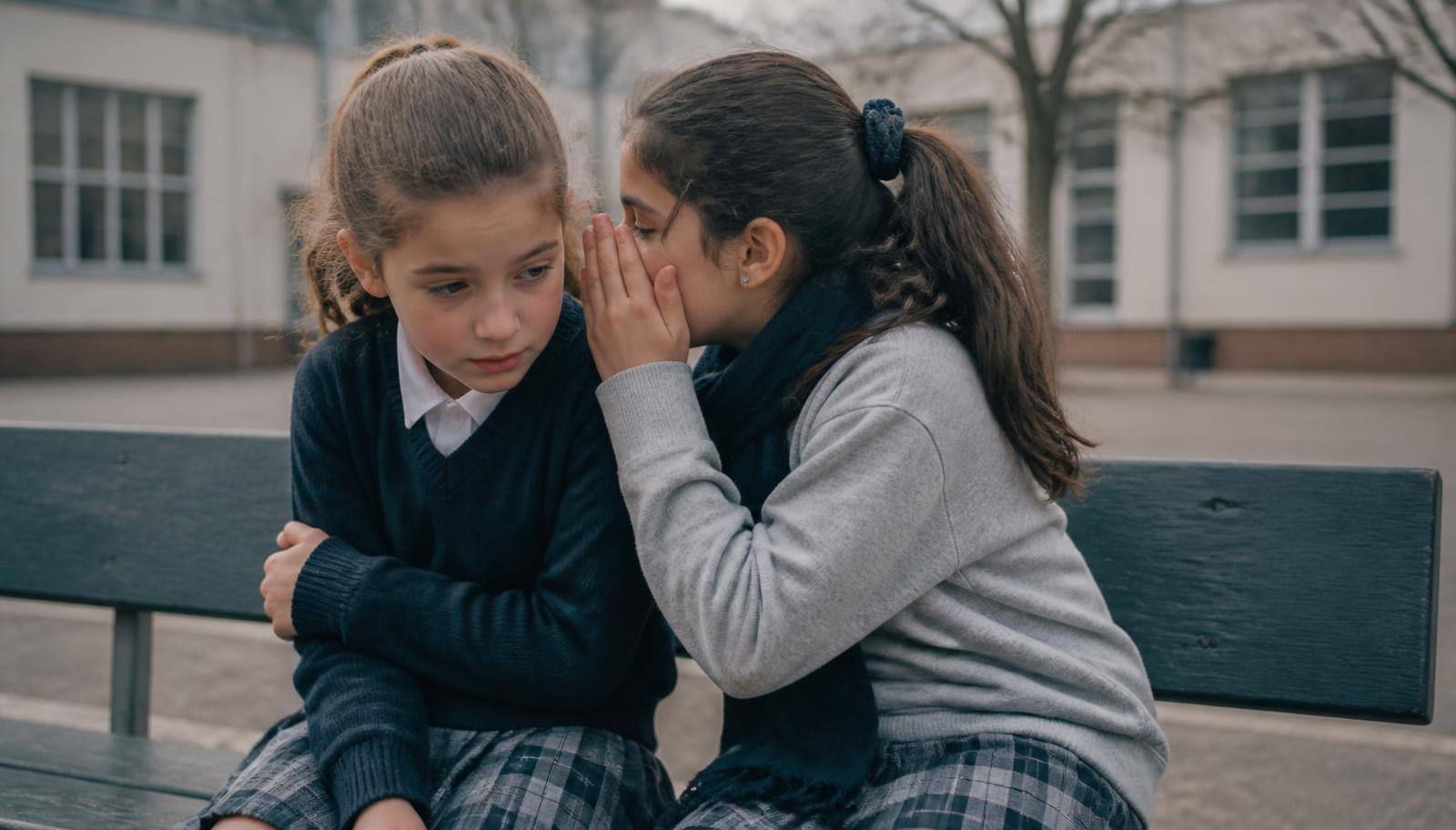
Surprises vs Secrets: Teaching Body Safety
Teaching children the difference between a surprise and a secret — and why it protects them.
Reviewed by Sian Trombley, CCCFounder, Thrive Family Company
7 min read
Best for parents of children who are…
- struggling to say what is really going on
- needing extra emotional support at the moment
- going through a change at home or at school

Share this
Children are told to be kind, to be helpful, to be loyal, and to keep their promises. Every one of those instructions is good. Every one of them can also be used against a child by someone who understands how children work.
One rule, taught early, repeated often
Most safeguarding advice given to parents is too vague to be usable by a seven-year-old. 'Tell me if anything worries you' is a fine sentiment and a poor instruction. Children need a rule with a clear boundary, and the cleanest one available is the distinction between a surprise and a secret.
- A surprise is temporary. There is a day it ends, and when it ends everybody is pleased.
- A secret has no end date, and the longer you hold it, the heavier it gets.
- In this family, we keep surprises. We do not keep secrets.
- If an adult or an older child asks you to keep a secret from me, that is exactly the thing you tell me.
Teach it in small doses
One serious sit-down conversation raises anxiety and is largely forgotten within a fortnight. Thirty seconds in the car, repeated across a year, is retained. Keep the tone matter-of-fact — the same voice you use for road safety, which children absorb without becoming frightened of roads.
- 01Name the body parts properly
Anatomical language, without embarrassment, from the beginning. Children who lack the words are measurably less likely to be able to report.
- 02Establish the three safe adults
Named, not implied, and at least one outside the home. Tell those adults they are on the list.
- 03Give a rule about touch
Nobody looks at or touches your private parts except to keep you clean or well, and never as a game or a secret.
- 04Extend it online
Same rule, same words. Anyone online who asks you not to tell a grown-up is someone I need to know about.
- 05Rehearse the words
Once, lightly, so the sentence exists in their mouth before they ever need it.
The first ten seconds
Whether a child tells you a second, harder thing is decided almost entirely by how you responded to the first, smaller one. Children watch for shock, for anger at the other person, for tears, for a phone being picked up. Any of these can be read as 'this was too much for them'.
Then ask open, non-leading questions, or none at all. It is not a parent's job to investigate — only to receive the information calmly, write down what was said in the child's own words, and take it to the right service.
When something has been kept
Delay is normal, not evidence against a child. Most children who disclose do so long after the event, in fragments, and often to test the reaction before telling the whole. Treat a partial disclosure as the beginning of a conversation, never the end of one.
If you have any concern that a child has been harmed, contact your local safeguarding or children's services team, or the NSPCC helpline in the UK on 0808 800 5000. You do not need certainty to make a call. Uncertainty is precisely what those services exist to hold.
Children do not need a perfect parent. They need a predictable one who returns after hard moments.
Sian Trombley, Canadian Certified Counsellor
What you can try this week
Draw the safe hand
Trace your child's hand and write one trusted adult on each finger. Keep it somewhere visible.
Play 'surprise or secret?'
Five quick scenarios at teatime. Granny's birthday cake — surprise. A game someone said not to mention — secret. Sixty seconds, no drama.
Practise the first line
Give them the exact words: 'I need to tell you something and I'm worried you'll be cross.' Rehearse it once, lightly, so it is available under pressure.
- Surprises end and feel good. Secrets have no end and sit heavily.
- Children need three named safe adults, at least one outside the household.
- Rehearse the exact opening sentence — knowing the rule is not the same as being able to say it.
- Never promise a child in advance that you will keep what they tell you secret.
- Reward the telling, not the content. Your first ten seconds decide whether they tell you again.
Could my child name three adults they would go to if they couldn't come to me?
What do I actually do in the first ten seconds when my child tells me something difficult?
Have I ever asked my child to keep something from the other parent?
Printable resources
Recommended Thrive courses
This article is educational and is not a substitute for individual clinical advice. Comments are closed so the Journal stays a calm place to read.
Share this
Keep going
You may also like
Courses, worksheets and pathways from the same part of the library.
- JournalWhat Children Overhear About MoneyA child cannot do the maths on a mortgage. They can absolutely do the maths on how quiet the kitchen gets after the post arrives.Read
- JournalWhen a Parent Works Away From HomeIt is rarely the leaving that undoes a child. It is the two days before, and the strange, prickly week after they come home.Read
- ResearchThe Research LibraryPeer-reviewed parenting and child mental health research, translated into plain language.Read
- Thrive GuideThrive GuideAsk a question and get warm, evidence-informed guidance drawn from the Thrive library.Read
- Thrive Care PlanThrive Care PlanA short check-in that turns how your week actually went into one focused plan.Read
- Thrive ToolThrive ToolsPremium printable workbooks and therapeutic tool kits.Read