Back to School Anxiety
The approach to a new school year can unsettle even confident children. Here is how to reduce uncertainty, respond to distress and support steady attendance without feeding the fear.
Written by Sian Trombley · BEd, MACP, CCC
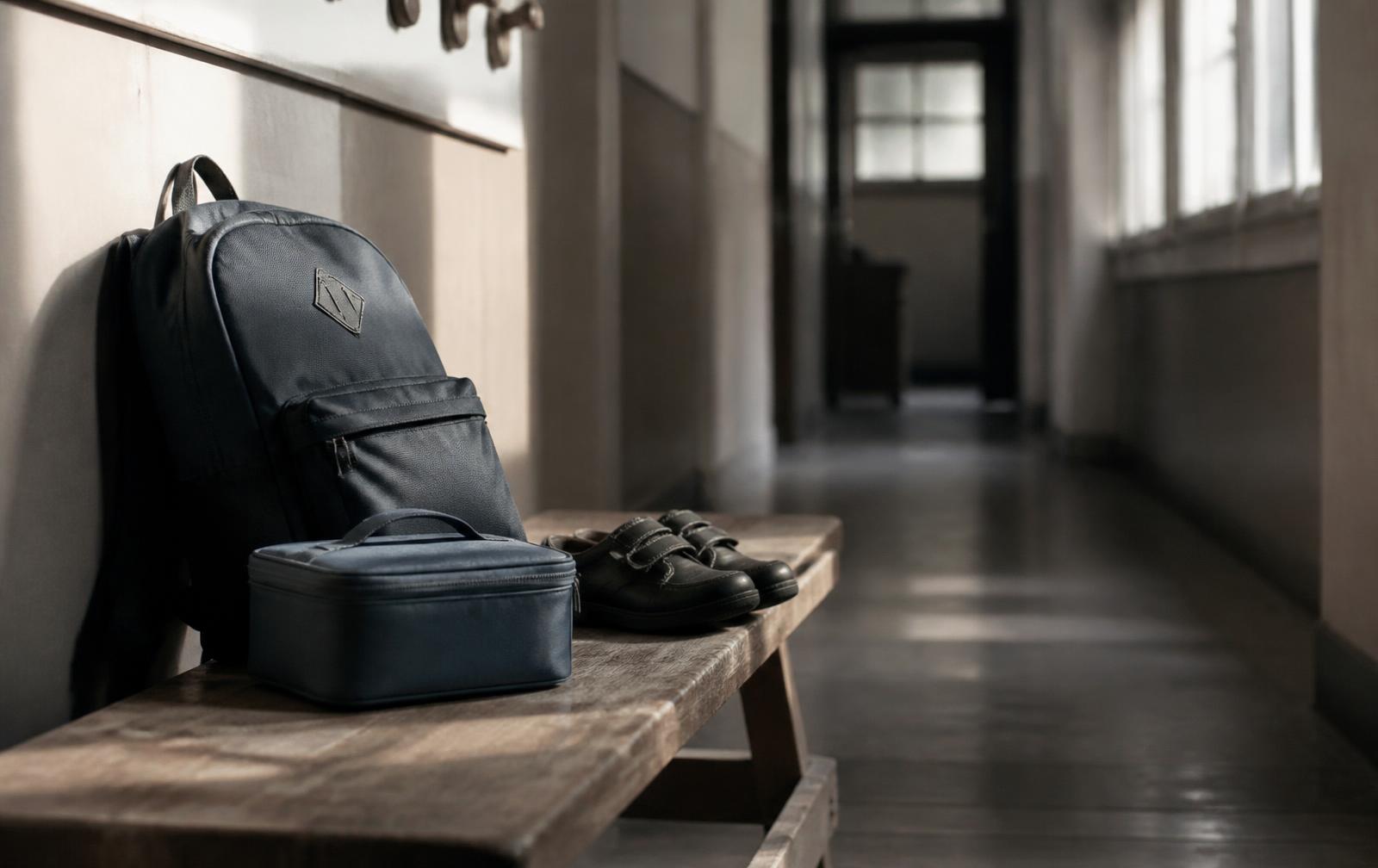
It is 8:20 on a late-August evening. A new lunch box sits on the counter, labels are half attached, and your child has asked for the third time whether you are certain their best friend will be in the same class. Later, they cannot sleep. By morning, their stomach hurts. They snap when you mention school shoes, then insist they are not worried at all. Back-to-school anxiety often looks like this: physical discomfort, irritability, repeated questions, tears or sudden resistance around ordinary tasks. The two weeks before term leave plenty of blank space for anxious predictions; the first fortnight then brings real social, academic and sensory demands. The helpful reframe is not “How do I make this fear disappear?” but “How do I help my child move safely through uncertainty?” Anxiety can come along without being put in charge of the family’s plans.
Why anxiety rises before term
Anxiety is a protective response to anticipated threat. Before school begins, your child’s mind may be trying to answer questions it cannot yet resolve: Who will be in my class? Will the work be too hard? Where do I go at lunch? What if I am alone? Because there is little current information, imagination fills the gaps. A child who coped well in June can still become unsettled in August; confidence in one familiar setting does not automatically transfer to a changed one.
Transitions also remove the cues that make daily life feel manageable. Summer bedtimes may have shifted. The school building has been out of sight, and familiar staff may change. For children who are sensitive to noise, social evaluation, separation, mistakes or unpredictability, the return involves many demands at once. Older children may hide this vulnerability. A tween may become argumentative about supplies, while a teenager says school is “pointless” rather than admit they fear walking into the cafeteria alone.
The body often speaks first. Stress can alter appetite, sleep, bowel habits, muscle tension and pain perception. A stomach ache on a school morning is therefore neither proof of illness nor evidence that a child is pretending. Check symptoms calmly and follow medical and school health guidance. New, severe or persistent physical complaints warrant medical attention. Once illness has been reasonably considered, you can acknowledge discomfort without making complete physical ease a condition for attending.
During the first fortnight, anxiety may briefly intensify because imagined concerns meet real demands. Your child is learning routes, expectations, faces and social rhythms while spending hours regulating their behaviour. They may hold themselves together at school and unravel at home. This after-school release does not necessarily mean the entire day was harmful. Offer food, quiet and reduced questioning before seeking details. Settling is rarely linear: a good day can be followed by a difficult one.
Prepare enough, but not endlessly
Helpful preparation makes the next step more predictable. It does not attempt to eliminate every surprise. Confirm the start time, entrance, transport plan, required clothing and the adult your child can approach. If your child is changing schools, ask whether you can view a map, visit the grounds or see photographs of key spaces. One brief rehearsal of the route can help. Repeated visits, quizzes and countdowns may keep school positioned as a looming threat.
Restore routines gradually during the final one or two weeks. Move sleep and waking times in manageable increments, reintroduce regular meals, and place devices outside the bedroom at an agreed time. Sleep supports emotional regulation, but avoid presenting it as a test your child must pass. A poor night does not mean the next day is lost. Say, “Your body can manage a tired day. We will keep tonight simple and try the routine again.”
- 01Name the known facts
Write down only what is confirmed: the start time, teacher or adviser, entrance, travel plan and first point of contact. Separate these facts from predictions. If something is unknown, say when and how you will find out rather than repeatedly speculating.
- 02Rehearse the first ten minutes
Ask your child to picture arriving, entering and reaching the first supervised place. Practise one sentence for requesting help: “I am not sure where I should go.” Keep the rehearsal short so it builds familiarity rather than becoming a ritual.
- 03Choose one coping tool
Your child might use a slow exhale, notice five blue objects, carry a small permitted reminder from home or read a brief coping card. Frame the tool as help for moving forward, not something that must remove anxiety before they enter.
- 04Plan the handover
Agree who will take your child, where goodbye happens and which staff member will receive them if needed. A warm, brief handover is usually easier than an extended farewell. School staff should know the plan before the morning becomes difficult.
- 05Protect recovery time
Keep the first school week lighter where possible. Offer a snack, water and some quiet movement or rest after school. Delay detailed questions until your child has decompressed. Familiar evening routines provide stability while their nervous system adjusts to increased demands.
Include your child in planning, but do not hand anxiety every decision. You might offer a choice between two breakfasts or two coping cards, not whether school happens. For a teenager, collaboration can be more direct: “You know the building and social side better than I do. I am responsible for helping you attend. Which arrival option makes that most manageable?” Agency within firm boundaries is different from making a distressed child responsible for the whole plan.
Respond without feeding the worry
Validation means showing that you understand the experience; it does not mean agreeing with anxiety’s forecast. “You are worried nobody will speak to you” is validating. “Perhaps you should stay home until your friends confirm their classes” turns the prediction into a reason for avoidance. Pair warmth with confidence: “That uncertainty is hard. You can handle an awkward beginning, and there are adults who can help.” Your tone often matters more than finding flawless words.
Repeated reassurance can become a loop. Your child asks whether the teacher will be kind, receives an answer, feels relief, then asks again because certainty has faded. Rather than supplying stronger promises, answer once with honesty: “I expect your teacher to help, but I cannot know every moment. If there is a problem, we will deal with the actual problem.” You are teaching that uncertainty can be tolerated, not that every feared event is impossible.
On a difficult morning, reduce language and keep the sequence moving. Avoid courtroom-style debates about whether the child is truly ill or whether school is objectively safe. Speak slowly, repeat the plan and support the next concrete action. If your own anxiety is rising, place both feet on the floor and lengthen your exhale before speaking. Calm leadership is not emotional coldness; it is lending your child a steadier nervous system while theirs is activated.
Praise approach rather than the absence of fear. “You walked through the door while your stomach was tight” is more useful than “See, there was nothing to worry about.” The first statement notices courage and behaviour; the second can feel dismissive if the day contained real discomfort. Be specific about recovery too: “You had a rough start and still found the library at lunch.” This helps your child build a more accurate story about what they can do.
What quietly makes anxiety worse
Avoidance is powerful because it works immediately. If staying home removes nausea and dread, the nervous system learns that escape created safety. The next school morning may then feel even more threatening. This does not mean you should drag, threaten or shame a distressed child. It means adults should respond early, maintain an expectation of attendance where it is safe, and arrange graduated support when full attendance is temporarily beyond the child’s current capacity.
Accommodation can also expand unnoticed. You may begin answering ten reassurance texts during class, completing work for your child, checking the class portal repeatedly or changing the whole family’s routine around anticipated distress. Some flexibility is humane and necessary. The question is whether a support helps your child participate or helps anxiety avoid participation. A useful accommodation should have a purpose, a review date and, where appropriate, a gradual plan for reducing it.
Adult alarm can amplify the threat signal. Lengthy conversations at bedtime, visibly worried exchanges at the school gate or contacting several staff members after every difficult comment may suggest that school requires emergency-level monitoring. Discuss concerns privately with adults. With your child, remain truthful and proportionate: “I have heard you. I will email your year adviser about the lunch issue, and we will continue with tomorrow’s plan.” Then shift towards an ordinary evening activity.
Do not assume every attendance problem is anxiety alone. Bullying, discrimination, learning difficulties, unmet disability needs, academic pressure, family stress, depression, trauma, unsafe transport or conflict with staff can all contribute. Ask directly and calmly about safety, peers, workload and specific parts of the day. Document concrete concerns and expect the school to investigate them. Supporting attendance must never mean teaching a child to endure an environment that is genuinely unsafe.
Build a plan for the first fortnight
For the first two weeks, look for patterns without interrogating your child. Instead of “Was everything okay?”, try one contained question: “What was the easiest part and what was the hardest part?” Some children talk more while walking, driving or making food. If they do not want to discuss the day immediately, agree on a later check-in. Keep attention broad enough to notice competence, humour and connection rather than making anxiety the main subject of family life.
If support is needed, contact the person closest to the difficulty: the classroom teacher, form tutor, year adviser, counsellor, learning-support lead or administrator. Share observable facts rather than labels: “Sam has vomited before school twice, settles once inside and is most worried about unstructured lunch.” Ask for one coordinated plan, such as a named arrival adult and a lunchtime location. Too many options or adults can create confusion and accidental escape routes.
Track attendance, sleep, physical symptoms and recovery briefly for ten school days. A few words per day are enough. You are looking for improvement, a stable problem or a worsening pattern. Seek professional help if distress is severe, attendance is repeatedly disrupted, symptoms persist, or your child is withdrawing from eating, sleeping, friendships or usual activities. A family doctor, paediatrician or qualified mental health professional can assess contributing factors and recommend evidence-based care.
Urgent support is needed if your child speaks about suicide or self-harm, reports abuse or violence, cannot be kept safe, or shows a sudden and serious deterioration. Contact emergency or crisis services in your area and do not leave them alone when immediate safety is in question. Reports of bullying, harassment or school-based danger also require prompt action with the school. Anxiety may be present, but it should never be used to explain away a credible safety concern.
Most children do not need you to make the first days feel effortless. They need you to believe their distress, hold a workable boundary and help them take one ordinary step after another. The bag may still be packed through tears, breakfast may be small, and the goodbye may feel untidy. A successful start is not one without anxiety. It is one in which your child learns that anxiety can rise, be supported and eventually settle while life continues.
A child who dreads September is not refusing school. They are bracing for a day they cannot yet picture going well.
Sian Trombley, Canadian Certified Counsellor
What you can try this week
Walk the route once
Choose a quiet time to travel the school route, pass the entrance and identify the exact drop-off point. Keep it matter-of-fact rather than turning it into a test. Say, “We are helping your brain know what Monday will look like.” If the school permits it, check where your child will enter and whom they can approach.
Create a two-line morning plan
Write a plan short enough to remember under stress: “Get dressed, eat something, leave at 8:10. At school, meet Mr Singh by reception.” Avoid adding multiple coping requirements. Your child does not need to feel calm or perform breathing exercises perfectly before leaving; the plan should carry the family forward even on a difficult morning.
Practise one grounded response
When your child asks, “What if nobody talks to me?”, reply once: “That would feel awkward. You can sit near Maya or ask the supervisor where to go, and I trust you to get through the first break.” Practise using the same calm wording. Predictable responses reduce reassurance loops and communicate confidence without dismissing the concern.
- Back-to-school anxiety often rises before term because uncertainty gives the mind room to predict threats.
- Validate your child’s feelings while keeping school attendance and ordinary routines as the expected path.
- Use brief, accurate reassurance instead of repeatedly trying to prove that nothing difficult will happen.
- Practise manageable school-related steps before term and coordinate a simple arrival plan with staff.
- Seek professional support when distress is severe, persistent, impairing or associated with safety concerns.
When my child becomes anxious, do I move towards calm support, repeated reassurance, problem-solving or escape?
Which part of the school day is genuinely uncertain for my child, and what single piece of information would make it more manageable?
How can I communicate both “I believe you are struggling” and “I believe you can take the next step”?
Printable resources
Recommended Thrive courses

Share this article
This article is educational and is not a substitute for individual clinical advice. Comments are closed so the Journal stays a calm place to read.
Keep going
You may also like
Courses, worksheets and pathways from the same part of the library.
- JournalSchool Refusal: What Actually Helps When They Cannot Get Through the DoorBy the time a child cannot get through the door, the decision was made hours — often weeks — earlier.Read
- JournalThe Night Before: Helping a Child With Test AnxietyRevision fixes a knowledge problem. Test anxiety is a physiology problem, and more revision usually makes it worse.Read
- WorksheetSchool Refusal Support GuideA compassionate, structured plan for school-avoidant daysRead
- Thrive GuideThrive GuideAsk a question and get warm, evidence-informed guidance drawn from the Thrive library.Read
- ResearchThe Research LibraryPeer-reviewed parenting and child mental health research, translated into plain language.Read
- Thrive Care PlanThrive Care PlanA short check-in that turns how your week actually went into one focused plan.Read