School Refusal: What Actually Helps When They Cannot Get Through the Door
It is almost never defiance, and it is very rarely about the lessons. A clear-eyed guide to the mornings that stop working — and the plan that gets a child back in.
Reviewed by Sian Trombley, CCCFounder, Thrive Family Company
11 min read
Best for parents of children who are…
- resisting or avoiding school
- worrying often, or asking the same question again and again
- finding school days hard to get through
- withdrawing during the teenage years

Share this
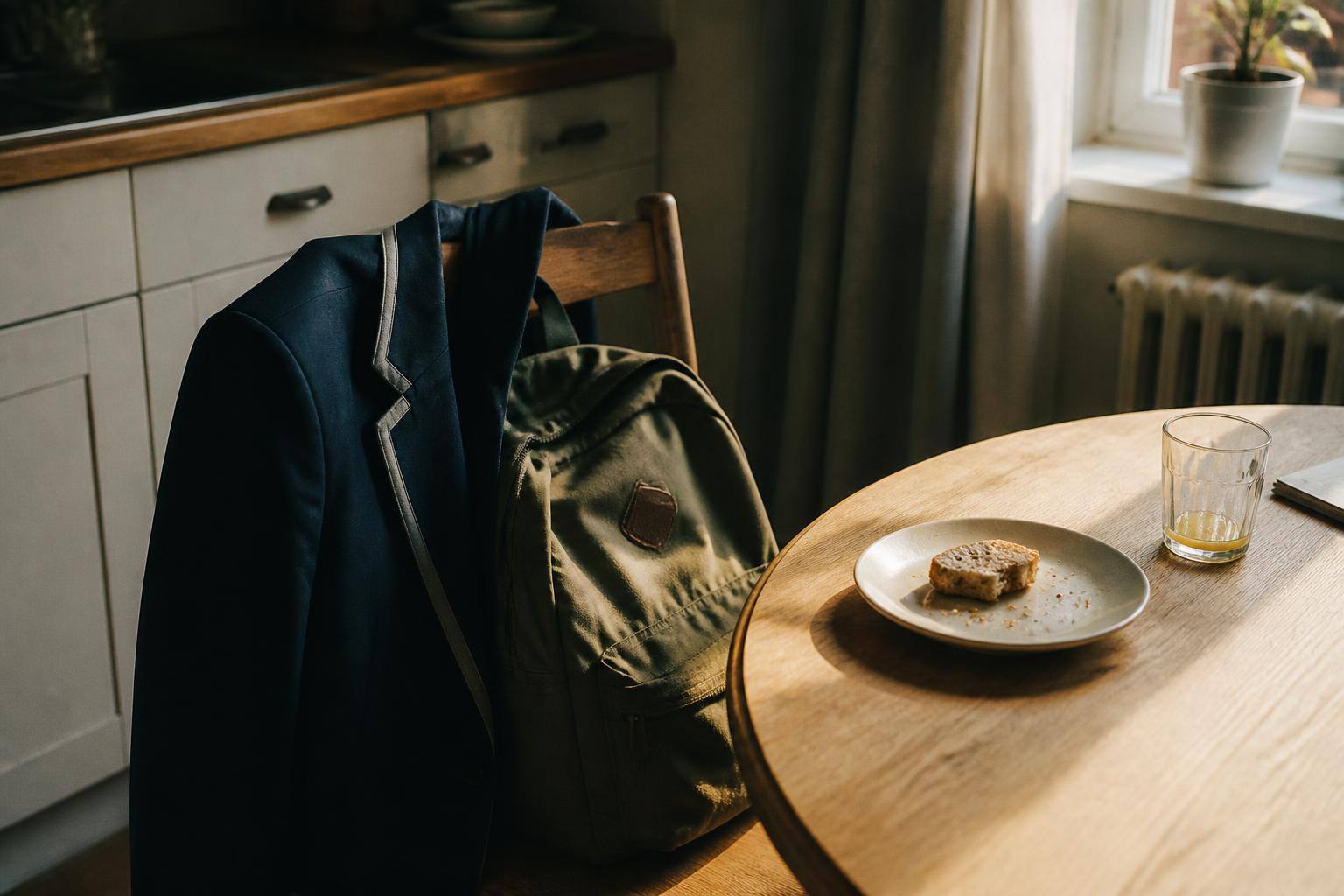
There is a particular silence that settles over a house at 8:50, once the school run is definitively missed. Downstairs, a parent is writing an email they have written eleven times. Upstairs, a child who was screaming forty minutes ago is now quiet, relieved and ashamed in roughly equal measure.
That sequence — escalation, avoidance, relief, shame — is the engine of school refusal. Understanding it is what makes a plan possible, because it explains why threats and rewards both tend to fail, and why the relief at 8:50 is the thing that quietly guarantees tomorrow.
Four different reasons children stop going
- 01To escape something distressing
A specific lesson, a corridor, PE changing rooms, an unpredictable teacher, the noise of the dining hall.
- 02To avoid social or evaluative situations
Reading aloud, group work, arriving late in front of everyone, having no one to sit with.
- 03To stay close to home
Classic separation-based avoidance, often after illness, bereavement, a house move or parental illness.
- 04Because home is more rewarding
The least common driver, and rarely the whole story — but it needs naming honestly, because it changes what the plan has to include.
What makes it worse
- Negotiating at the door, when everyone is flooded.
- Full days at home with devices, warmth and company — however understandable.
- Long absences agreed informally, without a return date.
- Punishment for symptoms the child cannot control.
- Waiting for the child to feel ready. Confidence follows attendance, not the other way round.
The staged return plan
- 01Rule out physical illness with the GP, and say so out loud to your child.
- 02Map the week with them and rate every block out of ten for difficulty.
- 03Meet the school — parents, child, a named adult — and write the plan down.
- 04Start with the easiest realistic step: one lesson, a favourite subject, arriving after the corridor rush.
- 05Fix the arrival ritual: same door, same adult, same time, every day.
- 06Provide an exit card so they can leave a room without asking in front of anyone.
- 07Increase only when the current step is dull rather than frightening.
- 08Keep home days flat: no screens, quiet, schoolwork at the kitchen table.
- 09Review every Friday, adjust in writing, and tell the child what changed.
“No child wakes up wanting to be the one who cannot go in. Behind every refusal is a child working extremely hard at something we have not yet identified.”
Sian Trombley
What to say at 7:45
When to seek help
Involve your GP and the school's SENCO or pastoral lead if absence exceeds a couple of weeks, if there are daily physical symptoms, if your child talks about not wanting to be here, or if avoidance has spread beyond school into friendships and leaving the house. Ask specifically about emotionally based school avoidance pathways, an educational psychology assessment, and CAMHS referral where anxiety or low mood is significant. Early, structured involvement changes the outcome substantially.
School refusal is an anxiety disorder with a school-shaped door. Pushing harder at the door rarely opens it.
Sian Trombley, Canadian Certified Counsellor
What you can try this week
Stop negotiating at 8am
No decisions are made at the door. Move the conversation to a calm evening slot and hold the mornings to a written, agreed plan instead.
Find the exact trigger
Walk the timetable with them, hour by hour, and rate each block out of ten. The number that leaps out is where the intervention belongs.
Ask school for a partial timetable in writing
Two lessons, a named safe adult, a card to leave the room. Small, formal adjustments succeed where informal goodwill quietly fails.
- School refusal is anxiety-driven and visible to parents; truancy is not.
- Physical symptoms are real, not invented — and they fade at the weekend for physiological reasons.
- Every day out increases the difficulty of returning; partial attendance beats none.
- The plan must be written, staged and agreed by parent, child and school together.
- Look for the specific trigger — a subject, a corridor, a lunch hall, a person.
What happens in our house at 7:30 that makes 8:15 harder?
What is my child avoiding — the work, the people, the noise, or the failure?
Who at school actually knows my child well?
Printable resources
Recommended Thrive courses
This article is educational and is not a substitute for individual clinical advice. Comments are closed so the Journal stays a calm place to read.
Share this
Keep going
You may also like
Courses, worksheets and pathways from the same part of the library.
- JournalWhen School Becomes Too Much: Understanding School RefusalThe stomach ache is real. The refusal is not manipulation. Here is how school avoidance builds, why reassurance and pressure both fail, and what genuinely rebuilds a morning.Read
- JournalYour Teenager Isn't Lazy — They're OverwhelmedLaziness is a verdict. Overwhelm is a description. Only one of them tells you what to do next.Read
- WorksheetSchool Refusal Support GuideA compassionate, structured plan for school-avoidant daysRead
- ResearchThe Research LibraryPeer-reviewed parenting and child mental health research, translated into plain language.Read
- Thrive GuideThrive GuideAsk a question and get warm, evidence-informed guidance drawn from the Thrive library.Read
- Thrive Care PlanThrive Care PlanA short check-in that turns how your week actually went into one focused plan.Read