Is My Child Masking at School?
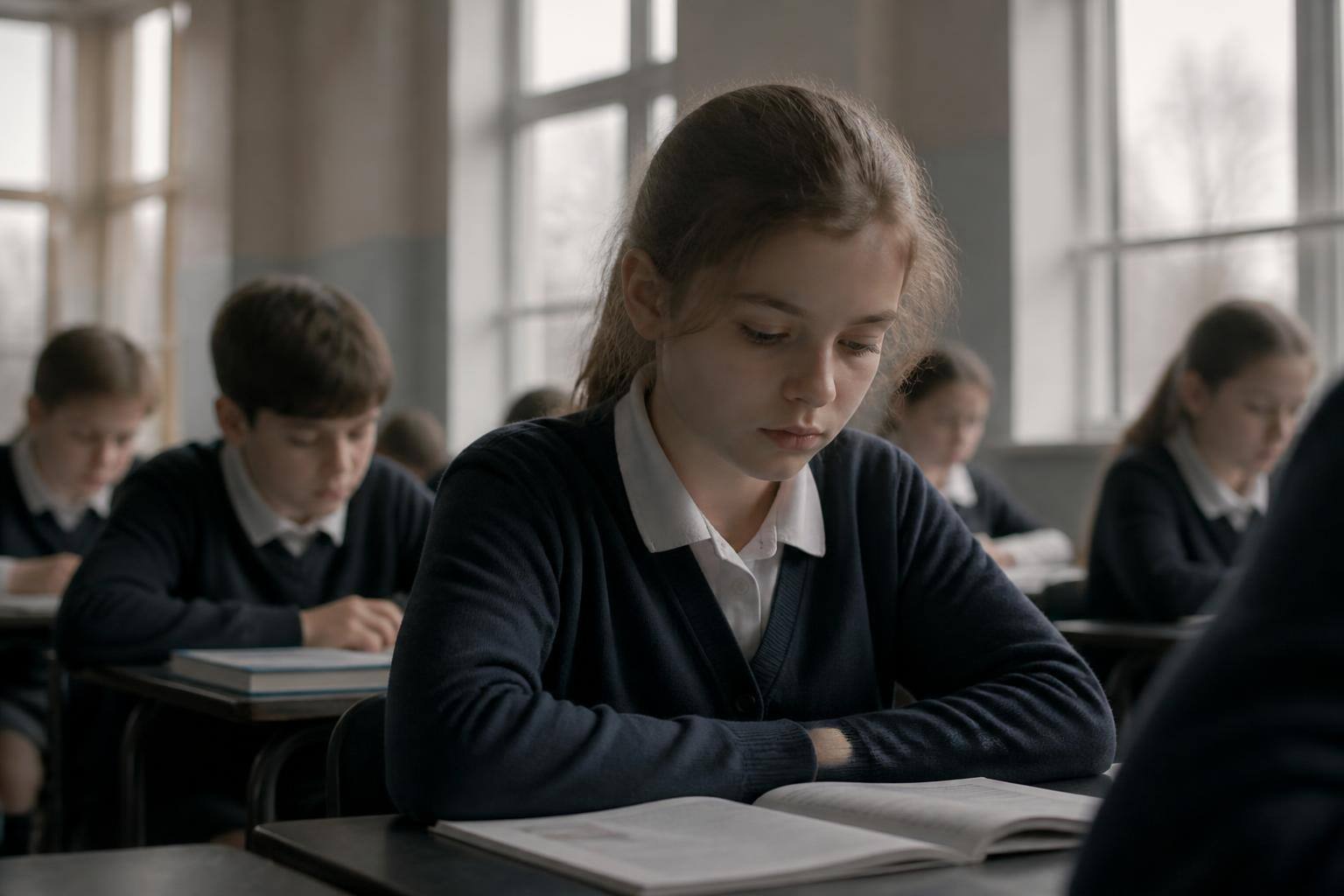
Glowing reports, no concerns raised, and a child who falls apart the moment the front door closes. Masking is invisible by design — that is what makes it exhausting.
Reviewed by Sian Trombley, CCCFounder, Thrive Family Company
10 min read
Best for parents of children who are…
- experiencing the world in their own particular way
- needing predictability and sensory care
- struggling to start, focus or finish things
- becoming overwhelmed by noise, texture or crowds

Share this
Rows of lockers, polished floor, one door slightly open. Somewhere in this building your child spent the whole day appearing entirely fine, at a cost nobody here recorded.
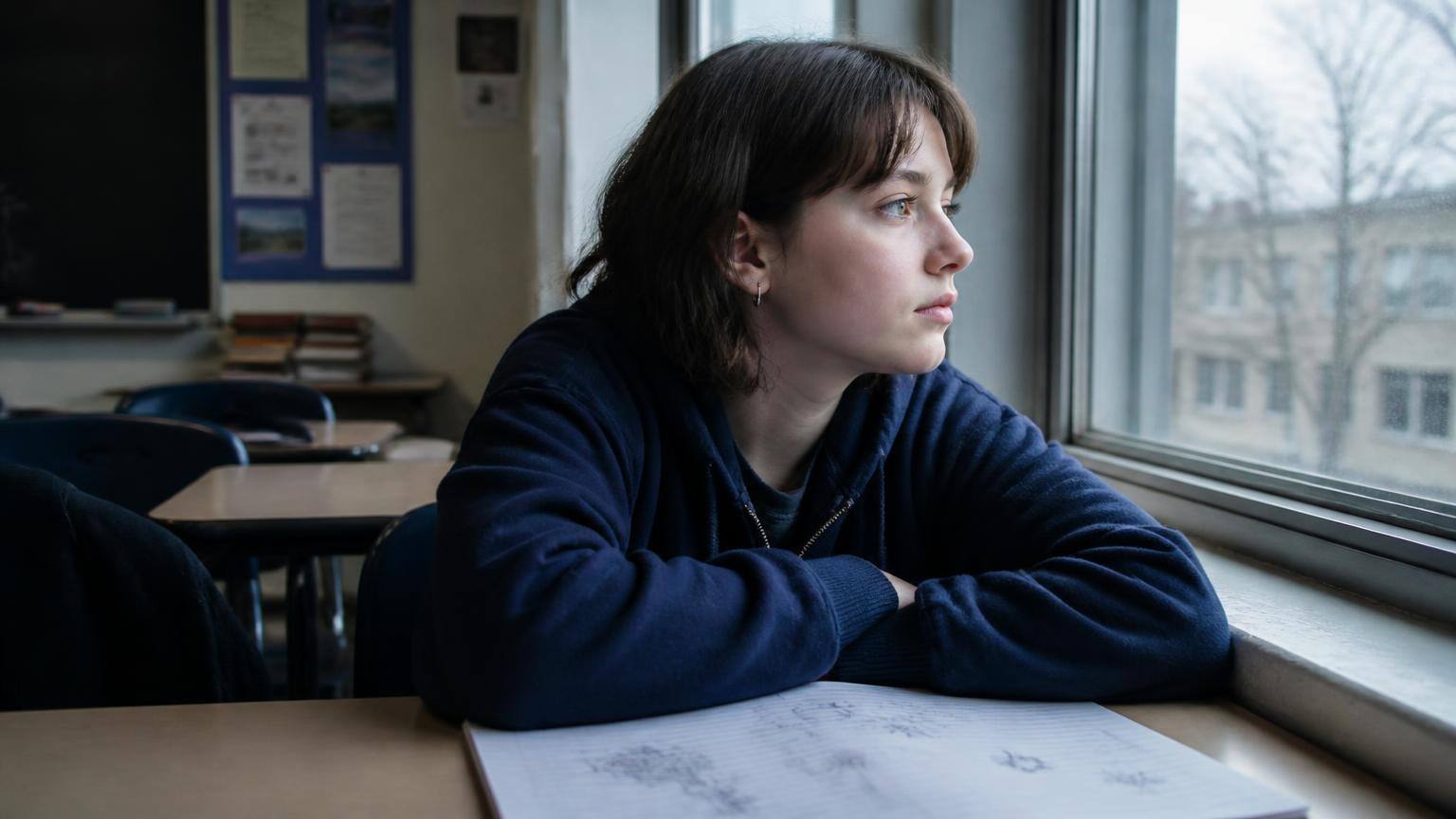
Masking is the effortful, continuous suppression of natural responses in order to appear typical. Copying other children's expressions. Holding still when the body wants to move. Rehearsing sentences before saying them. Not flinching at a sound that hurts. Every one of those is work, and none of it shows up on a report.
Signs the day is costing more than it looks
- Immediate collapse at pickup — rage, tears or total shutdown within minutes.
- Extreme sensitivity at home to noise, texture, clothing or smell, but apparently none at school.
- Scripted, rehearsed-sounding social language with peers.
- Exhaustion on Fridays and through the first day of every holiday.
- Sunday-night dread with no identifiable school problem.
- A child who mirrors different personalities depending on who they are with.
“A child who is exhausted from being acceptable has been doing a full day's work that nobody put on the timetable.”
Sian Trombley
How to reduce the cost
- 01Cut daytime load, not evening consequences
The meltdown at five is caused by the six hours before it. Adjustments belong at school, not at bedtime.
- 02Make home demand-light
Fewer questions, softer transitions, familiar food, movement permitted. Home is the recovery room.
- 03Let the natural behaviours be
Stimming, special interests, avoiding eye contact. Suppressing these at home removes the only place they are free.
- 04Document the difference
A two-week diary of after-school behaviour is the most persuasive thing you can bring to a school meeting.
- 05Seek assessment if the pattern persists
Ask your GP or school SENCo for a referral. Identification changes how a child understands themselves, which matters enormously by adolescence.
When to seek help
Request assessment or clinical support if the home–school gap has lasted more than a term, if there is escalating anxiety, low mood or school avoidance, if your child describes feeling fake or wrong, or if they are exhausted in a way that holidays no longer resolve. Unidentified masking has a long tail; identified masking becomes something a young person can understand and manage.
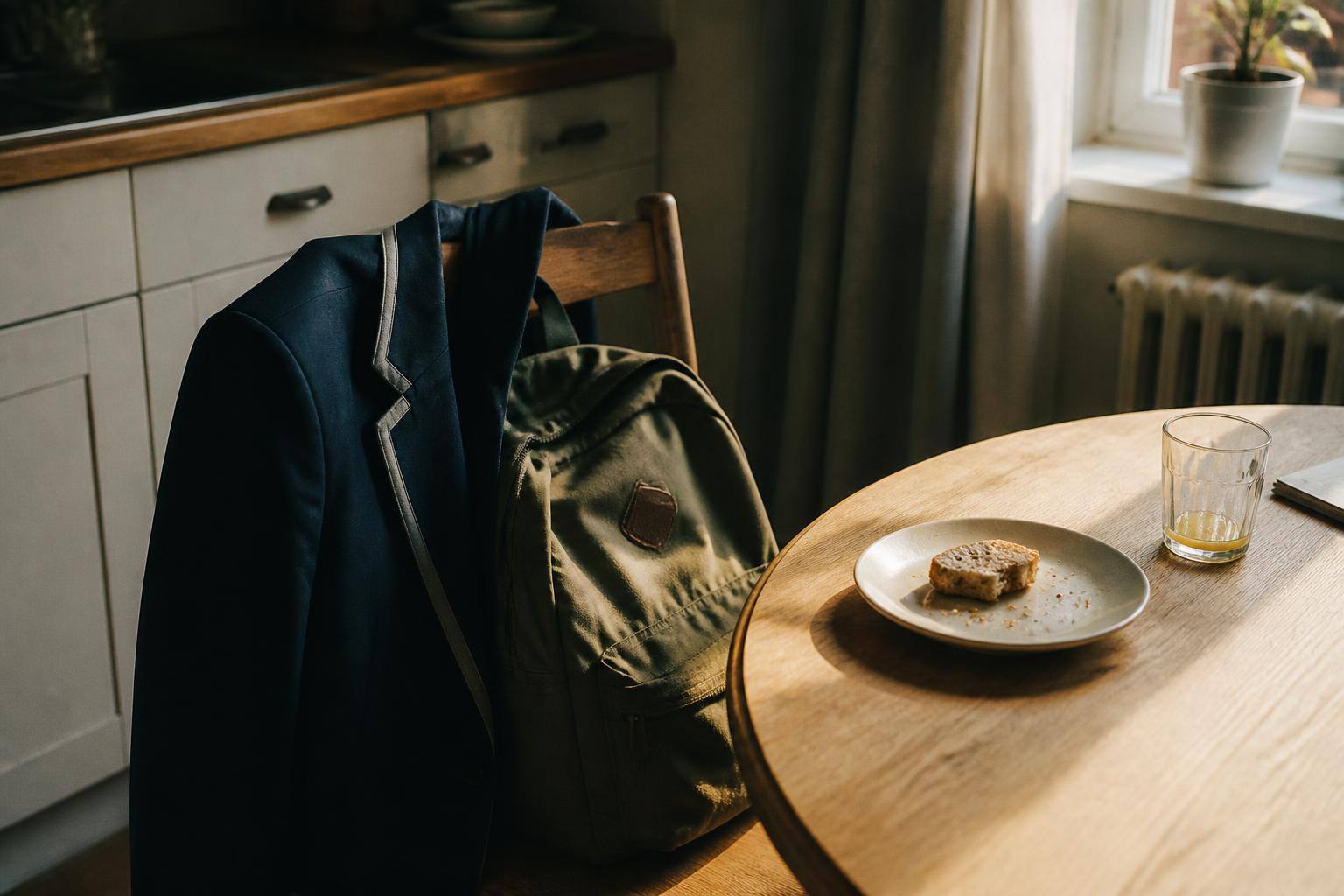
The glowing school report and the child on the kitchen floor are describing the same day.
Sian Trombley, Canadian Certified Counsellor
What you can try this week
Protect the unmasking hour
The first hour home: no questions, no tasks, sensory freedom — headphones, dim light, familiar food, comfortable clothes. Recovery, not interrogation.
Ask school for one sensory adjustment
Ear defenders, an exit pass, five minutes early to lunch, a quiet space at break. Small daytime reductions change the whole evening.
Make home a genuinely low-demand place
Fewer social expectations, no forced eye contact, stimming permitted, special interests welcome. The point of home is that no performance is required.
- Masking is effortful suppression, not good behaviour.
- The cost is paid at home, hours later — sometimes days later.
- Girls and academically able children are most likely to be missed.
- Reducing sensory and social load during the day is more effective than managing the aftermath.
- Long-term masking is associated with anxiety, depression and burnout, and warrants proper assessment.
Which parts of my child do I only see at home?
What do I ask them to suppress for the sake of appearances?
Have I been persuaded that nothing is wrong because school says so?
Printable resources
Recommended Thrive courses
This article is educational and is not a substitute for individual clinical advice. Comments are closed so the Journal stays a calm place to read.
Share this
Keep going
You may also like
Courses, worksheets and pathways from the same part of the library.
- JournalADHD Burnout in Children Is RealIt is not that they have stopped trying. It is that trying has become more expensive than they can currently afford.Read
- ResearchThe Research LibraryPeer-reviewed parenting and child mental health research, translated into plain language.Read
- Thrive GuideThrive GuideAsk a question and get warm, evidence-informed guidance drawn from the Thrive library.Read
- Thrive Care PlanThrive Care PlanA short check-in that turns how your week actually went into one focused plan.Read
- Thrive ToolThrive ToolsPremium printable workbooks and therapeutic tool kits.Read
- CollectionThe Resource LibraryFree printable worksheets, scripts and planners for families.Read