

Article
The Special Interest Is Not a Problem
Adults often see the trains, the dinosaurs, the same film watched for the four hundredth time, and think: we need to broaden this out. The evidence suggests the opposite instinct is right.
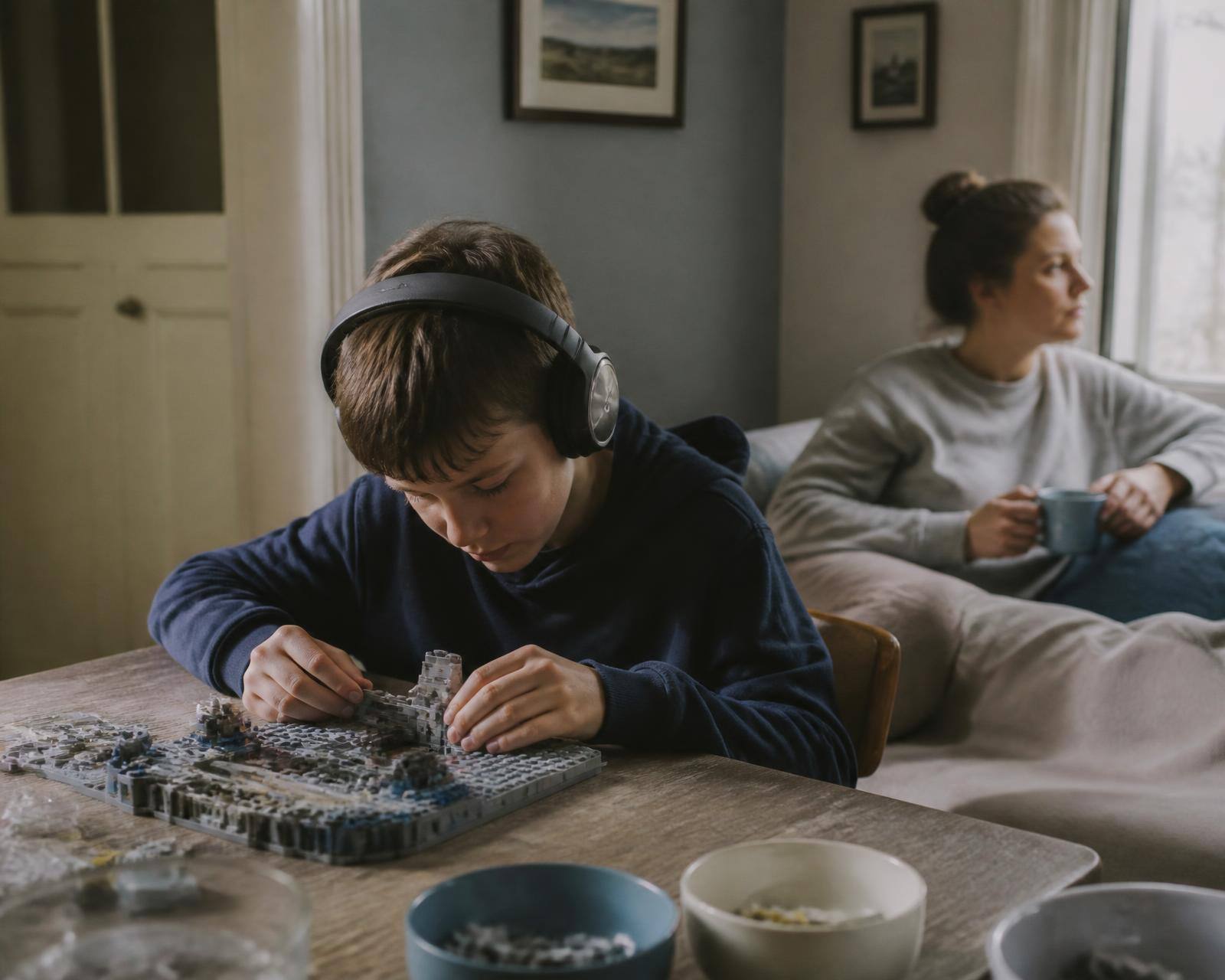
Understanding a differently-wired child — sensory needs, communication, regulation and the everyday accommodations that let them be themselves.
Start here“Your child’s brain is not a broken version of someone else’s. Most of what looks like refusal is a mismatch—between what a body needs and what a room is asking of it. When we change the fit rather than the child, distress falls away and the strengths become visible. Accommodation is not lowering the bar; it is removing the parts of the day that were never the point.”
A narrated introduction — why your child's brain is not a broken version of another, why distress is usually a mismatch rather than defiance, and how changing the fit changes everything.
Narrated · 1 min 13 sec
One thing to understand, one way to learn it properly, one thing to try this week.
The report says settled and well-behaved. At home, the same child cannot bear the sound of a fork.
The comprehensive start-here course — affirming lens, sensory life, communication, regulation and shutdown, routine and change, identity and masking, school advocacy and a home that fits.
A landing routine built around hunger, movement and depleted self-regulation, for children who spend the school day working harder than anyone can see.

A clear, affirming introduction to parenting a neurodivergent child — sensory life, communication, regulation and advocacy across home and school.
8 modules · $99 · Available now
A structured journey through neurodiversity — built to be taken in order, or started wherever you are today.

The comprehensive start-here course — affirming lens, sensory life, communication, regulation and shutdown, routine and change, identity and masking, school advocacy and a home that fits.
Practical, strengths-based parenting.

Regulation through the senses.
Same skills, different scaffolds.

Self-understanding as strength.

Collaborate with schools with confidence.
Six Focused Course Bundle — every focused course in Neurodiversity, $199.
Complete Pathway — Foundations plus every course in Neurodiversity, $249.
Adults often see the trains, the dinosaurs, the same film watched for the four hundredth time, and think: we need to broaden this out. The evidence suggests the opposite instinct is right.
Plain-language summaries of the studies behind the guidance — what was found, how strongly, and what it does and doesn't mean at home.
This reflection invites you to observe how your child’s unique neurobiology interacts with the daily rhythms of your household. It offers a gentle lens to distinguish between a child’s capacity and their willingness in moments of high stimulation.
The report says settled and well-behaved. At home, the same child cannot bear the sound of a fork.
The comprehensive start-here course — affirming lens, sensory life, communication, regulation and shutdown, routine and change, identity and masking, school advocacy and a home that fits.
Adults often see the trains, the dinosaurs, the same film watched for the four hundredth time, and think: we need to broaden this out. The evidence suggests the opposite instinct is right.
When the nervous system is overloaded, language fails. Sensory breaks speak directly to the body, helping children reset before they reach meltdown.
A landing routine built around hunger, movement and depleted self-regulation, for children who spend the school day working harder than anyone can see.
Plain-language summaries of the studies behind the guidance — what was found, how strongly, and what it does and doesn't mean at home.
It is not that they have stopped trying. It is that trying has become more expensive than they can currently afford.
This reflection invites you to observe how your child’s unique neurobiology interacts with the daily rhythms of your household. It offers a gentle lens to distinguish between a child’s capacity and their willingness in moments of high stimulation.
This reflection examines the silent dialogue between home and school through the contents of your child’s lunchbox. We consider how the rhythms of morning preparation and the sensory realities of the dining hall influence your child’s ability to remain regulated throughout their day.
Autism, ADHD, sensory difference and PDA — written by, or in close partnership with, neurodivergent people rather than about them.
Therapist-picked books, games, and tools to help kids and teens read social cues, make friends, and handle conflict.
It is not oversensitivity. It is a pain response to social threat — and telling a child to toughen up adds to the injury it was meant to prevent.
Most families try to fix mornings with more urgency. Mornings improve when you remove decisions, not when you add pressure.
Nobody is being difficult at 7:40am. A brain is being asked to do something it cannot yet do alone.
ADHD is not only a disorder of attention. It is a disorder of regulation — and emotion is the system that shows it most.
Explore patterns in attention and executive functioning for a child, a teen or yourself, and receive personalized insights and practical next steps.
By eleven o'clock, a child who ate nothing at seven is not badly behaved. They are running an engine with no fuel in it.
Laziness is a verdict. Overwhelm is a description. Only one of them tells you what to do next.
Mornings, homework, transitions, bedtime — the ordinary hours where this work is really done.
This reflection examines the silent dialogue between home and school through the contents of your child’s lunchbox. We consider how the rhythms of morning preparation and the sensory realities of the dining hall influence your child’s ability to remain regulated throughout their day.
Thrive Guide can help you find the courses, tools and resources that fit what your family is navigating right now.