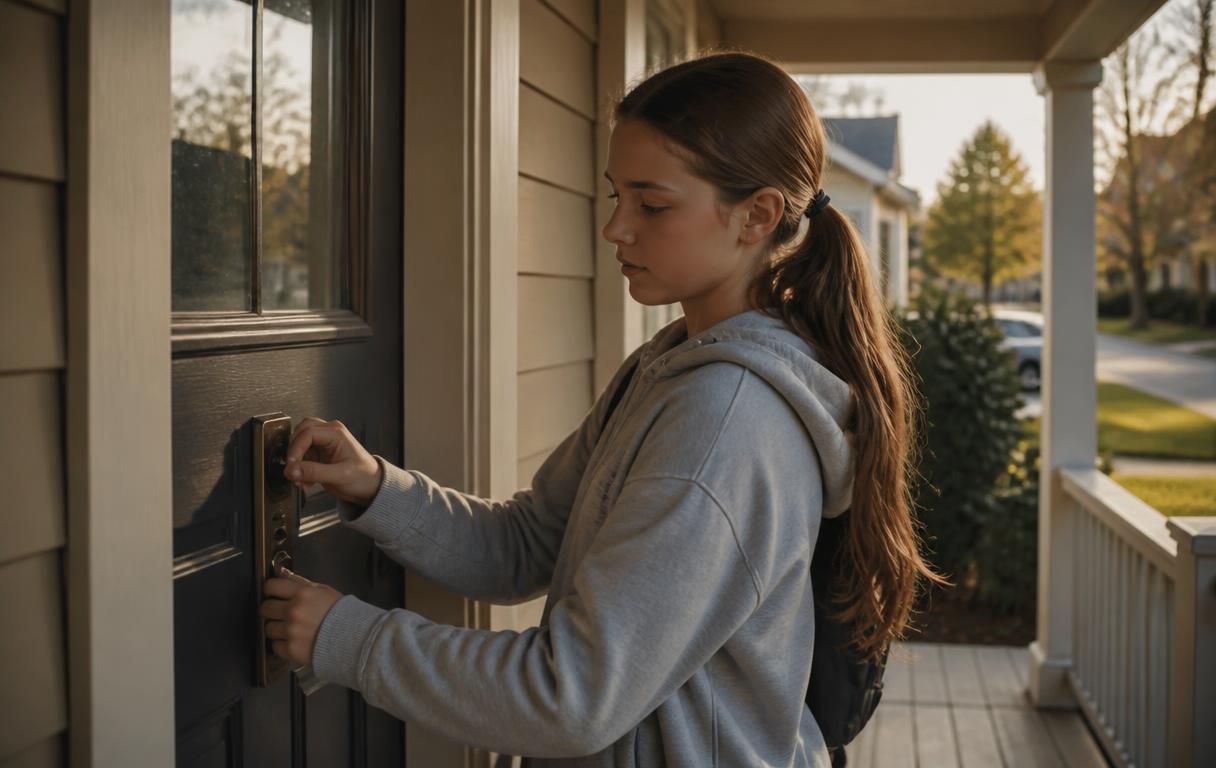
Ready to Be Left Alone
Readiness is not a birthday. It is a set of skills you can see and build.
Written by Sian Trombley · BEd, MACP, CCC
Your twelve-year-old wants to stay home while you do the school run for a sibling. Fifteen minutes, maybe twenty. You hesitate — not because you doubt them exactly, but because you've never actually tested it.
Most parents treat 'home alone' as a threshold you cross on a particular birthday. It isn't. It's a bundle of separate skills — noticing a problem, deciding whether it's serious, knowing who to call, staying calm long enough to do it — and each of those can be practised well before the stakes are real.
What actually indicates readiness
- They can name what to do if the doorbell rings and they aren't expecting anyone
- They know two ways to reach you and one trusted adult nearby
- They can describe what counts as an emergency versus something that can wait
- They've handled a small unscheduled problem calmly before (a spill, a lost key, a wrong turn)
- They want to try it, rather than merely tolerating the idea
Common parental mistakes
Building the skill, step by step
- 01Start in the house
Leave the room, then the floor, then the building for a few minutes while you're nearby, and debrief.
- 02Move to short outings
A five-minute walk to the postbox, then ten, then thirty, always followed by a conversation about what came up.
- 03Write the plan together
One page: emergencies, contacts, house rules, what 'call me' looks like.
- 04Rehearse the scary scenarios
Doorbell, phone ringing, a minor injury. Say the words out loud so they're available under stress.
- 05Extend gradually
Only lengthen the time once the shorter version has gone well more than once.
Children do not need a perfect parent. They need a predictable one who returns after hard moments.
Sian Trombley, Canadian Certified Counsellor
What you can try this week
Run a five-minute test
Leave the house for five minutes on a low-stakes afternoon. Come back and ask what they noticed, what felt fine, what felt odd.
Write the one-page plan together
Emergency numbers, what to do if the doorbell rings, what to do if they feel unsafe. Stick it to the fridge, not in a drawer.
Practise the phone call
Role-play calling you or a neighbour to say something feels wrong. Rehearsed words come out easier than invented ones.
- There is no single legal or developmental age that makes a child 'ready'.
- Readiness is a skill set: problem-solving, calling for help, basic safety judgement.
- Build tolerance gradually, in minutes, not hours, at first.
- A written plan reduces panic more than a long verbal warning does.
- Debrief after every attempt — it's how the skill actually forms.
Have we actually practised this in small steps, or am I about to test it cold?
Does my child know exactly what to do in the three most likely problems — a knock at the door, a small accident, a power cut?
Am I basing this decision on their age, or on what I've actually seen them do?
Printable resources

Share this article
This article is educational and is not a substitute for individual clinical advice. Comments are closed so the Journal stays a calm place to read.
Keep going
You may also like
Courses, worksheets and pathways from the same part of the library.
- JournalThe Most Useful Word They OwnA child who cannot say no to you will find it very hard to say no to anybody else — and the people who need them to say yes are not always kind.Read
- JournalThe Shower ArgumentBy the third reminder, it stops being about cleanliness and starts being about control. Nobody wins that argument twice in a row.Read
- ResearchThe Research LibraryPeer-reviewed parenting and child mental health research, translated into plain language.Read
- Thrive GuideThrive GuideAsk a question and get warm, evidence-informed guidance drawn from the Thrive library.Read
- Thrive Care PlanThrive Care PlanA short check-in that turns how your week actually went into one focused plan.Read
- Thrive ToolThrive ToolsPremium printable workbooks and therapeutic tool kits.Read