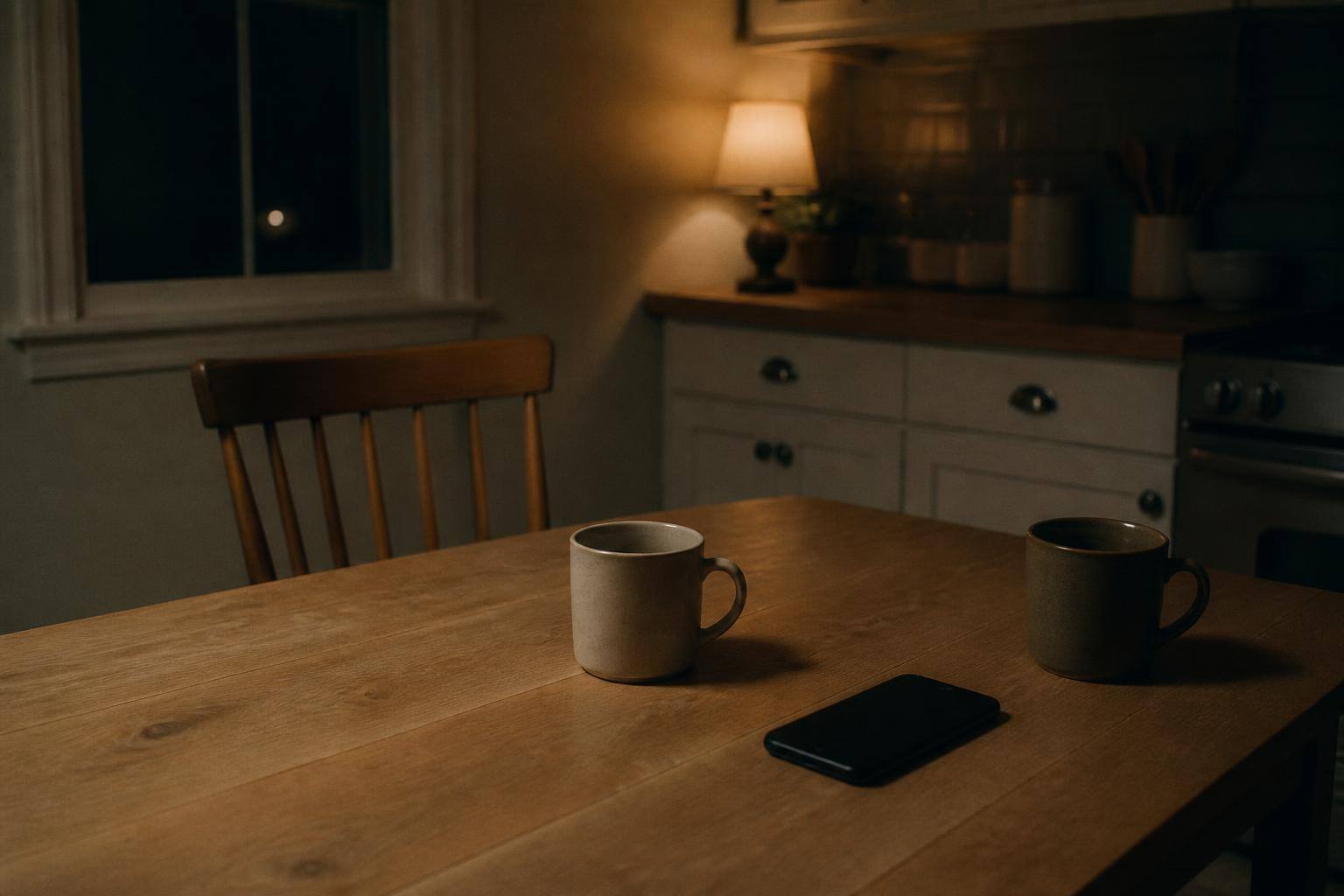
Quieter Than Usual: Recognising Depression in Teenagers
Teenage depression rarely announces itself as sadness. More often it arrives as irritability, exhaustion and a slow withdrawal that looks, from the outside, like an ordinary phase.
Reviewed by Sian Trombley, CCCFounder, Thrive Family Company
9 min read
Best for parents of children who are…
- worrying often, or asking the same question again and again
- needing extra emotional support at the moment
- going through a change at home or at school

Share this
It is rarely a crisis that brings parents to the appointment. It is a sentence like this one: he's just not himself, and I can't tell if that's the age or something else.
It is a fair question and a difficult one, because adolescence and depression share a great deal of surface: tiredness, moodiness, a preference for the bedroom, a shrinking interest in family life. The differences are real, though, and once you know what to look at they are not subtle.
What depression looks like at fifteen
- 01Irritability rather than sadness
Snapping, contempt and a short fuse are more typical presentations in adolescents than tearfulness.
- 02Anhedonia
The clinical heart of it. Things that used to be enjoyable stop delivering anything — and this is the sign parents most reliably notice in hindsight.
- 03Physical complaints
Headaches, stomach pain, exhaustion that sleep does not touch, appetite that changes in either direction.
- 04Withdrawal that widens
First from family, then friends, then the activities. The order matters less than the direction of travel.
- 05Self-criticism
Language shifts from "I did badly" to "I'm useless". Global, permanent, personal — that triad is worth taking seriously.
The first conversation
“Depression in a teenager is not usually a storm. It is a light going down slowly enough that everyone's eyes adjust.”
Sian Trombley
What helps while you wait for help
- Protect sleep timing above almost everything else; it is both a symptom and a driver.
- Keep one daily contact ritual that requires nothing of them emotionally.
- Reduce demands temporarily rather than removing structure entirely.
- Get outside once a day, even briefly, even badly.
- Tell them plainly that this is treatable and that you are not frightened of them.
When to act immediately
Seek urgent help — your GP, NHS 111, or emergency services — if your child has a plan or intent to harm themselves, has recently self-harmed, is expressing hopelessness about the future, or has withdrawn abruptly after a period of distress. Do not wait for an appointment window, and do not manage this alone.
Teenage depression is often not sadness. It is a slow narrowing of everything that used to be worth doing.
Sian Trombley, Canadian Certified Counsellor
What you can try this week
Take the pressure off eye contact
Car journeys, walks and washing up produce far more disclosure than a face-to-face conversation on the sofa. Side by side lowers the stakes.
Ask one plain question
"You've seemed heavier lately. Not in trouble — I just want to know how bad it's been." Then leave a long silence.
Protect one small anchor
One walk, one meal at the table, one thing they used to like. Behavioural activation is slow, unglamorous and genuinely effective.
- Irritability is a more common presentation than sadness in adolescents.
- Loss of interest in previously enjoyed things is the signal that matters most.
- Two weeks of persistent change across several areas is the practical threshold.
- Asking directly about self-harm or suicidal thoughts does not increase risk.
- Treatment works, and early treatment works better.
When did I last see my child properly enjoy something?
Am I calling this a phase because it is one, or because I want it to be?
What would I need in place to be able to ask the hardest question calmly?
Printable resources
Recommended Thrive courses
This article is educational and is not a substitute for individual clinical advice. Comments are closed so the Journal stays a calm place to read.
Share this
Keep going
You may also like
Courses, worksheets and pathways from the same part of the library.
- JournalThe Teenager Who Refuses to Submit Work That Is Not PerfectIt is 11:30 PM. The essay is written, rewritten, deleted, and written again. To the outside world, they are a dedicated student; inside, they are trapped in a loop where anything less than flawless feels like catastrophe.Read
- JournalYour Teenager's First JobThe payslip is never really about the money. It is the first evidence a teenager has that the world outside their family will pay for who they are.Read
- ResearchThe Research LibraryPeer-reviewed parenting and child mental health research, translated into plain language.Read
- Thrive GuideThrive GuideAsk a question and get warm, evidence-informed guidance drawn from the Thrive library.Read
- Thrive Care PlanThrive Care PlanA short check-in that turns how your week actually went into one focused plan.Read
- Thrive ToolThrive ToolsPremium printable workbooks and therapeutic tool kits.Read