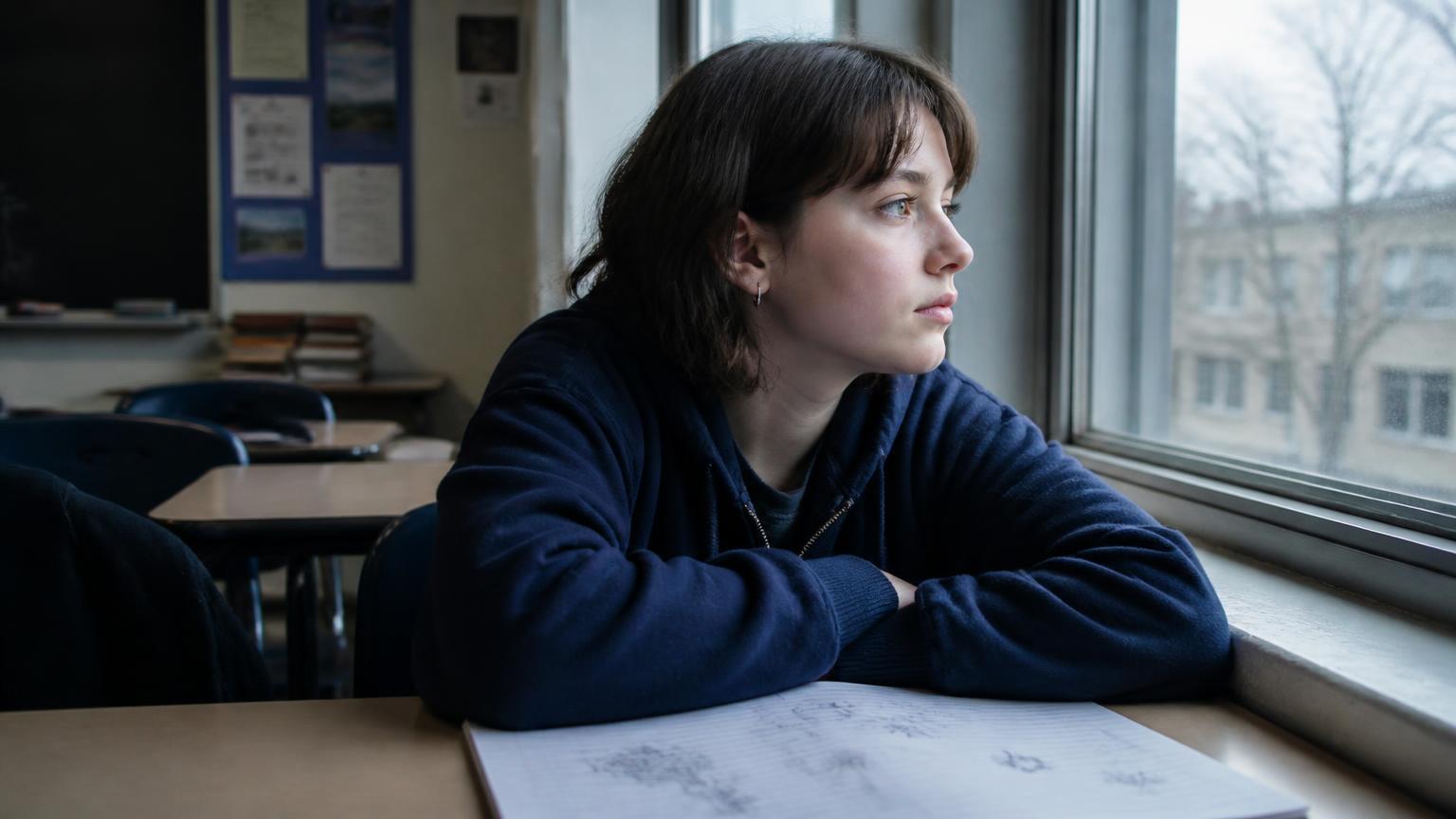
The Girls We Miss: Why Neurodivergent Girls Are Overlooked
She is polite, verbal, and eager to please. She also hides her confusion, mimics her friends, and comes home exhausted. The profile we have been taught to look for was never built for her.
Written by Sian Trombley · BEd, MACP, CCC
She has a few close friends. She does well enough in school. She apologises constantly. She reads social situations with the intensity of a scholar. And by Friday afternoon, she is so depleted she can barely speak. To the outside world, she is fine. On the inside, she is performing a version of fine that nobody else can see.
This is the hidden story of countless neurodivergent girls. Their autism or ADHD does not look like the textbook picture. It looks like anxiety, perfectionism, social exhaustion, and a child who tries harder than anyone else to seem effortless. They are often missed for years, sometimes forever.
The mask that looks like success
Girls are socialised early to be agreeable, attuned, and accommodating. For a neurodivergent girl, this becomes a survival strategy. She watches, imitates, rehearses, and suppresses. She learns which expressions to make, when to laugh, how to keep a conversation going. The performance is remarkable. The cost is invisible.
What the signs look like in girls
The signs are often subtle and easy to misread. They may show up as intense friendships, not a lack of them. As a passion for books or animals, not trains. As people-pleasing, not opposition. As stomach aches, headaches, or school refusal, not obvious distress. The key is not the outward behaviour but the effort and recovery required to produce it.
- Extreme anxiety about being seen as different or 'weird.'
- Social exhaustion after ordinary school days or playdates.
- Intense, one-on-one friendships that can be all-consuming.
- Difficulty with subtle social rules, hidden behind imitation.
- Sensory sensitivities hidden through avoidance or compliance.
- Perfectionism, rigidity, and distress at mistakes or change.
- Strong verbal skills that mask executive-function struggles.
- Mood crashes at home after holding it together elsewhere.
Why the diagnostic system misses them
Much of what we know about autism and ADHD was originally studied in boys. Diagnostic tools, checklists, and clinical descriptions still carry that bias. A girl who makes eye contact, has friends, and speaks well may not fit the criteria even when she is deeply struggling. The system was designed to see a different profile.
What parents can do
If you suspect your daughter is neurodivergent, trust your observation. Look past the surface performance. Ask about her inner experience. Seek assessors who understand female-presenting neurodivergence. And above all, protect her from the narrative that she is just not trying hard enough.
- 01Document the invisible cost
Keep a brief log of energy, mood, sensory complaints, and recovery after social demands. Patterns matter more than single incidents.
- 02Find a neurodiversity-affirming professional
Not every clinician is trained in female profiles. Ask directly about experience with masking and gender differences.
- 03Make home a place to drop the mask
Reduce demands, allow stimming, honour sensory needs, and do not require constant sociability at home.
- 04Name it as a brain difference, not a flaw
'Your brain works hard to figure out social situations. That is a skill, and it is also tiring.'
The relief of being seen
For many girls, the diagnosis or realisation is not a burden. It is a homecoming. Finally, there is an explanation that fits. Finally, they can stop performing and start understanding. The work is still real. But the shame begins to lift. And from there, real support becomes possible.
Children do not need a perfect parent. They need a predictable one who returns after hard moments.
Sian Trombley, Canadian Certified Counsellor
What you can try this week
Notice the after-school crash
Does she come home withdrawn, tearful, or explosive? School may cost more than it appears.
Ask about the effort behind the performance
'When you are with friends, how much do you have to think about what to do next?' This question can reveal masking.
Look for sensory patterns
Clothing tags, food textures, noise, smells, transitions. Girls often hide sensory distress until it becomes a shutdown.
- Neurodivergence often looks different in girls than in boys.
- Masking can hide difficulties while causing serious exhaustion and anxiety.
- Social imitation and people-pleasing are common camouflage strategies.
- Diagnostic criteria were historically based on male-presenting profiles.
- Believing a girl's inner experience is more important than her outward performance.
Have I been comparing my daughter to boys or to a stereotypical neurodivergent profile?
What happens to her mood and energy after social situations?
Is she performing okay, or does it cost her everything to do so?
Printable resources

Share this article
This article is educational and is not a substitute for individual clinical advice. Comments are closed so the Journal stays a calm place to read.