System
A Family Command Centre That Actually Gets Used
Function first. It does not need to look like anything.

Share this
- Time in real life
- One hour to build
- The change
- The household has one physical place where the week and the paper live, and it gets checked daily.
- Ages
- All ages
- Reading
- 8 min
Reviewed by Sian Trombley, CCCFounder, Thrive Family Company
8 min read
Most family command centres fail for the same reason: they were built to look organised rather than to be consulted. A beautiful board that nobody reads is decoration with a job title.
The functional version answers four questions at a glance: what is happening this week, what needs doing, where is the paper, and where are the things that leave the house.
Put it where the traffic is
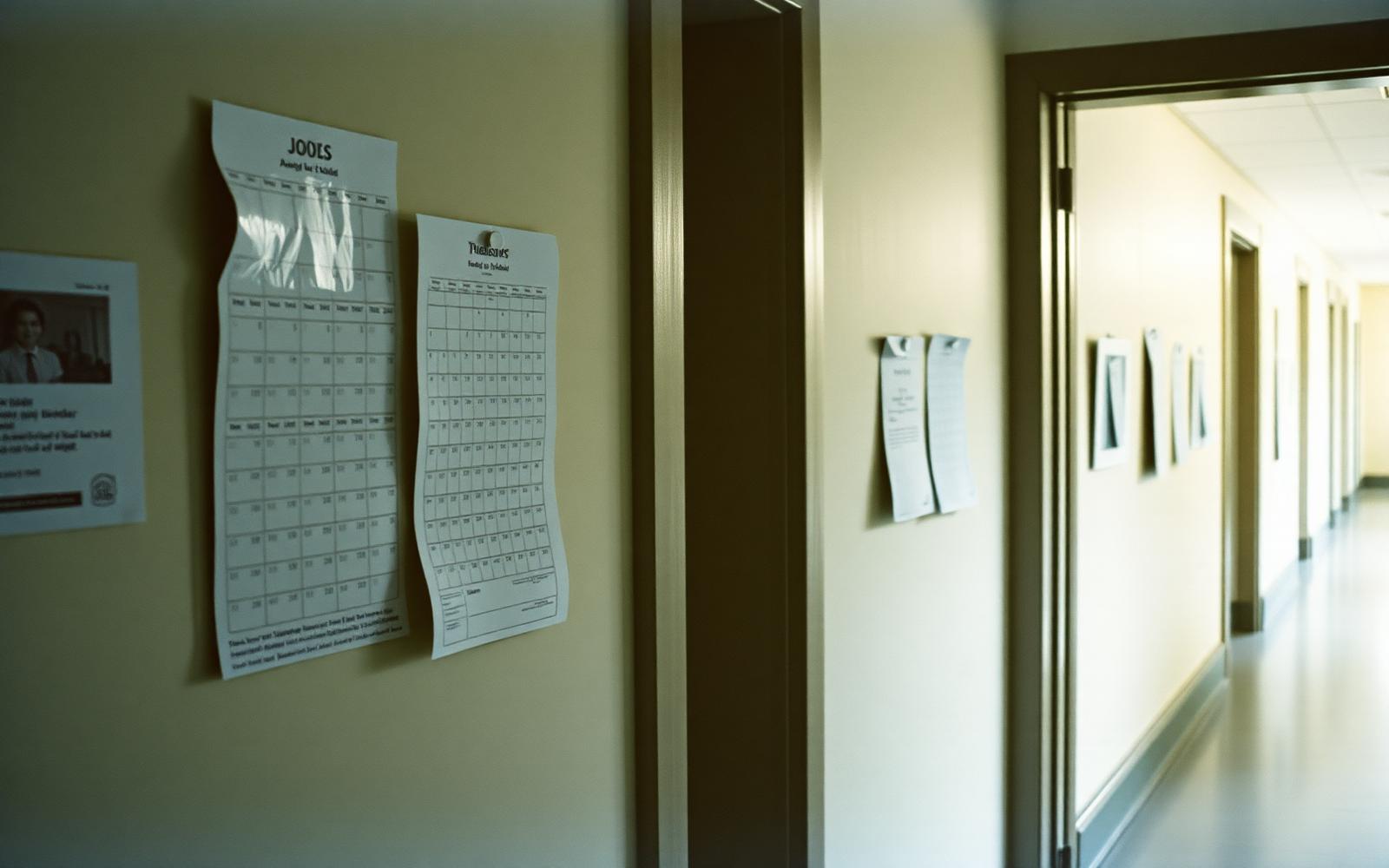
The correct location is wherever people already stop — the kettle, the fridge, the bottom of the stairs, the inside of the front door. A command centre in the study or the utility room will be visited on the day it is installed and then approximately never.
The four components
- 01
A calendar big enough to read from standing
Monthly view, one colour per person, written in something permanent. If the household runs on a shared digital calendar, print the week on a Sunday and pin it — the point is that a child can see it without asking.
- 02
One tray for incoming paper
Everything that comes through the door or out of a bag lands here and nowhere else. It gets emptied at the weekly reset. One tray, not a filing system.
- 03
A short 'this week' list
Five lines maximum, on a wipeable surface. Deadlines, money, the unusual thing. Anything longer stops being read.
- 04
The leaving-the-house shelf
Keys, bags, kit, the library books, the thing that must not be forgotten tomorrow. A hook and a basket per person is sufficient.
Small spaces and rented homes
- The inside of a cupboard door takes a calendar, a list and an envelope for paper without touching a wall.
- A single lidded box under a side table can be the entire paper system.
- Over-door hooks give a launch pad in a hallway too narrow for anything fixed.
- In two-home families, a duplicate minimal set at each address beats one perfect one.
Making it get used
- Write on it in front of the children. A board only the adults touch becomes a board only the adults read.
- Check it at a fixed moment — during the weekly reset and again on Wednesday evening.
- Give each child one line of the week that is theirs to fill in.
- Take something off it every week. Command centres die of accumulation, not neglect.
If, after a month, nobody has looked at it, the location is wrong. Move it before redesigning it.
Try this week
- 01Choose the spot where the household already stops, and put the calendar there tonight.
- 02Set up one tray for all incoming paper and tell everyone where it is.
- 03Write this week's five lines on it in front of the children.
- 04Add a hook and a basket per person by the door.
The therapist's perspective
The households that keep one of these going are the ones that built the ugly version first and improved it later, if ever.
A shared surface does something beyond logistics: it quietly demonstrates that the week belongs to everyone, not to whichever adult has been holding it.
Sian
Founder, Thrive Family Company
Share this
Continue in Family Systems
The School Communication System
School communication is now a genuine administrative load carried mostly by one adult. Here is a system that catches what matters and lets the rest go.

The Appointments and Health File
Health admin arrives at the worst moments and asks you to recall dates from two years ago. A simple file, kept lightly, removes most of that burden.
The Shared List That Replaces Nagging
When one person holds every task in their head, the only way to distribute the work is to speak — which everyone experiences as nagging. A visible list changes who is being asked.