Guide
The After-School Hour
Why the worst hour of the day is nearly always the first one home.

Share this
- Time in real life
- One hour, weekday afternoons
- Ages
- 5–16
- Reading
- 8 min
Reviewed by Sian Trombley, CCCFounder, Thrive Family Company
8 min read
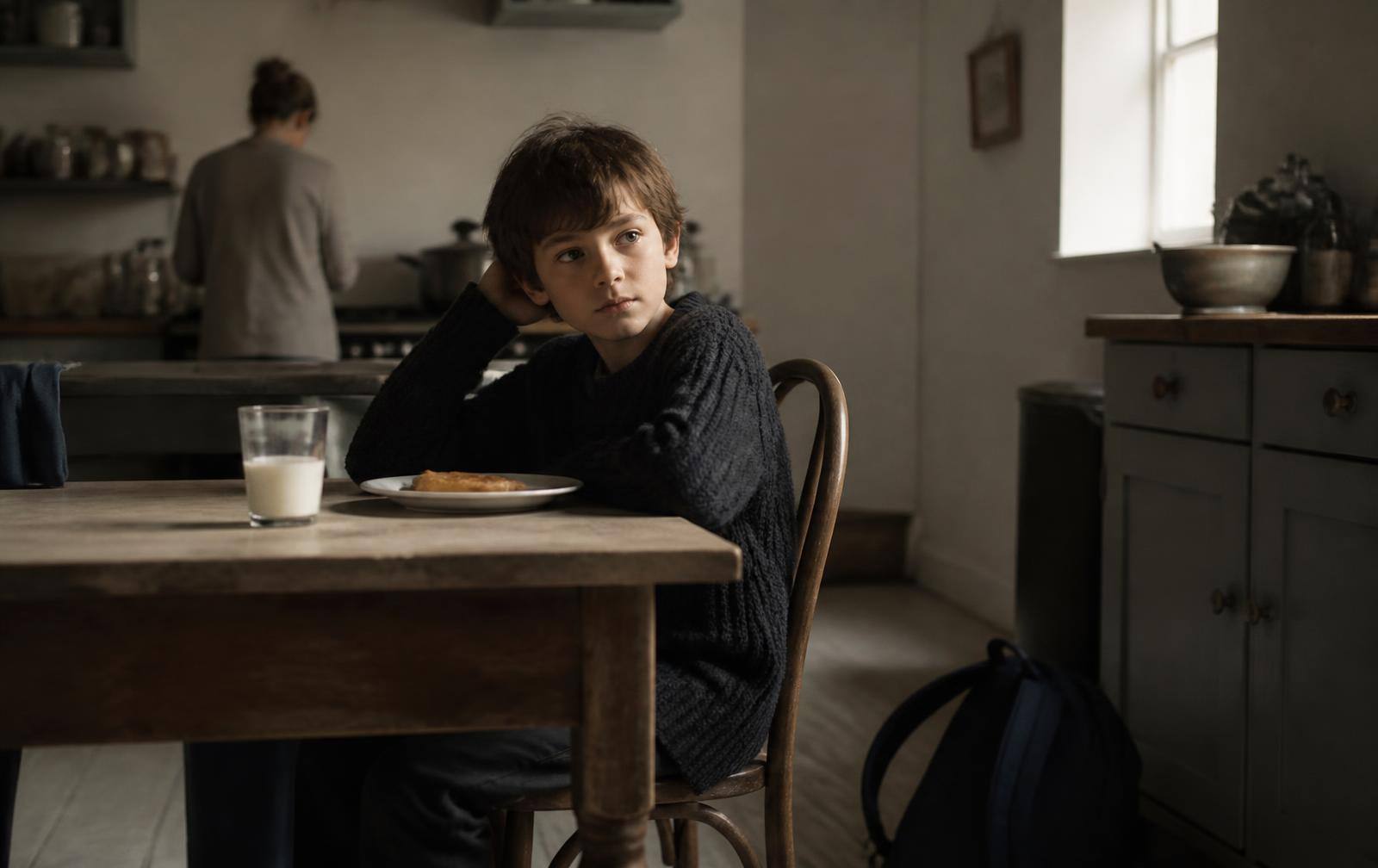
The teacher says they are a delight. The childminder says they are no trouble at all. And then the door closes behind them at ten past four and the same child cannot find their shoes, cannot answer a question, and is furious about a biscuit.
Parents often read this as evidence that something is wrong with home. It is almost always the opposite. Children release where they feel safest, and the first hour after school is where the day's held-in effort finally arrives.
You cannot talk a child out of decompression. You can, however, build an hour that expects it.
What is actually happening at 3:30
A school day asks a child to sit still, read social cues, manage noise, wait their turn, tolerate failure in front of peers and suppress most of what they feel about all of it. That is six hours of continuous self-regulation, which is effortful in the same way physical work is effortful. By the end of it the reserves are genuinely low.
This is why the questions we most want answered — how was your day, did you eat your lunch, what did you do in maths — land so badly. Each one asks the child to retrieve, organise and narrate, which is precisely the machinery that has just been run into the ground.
The shape of a good hour
- 01
Food before words
Something to eat, in their hand, within five minutes of the door. Not a negotiation about what, not a wait for dinner. Blood sugar does more for the next hour than any conversation you could have.
- 02
Twenty minutes of nothing asked
No questions, no instructions, no reading of the bag. Presence without demand. Sit nearby doing something ordinary — chopping, folding, tidying — and let them come to you or not.
- 03
Movement or water
A walk to the postbox, the garden, a bath, a shower. Physical state changes reset emotional state faster than talking does, particularly for children under ten.
- 04
Then, and only then, the logistics
Reading folder, forms, the note from the office. Administrative parenting after the nervous system has landed, not before.
If the meltdown comes anyway
- Assume tiredness before defiance. The same sentence at 4pm and 7pm is not the same sentence.
- Lower your own volume rather than matching theirs. A child in overflow is borrowing your regulation, not listening to your reasoning.
- Do not teach in the storm. Whatever needs saying about how they spoke to you keeps until after dinner and lands better then.
- Name the pattern once, calmly, on a good day: "You're often wrung out when you get in. That makes sense to me." Being understood reduces the shame that makes it worse.
Teenagers decompress differently
An adolescent's version of this hour usually looks like a closed door and a phone, and parents read the withdrawal as rejection. In most households it is a lower-load version of exactly the same thing: a period of no social performance after a day of continuous social performance.
The productive move is to protect the hour rather than to interrupt it, and to be visibly available at the end of it — in the kitchen, doing something, not waiting expectantly. Teenagers talk on their own timetable, and it is nearly always the second hour, not the first.
A child who falls apart at your door is telling you your door is the safest one they walked through today.
Sian Trombley
Try this week
- 01Have food ready before the door opens, three days out of five.
- 02Ask no questions for the first twenty minutes.
- 03Move the reading folder and forms to after dinner.
- 04Swap 'how was your day' for one small, specific question.
- 05Say the pattern out loud once, on a calm day, without any advice attached.
The therapist's perspective
Parents often arrive in my room describing a child who is 'fine everywhere but home', and they are braced to hear that they are the problem. They are almost never the problem. They are the safe place, and the safe place gets the truth.
If the hour is unmanageable every single day for weeks, and school itself has become hard to get to, that is worth a conversation with the school rather than a better routine at home.
Sian
Founder, Thrive Family Company
Share this
Continue in Routines
The Dinner Table Routine
Not everyone can eat together every night, and the pressure to try is its own problem. Here is the version that works for real schedules — and what makes the difference once everyone is sitting down.
The Travel Day Routine
Travel days break every routine a family has, all at once. A small amount of structure, built before you leave, absorbs most of what usually goes wrong.

Rebuilding a Routine After a Hard Season
After a hard stretch, most families try to restore every routine on the same Monday. Here is the sequenced version, which is slower and considerably more likely to hold.