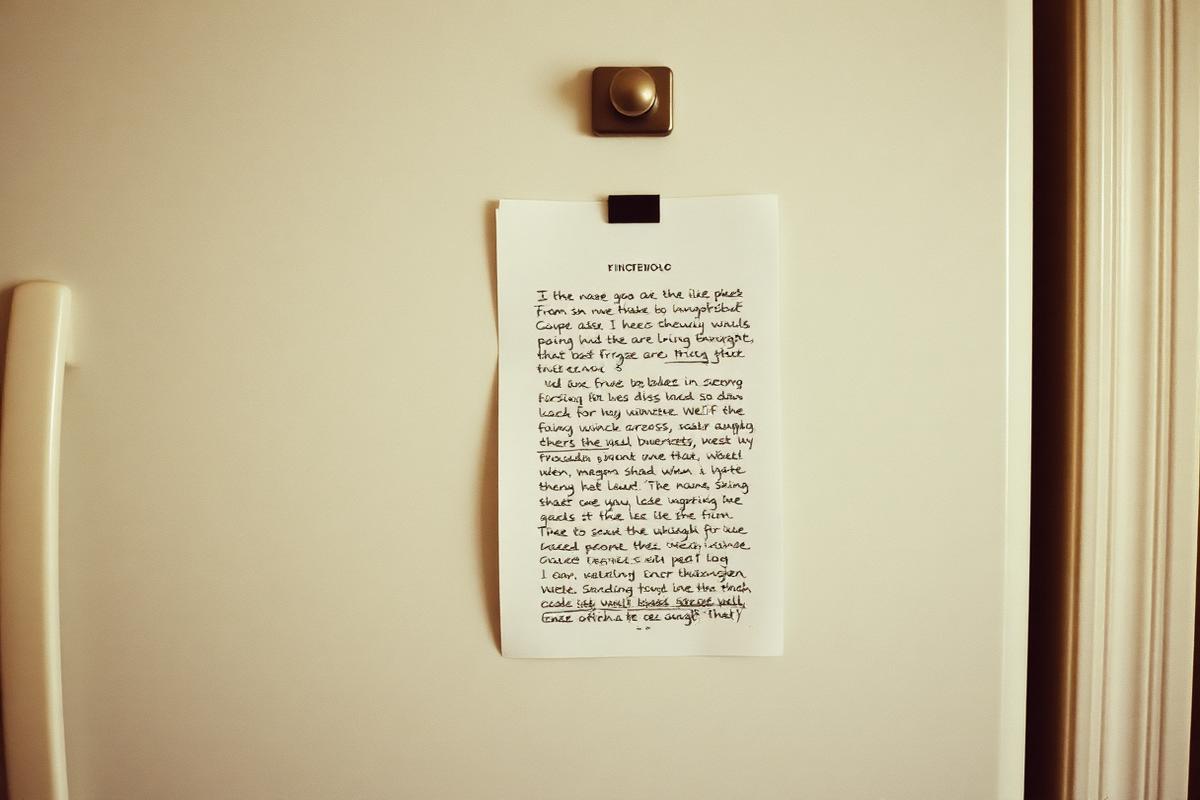
Guide
The Family Operating Page
One printed sheet that means anyone can run your house for a day.

Share this
- Time in real life
- 45 minutes, once a year
- Ages
- All ages
- Reading
- 7 min
Reviewed by Sian Trombley, CCCFounder, Thrive Family Company
7 min read
Ask most households who knows the dentist's name, which child has the nut allergy, what time the after-school club actually closes, and where the spare key is. In the overwhelming majority of families, one adult holds all four, and the others hold none of them.
That imbalance is rarely the result of anyone being lazy. It accumulates: whoever answered the first phone call becomes the person who knows, and knowing becomes owning.
One page fixes a surprising amount of it. Not the doing — the knowing. And the knowing is the part that follows you around on a Sunday night.
What goes on the page
- The week's shape: who is where, on which days, with the times that actually matter and the ones that do not.
- Medical: GP surgery, dentist, allergies, medications and doses, NHS or insurance numbers, who to ring first.
- School: teacher names, office number, absence line, uniform days, club pick-up times and where each child waits.
- Food: five meals everybody eats, what each child will not eat, where the shopping list lives.
- House: bin days, boiler and stopcock, wifi password, alarm code, the neighbour with the spare key.
- Bedtime: order of operations for each child, and the one thing each of them needs in order to settle.
- Emergency: two adults to call, in order, with numbers written out rather than assumed.
How to write it
- 01
The adult who knows least writes it
This is the whole trick. If the holder of the information writes the page, nothing transfers. If their partner writes it by asking, the interview itself does most of the work of sharing the load.
- 02
Write it in the imperative
"Ring the office before 9am" rather than "absences are reported to the school office". You are writing instructions for a tired person, not a description of your family.
- 03
Include the unwritten rules
The ones that will otherwise cause a meltdown: which cup, which side of the bed, the fact that the middle child needs ten minutes alone after school before anyone speaks to them.
- 04
Print two and date it
One inside a kitchen cupboard, one in the bag that travels. A date in the corner tells the next reader whether to trust it.
The second, quieter benefit
Households in which the invisible work is documented tend to divide it more evenly, because the work becomes visible enough to be discussed. Research on the mental load consistently finds that the burden is not primarily in executing tasks but in the anticipating, monitoring and remembering that precedes them. A written page externalises exactly that layer. It is also, quietly, the document that makes it possible for one adult to be ill, or away, or simply off duty for a weekend, without a running commentary by text message.
The load is not the school run. It is being the only person who remembers that there is one.
Sian Trombley
Try this week
- 01Set aside forty-five minutes at the weekend and have the other adult write it while you answer.
- 02Include three unwritten rules that would otherwise cause a bad morning.
- 03Print it, date it, and put it inside a cupboard door rather than in a drawer.
- 04Let a grandparent or sitter use it once and correct what was missing.
- 05Diary a fifteen-minute review for the start of the next term.
The therapist's perspective
Couples argue about the dishes and mean the remembering. This page will not resolve that argument, but it converts it from a character dispute into a document you can both point at, which is a considerably better place to start.
Single-parent households benefit from this most of all — not to share the load, but because it makes being unwell survivable, and because it lets a child see the machinery that has been quietly carrying them.
Sian
Founder, Thrive Family Company
Share this
Continue in Family Systems
The School Communication System
School communication is now a genuine administrative load carried mostly by one adult. Here is a system that catches what matters and lets the rest go.

The Appointments and Health File
Health admin arrives at the worst moments and asks you to recall dates from two years ago. A simple file, kept lightly, removes most of that burden.

The Shared List That Replaces Nagging
When one person holds every task in their head, the only way to distribute the work is to speak — which everyone experiences as nagging. A visible list changes who is being asked.