Guide
The Handover Between Two Homes
Making the moving-day routine boring, in the best possible sense.

Share this
- Time in real life
- 30 minutes, twice a week
- Ages
- 4–18
- Reading
- 9 min
Reviewed by Sian Trombley, CCCFounder, Thrive Family Company
9 min read
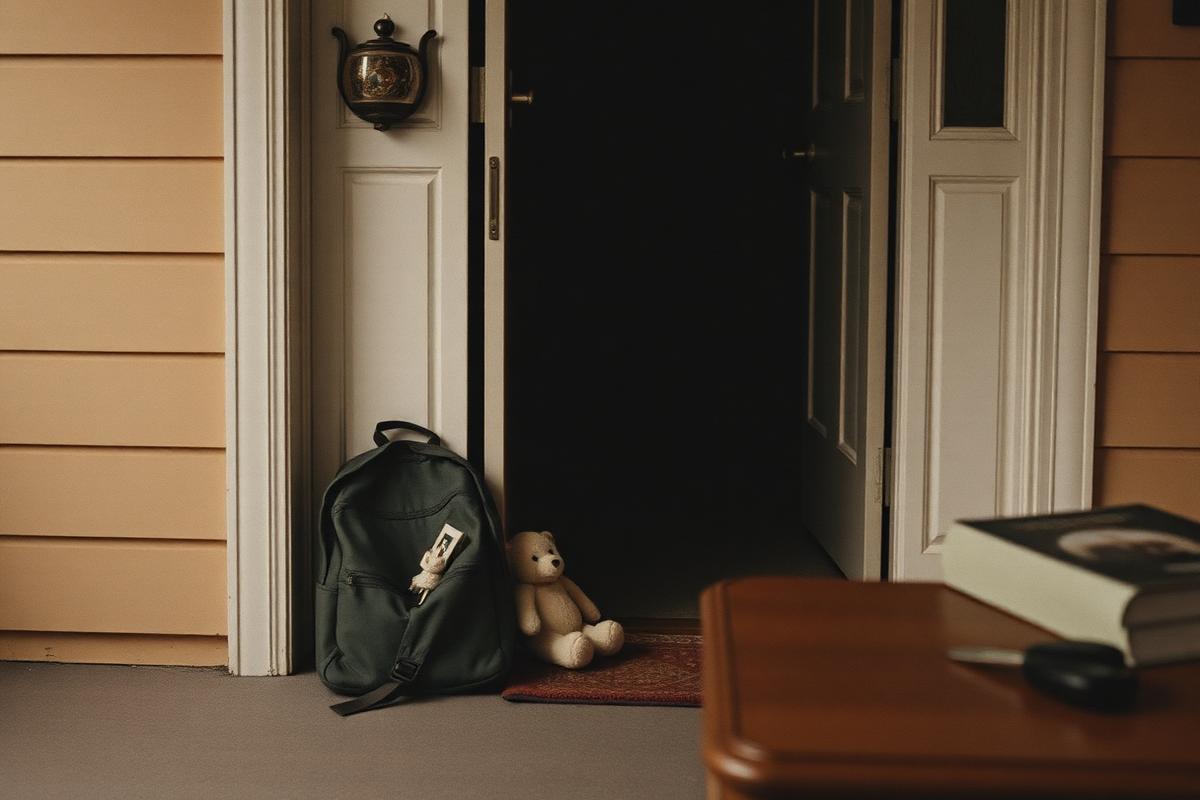
Parents in shared care often describe the same puzzling pattern. The child is fine at the other house, fine an hour after arriving, and impossible for the forty minutes on either side of the door.
It is tempting to read that hour as evidence about the other household. Usually it is not. It is a transition problem, and transitions are difficult for children in direct proportion to how much they have to hold in their heads while nobody is holding it for them.
The goal is not a joyful handover. It is a dull one.
What the hard hour is actually made of
- Cognitive load: two sets of rules, two bedtimes, two ideas of what happens after dinner, all being swapped at once.
- Loyalty pressure: the sense that being visibly happy to arrive is a betrayal of the person being left, and vice versa.
- Loss of control: a child in shared care almost never chose the arrangement, and the door is where that fact becomes physical.
- Adult emotion: children read the face of the parent handing over with extraordinary accuracy, and they manage what they read.
Research on children after parental separation converges on a reassuring finding: the arrangement matters far less than the level of conflict the child is exposed to and the warmth of each parent-child relationship. A well-run handover is one of the few places where a single adult, acting alone, can lower conflict exposure substantially.
Engineering the handover
- 01
Fix the time and stop renegotiating it
A predictable slot removes the weekly negotiation the child overhears. Where possible, use a neutral, low-drama location — the school gate is the single best handover point ever invented, because the transition happens invisibly inside an ordinary day.
- 02
Keep the doorstep to ninety seconds
Bag, coat, one warm sentence, done. Long doorsteps are where adult conversations start and where children stand watching two faces. Anything logistical goes in a message, not on the step.
- 03
Duplicate the essentials at both houses
Toothbrush, pyjamas, chargers, PE kit, a spare of the comfort item. Packing a life into a bag twice a week is a weekly reminder of being a visitor. Duplicates are the cheapest emotional intervention available.
- 04
Build a landing routine, identical every time
The first thirty minutes back should be the same every single week: shoes off, a snack, twenty minutes of nothing asked. No questions about the other house, no report on the week, no laundry conversation.
- 05
Ask nothing for an hour
The debrief will arrive later, usually sideways — in the car, at bedtime, mid-cartoon. Children who are interviewed at the door learn to arrive with an answer prepared instead of a feeling.
The bridge book
For children under about eleven, a small shared notebook that travels with them can carry the logistical information that would otherwise be transmitted through the child: dentist appointments, the reading book, the fact that they were up in the night on Tuesday. It moves information out of the child's mouth and into paper, which is exactly where it belongs. Keep it strictly factual — the notebook must never become a channel for adult grievance, and a child will read it.
When the other house runs differently
- Accept that two households will have two standards. Children manage different rules in different places routinely; they manage being made responsible for the difference far less well.
- Never ask the child to report. Any information gathered that way costs more than it is worth.
- Correct only what is unsafe, and correct it adult-to-adult, never through the child.
- State your own house's rules in the present tense, without comparison: "Here, screens go off at nine." No "unlike at Dad's".
You cannot make a handover happy. You can make it so predictable that a child no longer has to brace for it.
Sian Trombley
Try this week
- 01Time your next doorstep and get it under two minutes.
- 02Buy one duplicate item so the bag gets lighter.
- 03Write down your landing routine and use exactly the same one both weeks.
- 04Retire "did you have a nice time?" and replace it with a factual question.
- 05Move one piece of logistics out of your child's mouth and into a message or the notebook.
The therapist's perspective
Children in shared care are frequently the most competent-seeming people in the arrangement, and that competence is often expensive. The child who never complains about the handover is not always the child who finds it easy.
If your own grief arrives at the door — and it very often does — let it arrive after the car has gone. Not because your feelings are unacceptable, but because a child who sees them at that exact moment will start managing their departures around you.
Sian
Founder, Thrive Family Company
Share this
Continue in Routines

The Dinner Table Routine
Not everyone can eat together every night, and the pressure to try is its own problem. Here is the version that works for real schedules — and what makes the difference once everyone is sitting down.
The Travel Day Routine
Travel days break every routine a family has, all at once. A small amount of structure, built before you leave, absorbs most of what usually goes wrong.

Rebuilding a Routine After a Hard Season
After a hard stretch, most families try to restore every routine on the same Monday. Here is the sequenced version, which is slower and considerably more likely to hold.