
Guide
The Homework Hour That Isn't a Fight
Change the conditions, not the child.

Share this
- Time in real life
- 40 minutes, four evenings a week
- Ages
- 7–16
- Reading
- 8 min
Reviewed by Sian Trombley, CCCFounder, Thrive Family Company
8 min read
By four o'clock a child has already spent six hours regulating themselves in a room full of other people. The tank is empty. Then they walk into a house and are asked to do the single most effortful thing of the day.
Seen from there, the resistance is not defiance. It is a nervous system out of fuel being asked to sprint.
You cannot make the work easier. You can change almost everything around it — when it happens, how it starts, who is nearby, and what it costs to stop.
The gap before the work
Almost every household that solves homework does the same thing first: they stop starting it on arrival. A protected gap — thirty to sixty minutes of food, movement, silence or nothing at all — is not procrastination. It is the transition that makes concentration physically available.
The gap has to be genuinely unstructured, and it has to be non-negotiable in both directions. If the child can extend it by arguing, it becomes the new battleground. Name the end of the gap by clock, not by mood: "Books out at half five."
Body doubling: the quiet variable nobody mentions
Working alongside another person who is also working is one of the most reliable levers there is for a child who stalls. You do not teach, hover or check. You sit at the same table and do your own admin, your own reading, your own emails. Presence supplies the regulation the child cannot yet generate alone.
A shape for the hour
- 01
Two minutes of triage
Everything out on the table, listed on one scrap of paper, ordered hardest to easiest. Deciding what to do is where most of the avoidance lives; do that part together and the rest is downhill.
- 02
The hardest thing first, for twelve minutes only
Not until it's finished — for twelve minutes. A timer converts an open-ended dread into a bounded task, and most children carry on past the bell once started.
- 03
A real break, away from the chair
Five minutes, standing, out of the room, no screen. Screens do not rest an attention system; they occupy it.
- 04
Stop at the agreed time even if it isn't done
Then write a one-line note to the teacher. Protecting the boundary of the evening matters more than any single piece of homework, and teachers overwhelmingly prefer an honest note to a household in tears.
When it is still a war
- If it takes three times longer than the school says it should, the problem is not effort. Say so to the school in writing.
- If tears arrive within five minutes every night, stop for a week and reset the association before trying a new structure.
- If your presence makes it worse rather than better — real for some adolescents — move to the next room and stay audible.
- If nothing works across a term, ask for an assessment conversation rather than another system. Persistent, disproportionate difficulty is information.
No piece of homework is worth the evening. Say that out loud, and mean it, and watch how much more gets done.
Sian Trombley
Try this week
- 01Protect a thirty-minute gap between the door and the books, and name its end by the clock.
- 02Sit at the same table doing your own work for the first twelve minutes.
- 03Set a hard stop for the evening and write the note to school yourself if you hit it.
- 04Do the triage list together — hardest first — before anyone opens a book.
The therapist's perspective
When homework becomes the defining conflict of a household, the cost is almost never academic. It is the slow conversion of a parent into a supervisor, and the child's evening into a place where they are always slightly failing.
If you have to choose between the relationship and the worksheet, choose the relationship every time. You will get more worksheets done that way anyway.
Sian
Founder, Thrive Family Company
Share this
Continue in Routines

The Dinner Table Routine
Not everyone can eat together every night, and the pressure to try is its own problem. Here is the version that works for real schedules — and what makes the difference once everyone is sitting down.
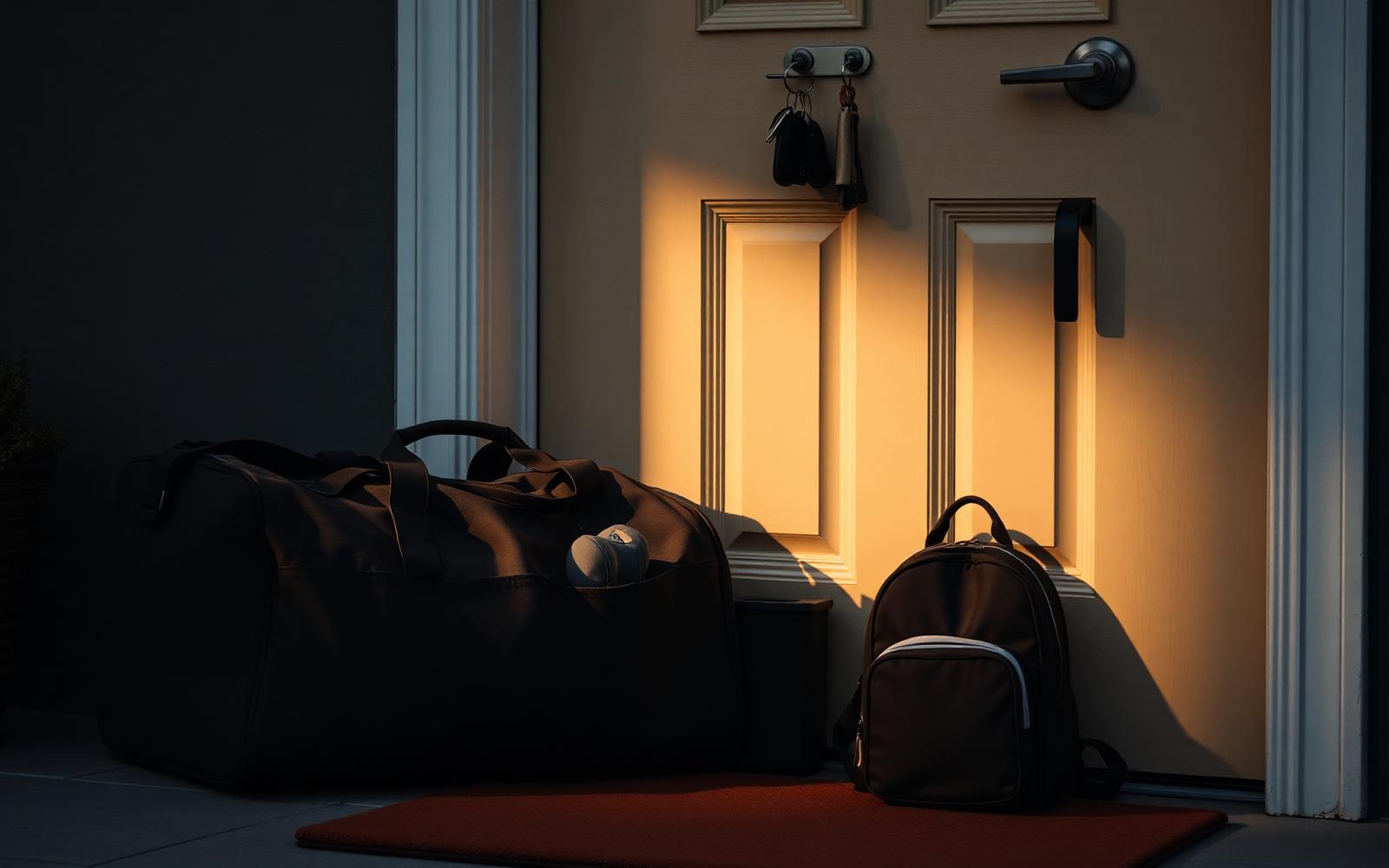
The Travel Day Routine
Travel days break every routine a family has, all at once. A small amount of structure, built before you leave, absorbs most of what usually goes wrong.

Rebuilding a Routine After a Hard Season
After a hard stretch, most families try to restore every routine on the same Monday. Here is the sequenced version, which is slower and considerably more likely to hold.