Routine 05
After school · The hour after the school gate
After-School Decompression
For the child who holds it together all day and hands you the wreckage at 3:35.
- Who it's for
- Ages 5–16. Particularly children who are described as 'fine at school'.
- When it runs
- Every school day. The first sixty minutes home.
- Approx. time
- 20-45 minutes. Flexible by design.
The friction
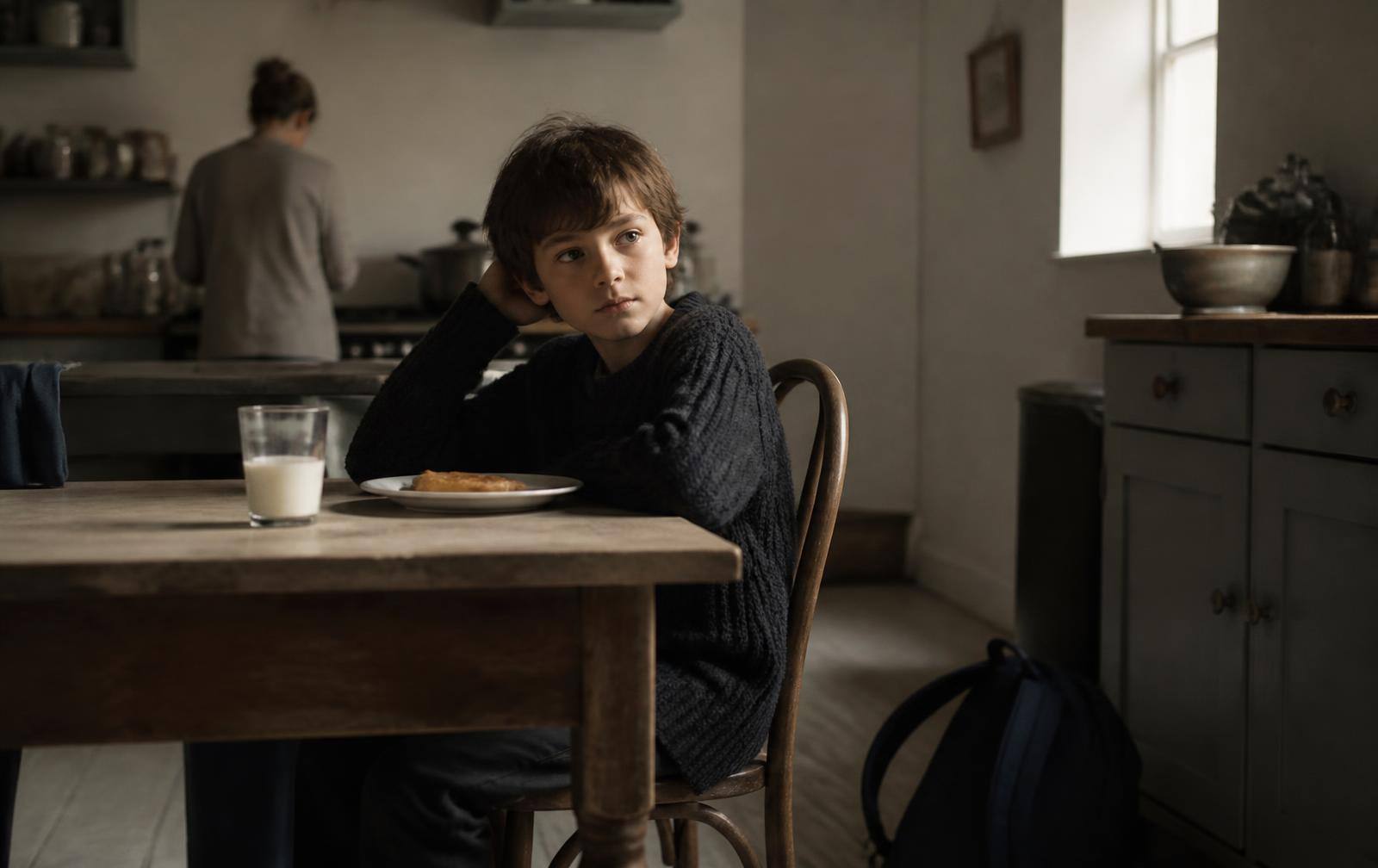
You ask how the day was and get a shrug, or a snap.
The backpack hits the floor and something small — a wrong snack, a sibling breathing — sets off something large.
You know they were polite and cooperative for six hours somewhere else.
By five o'clock you are managing a meltdown and still have dinner to make.
Why it breaks down
After-school restraint collapse is a real pattern
Children who spend the day suppressing frustration, sitting still and reading social rules often release all of it at the first safe place. That the release happens with you is a sign of safety, though it rarely feels like a compliment at the time.
Questions are work
"What did you do today?" asks a tired brain to search, sequence and narrate. It is one of the most effortful things you can request in the first ten minutes home.
The evening starts too early
Homework, clubs, chores and conversation land before the child has actually arrived. Households that protect a gap report fewer evening conflicts than households that fill it.
Set this up first
- Food ready before pickup. Blood sugar is a bigger variable here than anyone likes to admit.
- A landing place: one spot for bag, shoes and coat that does not require negotiation.
- A decision, made in advance, that the first hour contains no questions and no tasks.
The sequence
First 5 minutes
Presence, not questions
Greet with your body rather than your voice. A hand on a shoulder, a look, an unremarkable comment about the weather. Say almost nothing.
"Hey. Food's on the side."
5–20
Food and quiet
Something substantial, eaten wherever they want it. No sitting-up-properly, no interrogation, no conversation required.
20–40
Twenty minutes of their own choosing
Outside, on the floor, with the dog, in their room, on a device if that is genuinely what restores them. This part cannot be earned or removed; the moment it is conditional it stops working.
40–55
Sideways conversation, if any
If something is going to come out, it comes out here, and almost always shoulder-to-shoulder: chopping, driving, walking. Ask about one specific thing rather than the whole day.
"Who did you sit with at lunch?"
55–60
Name what comes next, once
The evening resumes with information, not a demand. One sentence, then leave the room.
"Homework at half four. I'll be at the table."
When it doesn't work
There is no hour — we go straight to a club.
Run a compressed version in the car: food, no questions, their music. Fifteen protected minutes still functions as decompression.
They spend the twenty minutes on a device and then cannot come off.
That is a handoff problem, not a decompression problem. Keep the device time and change the ending — see the device handoff routine.
The meltdown happens anyway.
Sometimes it will. The aim is not to prevent release but to give it somewhere less costly to land. A child who falls apart on a sofa with food in them recovers faster than one who falls apart mid-homework.
Make it yours
Younger children
Physical release first: park on the way home, trampoline, twenty minutes outdoors. Talking comes much later, if at all.
Teens
Expect the door to close. Leave food where they will find it and make yourself available in a shared room later. Availability without pursuit is the whole strategy.
When you have just finished work yourself
Take the first five minutes for you before pickup or before they walk in. Two depleted people arriving into each other rarely goes well.
What to say
Instead of
"How was school? What did you learn? Who did you sit with?"
Try
"Hey. Good to see you."
Arrival first. Questions ask for exactly the resource they have just spent at school.
Instead of
"Get your homework out before you do anything else."
Try
"Homework at half four. Until then it's yours."
A named later time is easier to accept than an immediate demand, and it protects the recovery.
Instead of
"You've been in a mood since I picked you up."
Try
"Long day. Food's out if you want it."
Describes the day rather than the child, and leaves the door open for later.
The minimum viable routine
Nothing left in either of you. This afternoon, keep:
- 01Food and a drink within ten minutes of the door.
- 02Half an hour where nothing is asked.
- 03One sentence of warm contact before the evening starts.
Homework, questions and plans can all wait. A calm landing is enough.
Try it for a week
Pick the parts that look most useful and run them for seven days. Then look at what actually happened:
- How long before they were genuinely available to talk?
- Did anything useful come out sideways rather than from a direct question?
- When did the decompression end, and did it have an ending at all?
- What demand can you move permanently out of the first hour?
Then adjust. The aim is not adherence to the sequence; it is a rhythm that makes this part of the day easier to run.
Keep this line
They are not giving you a hard time at 3:35. They are giving you what they could not give anyone else all day.
A note from Sian
When families protect this hour, the change usually shows up somewhere else entirely — at bedtime, or in how homework starts. Decompression is upstream of most evening conflict.
Hold the no-questions rule longer than feels natural. Most children start talking in week two, unprompted, usually while you are facing away from them.
Thrive Routines are psychoeducational family wellbeing guidance. They are not therapy, diagnosis or medical advice, and they are not a substitute for support from a professional who knows your child.