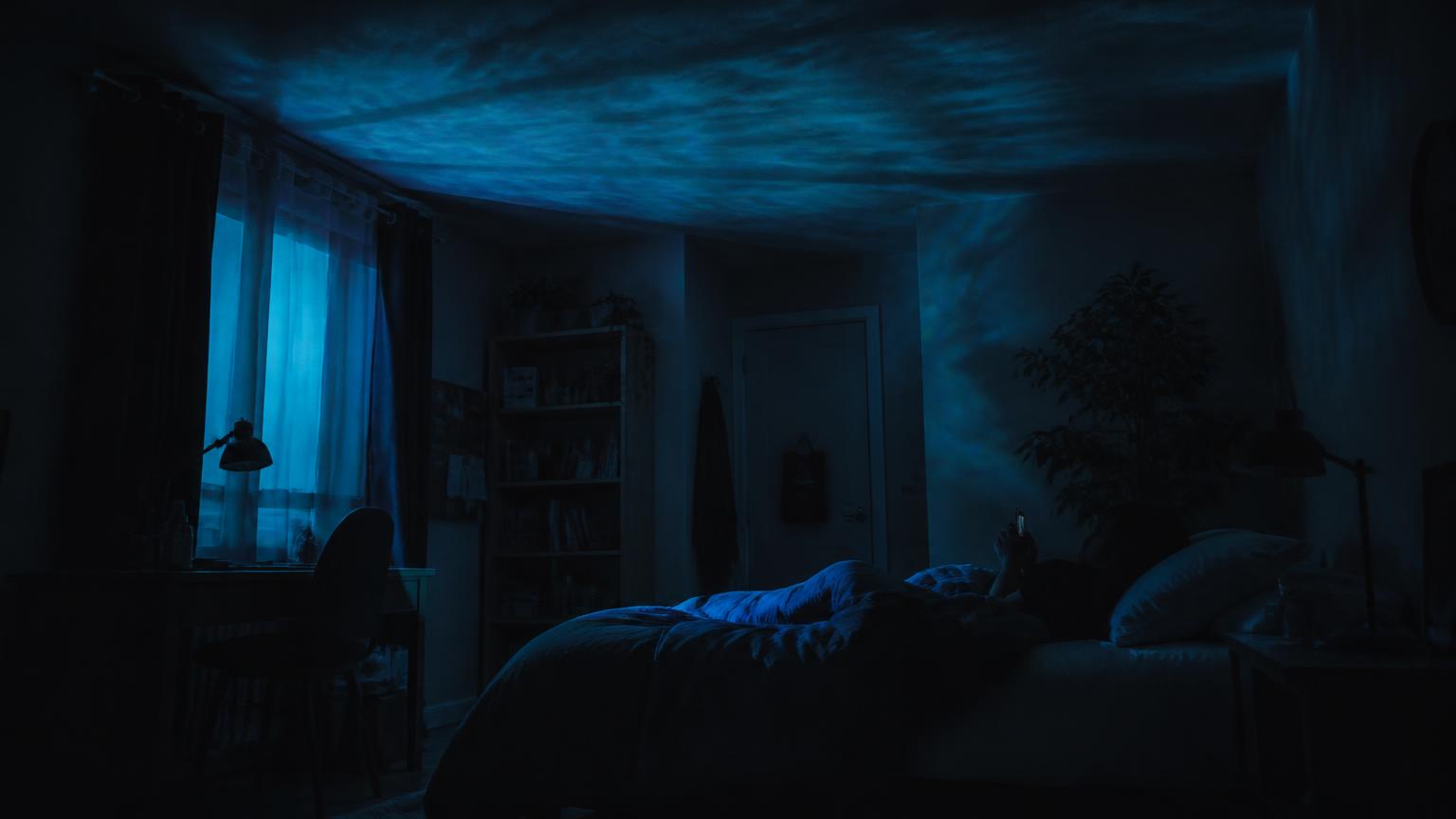
Screens at Bedtime: The Real Cost
It is not just that screens keep kids awake. It is that they change the texture of the evening, delay the nervous system wind-down, and make the transition to sleep feel like a sudden off-switch instead of a gentle landing.
Written by Sian Trombley · BEd, MACP, CCC
The phone goes dark. The room goes quiet. The child is expected to fall asleep immediately. But the brain has been fed a steady stream of novelty, social comparison, and micro-stimuli for the past hour. It is not tired. It is wired. This is the real cost of screens at bedtime: not just stolen minutes, but a stolen wind-down.
We often frame bedtime screens as a time management issue. The truth is bigger. Screens change the nervous system's state. They keep the brain in a mode of seeking and scanning. Sleep requires the opposite: a brain that can let go of seeking and settle into safety. The transition from one to the other cannot be instant.
It is not just blue light
Blue light suppression of melatonin is real, but it is only part of the story. The content matters: a suspenseful video, a group chat argument, or a social comparison spiral can leave the brain emotionally activated long after the screen is off. The design of the device matters: infinite scroll and notifications are built to keep attention, not release it. And the context matters: a phone in the bedroom is a portal that competes with the sleep environment.
What evening screens replace
Every minute on a screen is a minute not spent doing something else: reading, drawing, talking, daydreaming, stretching, being bored. These slower activities are not just pleasant. They are part of the wind-down architecture that tells the brain the day is ending and it is safe to let go.
- 01Reading or being read to lowers heart rate and prepares the brain for story-based relaxation.
- 02Quiet conversation helps process the day's emotional residue.
- 03Boredom and daydreaming allow the mind to shift into a more restful mode.
- 04Physical stretching or a warm bath signals the body to lower arousal.
- 05Dim light and reduced stimulation help the circadian rhythm anchor to the evening.
Phones in bedrooms: the hardest boundary
A phone in the bedroom is a device designed to interrupt sleep, kept in the place where sleep is supposed to happen. Notifications, late-night scrolling, and the psychological pull of the group chat make the bedroom a contested space. For teenagers, the phone is also a social lifeline. The boundary needs to be firm but not punitive.
- 01Choose a family charging location
The kitchen, the hallway, the living room. All phones — including parents' — charge there overnight.
- 02Use an alarm clock, not the phone
A simple alarm clock removes the main excuse for keeping the phone in the bedroom.
- 03Negotiate the social reality
For teens, explain that the boundary is about sleep, not trust. Let them tell friends they are offline after a certain time.
- 04Start earlier, not with the teen
If this is a new boundary, start with younger children first. Teens will push back hardest if they feel the rule is new and arbitrary.
Modelling the boundary
Children learn more from what we do than what we say. If you are scrolling in bed, your child will understand the rule as unfair. If you put your own phone away at wind-down, the boundary becomes a family value rather than a rule imposed on them.
A gentler evening technology rhythm
The goal is not a screen-free childhood. It is a screen-smart evening. The hour before bed is protected. The bedroom is a low-tech zone. The family has other rituals to fill the space. Over time, this rhythm becomes normal, and the child learns that sleep is something you prepare for, not something you fall into between notifications.
Children do not need a perfect parent. They need a predictable one who returns after hard moments.
Sian Trombley, Canadian Certified Counsellor
What you can try this week
Set a hard wind-down time for screens
End all recreational screens at least sixty minutes before bed. Use the hour for calmer, non-digital activities.
Create a family charging station
All phones charge overnight in a shared location. This removes the temptation and models the boundary for everyone.
Offer a replacement ritual
A book, a sketchpad, a quiet conversation, or a breathing practice. The screen is not just removed; it is replaced.
- Bedtime screens affect sleep onset, sleep quality, and circadian rhythm.
- The effect is not only from blue light; cognitive and emotional arousal also matter.
- Screens make the wind-down to sleep too abrupt for many children.
- Boundaries around evening screens are easiest to set before they become battles.
- A family-wide charging station is often more effective than individual rules.
How does evening screen use affect my own sleep and mood?
What is the hardest part of the wind-down for my child?
Am I modelling the boundary I want my child to follow?
Printable resources

Share this article
This article is educational and is not a substitute for individual clinical advice. Comments are closed so the Journal stays a calm place to read.