Why Sleep Battles Are Usually Emotional, Not Behavioural
When a child fights bedtime, we often look for a new rule. But the real resistance is often the feelings they have not yet learned to lay down.
Reviewed by Sian Trombley, CCCFounder, Thrive Family Company
10 min read
Best for parents of children who are…
- finding it hard to settle or stay asleep
- worrying often, or asking the same question again and again
- having big feelings that arrive faster than words

Share this
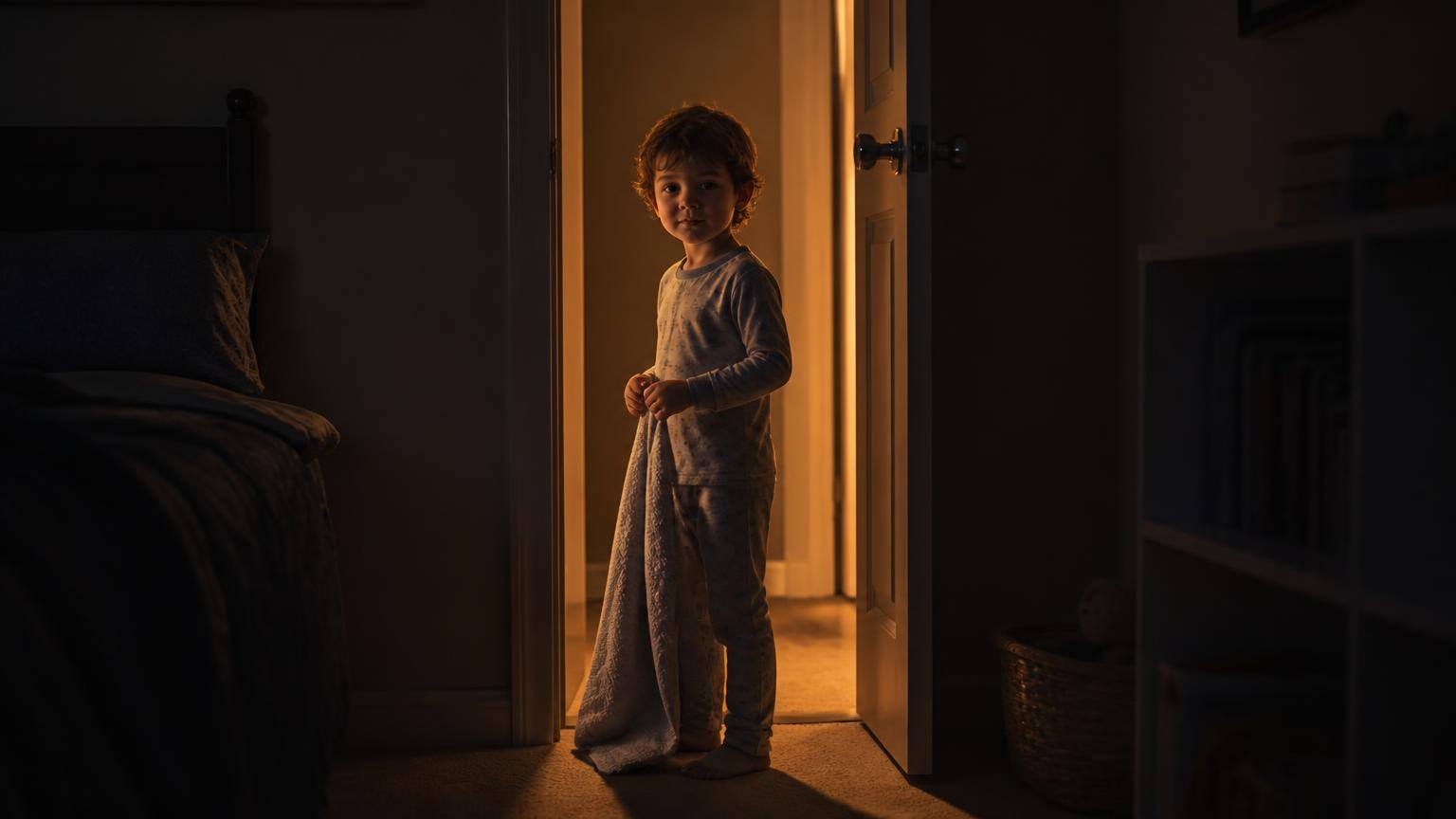
The clock says eight. The teeth are brushed. The story is read. And yet your child is suddenly thirsty, suddenly scared, suddenly furious. You have tried sticker charts, consequences, later bedtimes, and the famous 'one more drink'. Nothing sticks. That is because the problem is usually not the routine. It is the feeling that has not yet been laid down.
Sleep battles are among the most exhausting parts of parenting because they happen at the end of the day, when your own reserves are empty. But the resistance itself is information. It is the body saying, 'I do not feel safe enough to let go yet.'
What bedtime resistance is trying to say
Children are not naturally opposed to sleep. What they resist is the transition from awake to asleep, from company to aloneness, from the day — with all its stimulation and emotion — to the quiet where those feelings surface. When a child stalls, asks, refuses, or erupts, they are often communicating that they are not ready for that transition.
The emotional arc of the evening
Most children spend the day managing expectations: school, friends, transitions, rules, their own impulses. By evening, they are depleted. Bedtime is the first moment they are still enough to notice what the day cost them. This is why the meltdown often appears 'out of nowhere' — it was waiting for the first pause.
Building a bedtime that feels safe
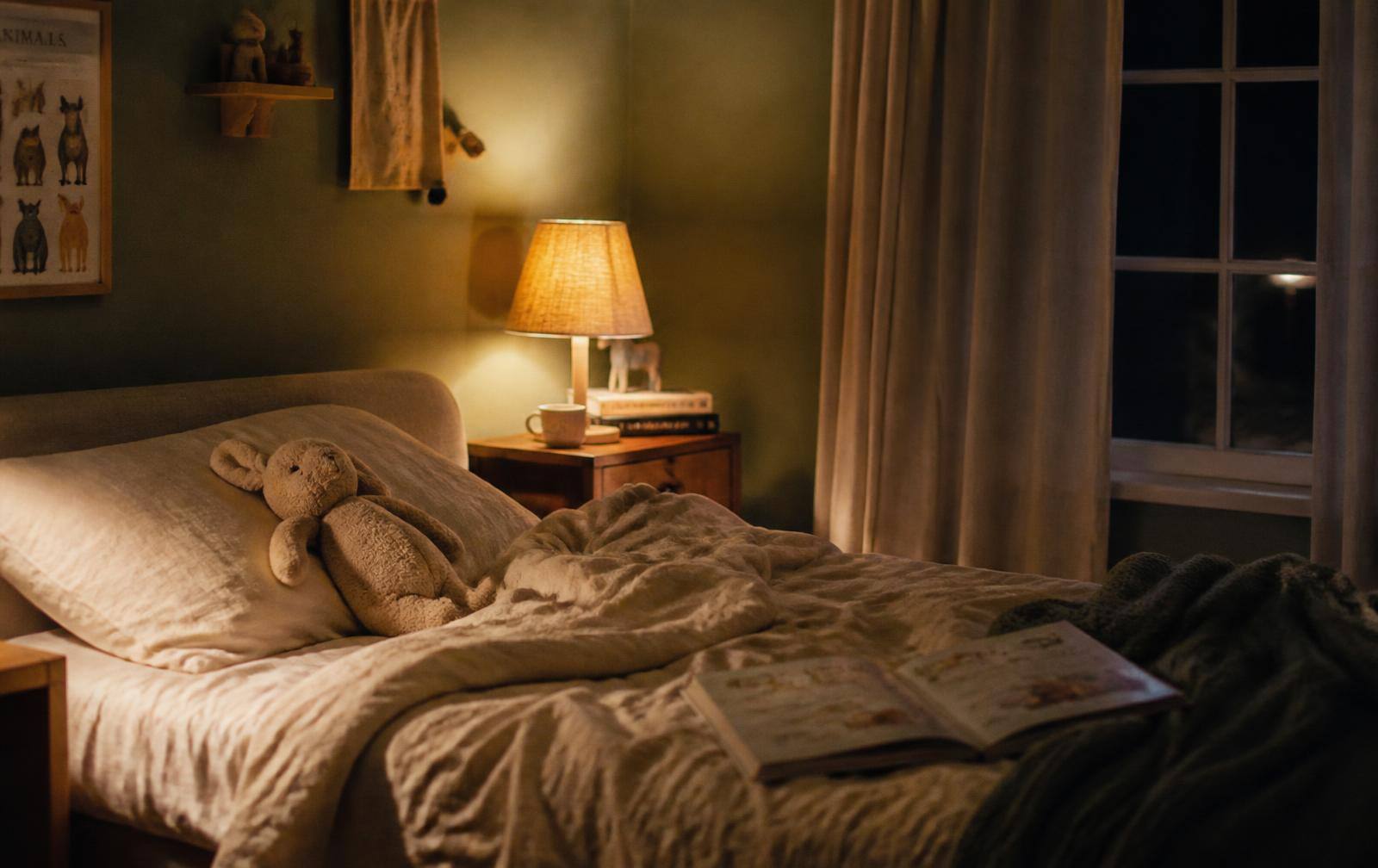
A safe bedtime is not just a set of rules. It is a sequence of signals that tell the nervous system: you are not alone, the world is predictable, and it is okay to let go. Warmth, low light, familiar scent, and a parent who is not rushing all contribute.
- 01Start the wind-down earlier
The transition begins thirty minutes before the routine. Lower lights, reduce stimulation, move slower.
- 02Offer a brief emotional download
Two questions: 'What drained you today?' and 'What are you looking forward to tomorrow?' Keep it under three minutes.
- 03Make the bed a landing pad, not a battlefield
Avoid negotiations and consequences in bed. If a limit is needed, state it calmly outside the bedroom, then return with warmth.
- 04Use presence over persuasion
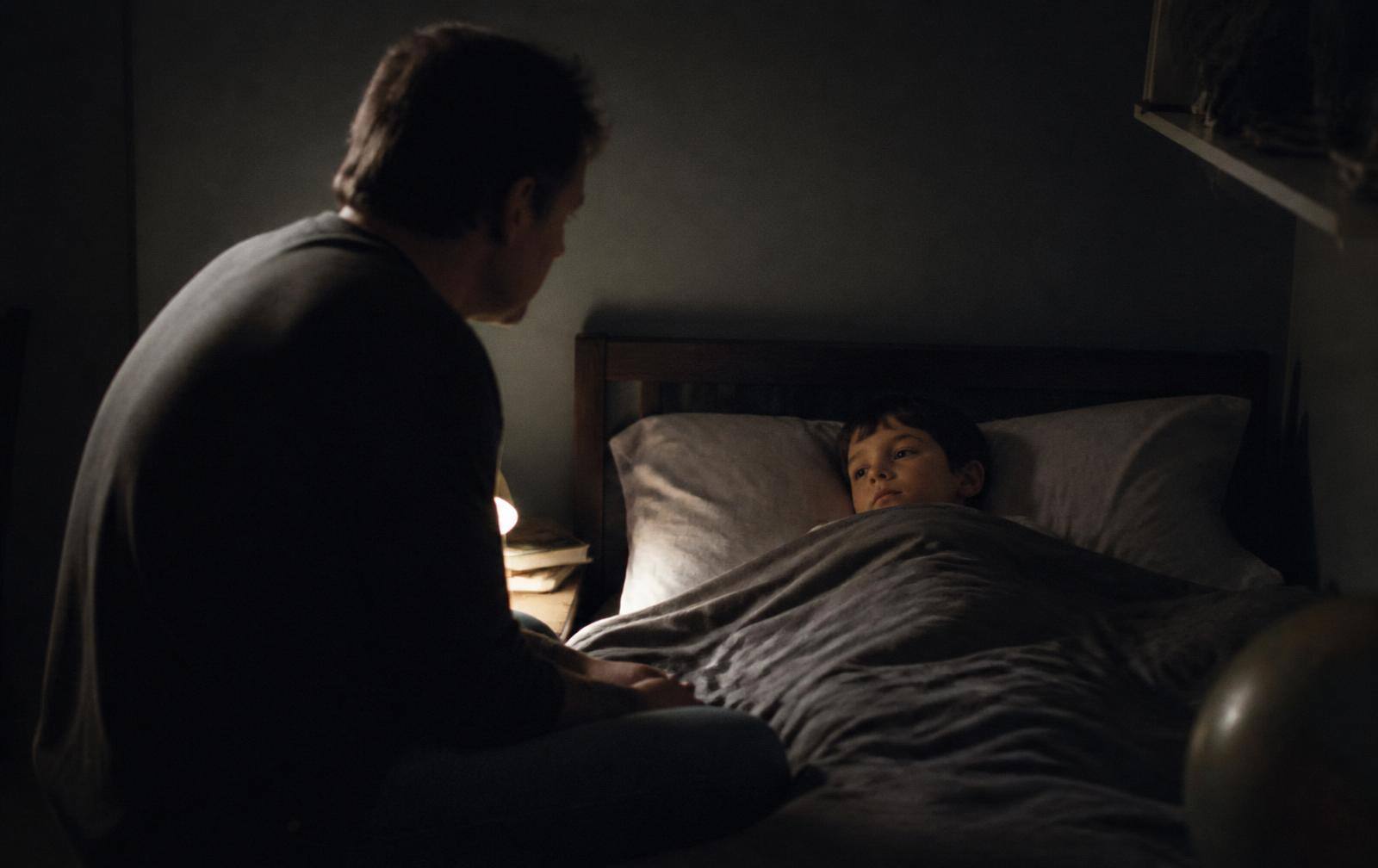
Sitting quietly nearby, breathing slowly, is often more effective than explaining why sleep is important.
When bedtime anxiety is the real issue
Some children are genuinely afraid of sleep: fear of bad dreams, fear of not waking up, fear of what happens in the dark, or fear of being alone with worried thoughts. These fears deserve to be taken seriously. They are not excuses. Dismissing them adds shame to the existing fear.
Your state is part of their sleep environment
Children are exquisitely sensitive to the emotional weather around them. If you are tense, urgent, or counting down the minutes until freedom, they feel it. Your calm presence is a sleep cue. That does not mean you must be serene. It means you aim to be present, slow, and unhurried — even when you are exhausted.
Bedtime resistance is rarely about sleep. It is about separation, and the dark, and everything the day did not say.
Sian Trombley, Canadian Certified Counsellor
What you can try this week
Create a 'download' ritual
Ten minutes before the routine begins, ask: 'What felt hard today? What are you glad about?' Keep it brief. The goal is discharge, not a deep conversation.
Make the room feel held
Dim light, familiar scent, a weighted blanket if appropriate, and a phrase you repeat: 'I am here. You are safe. Sleep is allowed.'
Separate the settling from the sleep
Let a child read or listen to a calm story in bed with a low light. The pressure to fall asleep often creates the resistance.
- Bedtime resistance is often a sign of unprocessed feelings, not bad behaviour.
- Sleep is a separation, and separation can feel unsafe to a child.
- The hour before bed matters more than the minute the light goes out.
- Predictability reduces the brain's need to stay alert.
- A child's meltdown at bedtime can be a release, not a manipulation.
What is my child trying to tell me through bedtime resistance?
How do I feel about bedtime? Could my tension be part of the pattern?
What would it look like to meet the feeling before enforcing the rule?
Printable resources
Recommended Thrive courses
This article is educational and is not a substitute for individual clinical advice. Comments are closed so the Journal stays a calm place to read.
Share this
Keep going
You may also like
Courses, worksheets and pathways from the same part of the library.
- JournalThe Science of Sleep: Why Bedtime Falls Apart and How to Rebuild ItSleep sits underneath everything: mood, attention, behaviour, appetite for hard things. Here is what the evidence says about why bedtime collapses, and how families rebuild it.Read
- JournalThe Light Left On: Night-Time Fears in ChildrenThe house is quiet, the day is done, and your child has become unrecognisably afraid. Nothing in the room has changed. What has changed is how much of it they can see.Read
- CollectionEmotional RegulationEverything Thrive publishes on emotional regulation — articles, courses, worksheets and research.Read
- ResearchThe Research LibraryPeer-reviewed parenting and child mental health research, translated into plain language.Read
- WorksheetEmotional Regulation PlanOne written plan for your child's biggest feelings, agreed while everyone is calmRead
- WorksheetCoping Cards — Emotional Regulation DeckA ready-to-print deck of 18 pocket-sized regulation cards for big feelingsRead