The Science of Sleep: Why Bedtime Falls Apart and How to Rebuild It
Almost every difficulty a family brings to therapy is worse on four hours' sleep. Bedtime is not a discipline issue — it is a physiological sequence, and sequences can be rebuilt.
Reviewed by Sian Trombley, CCCFounder, Thrive Family Company
13 min read
Best for parents of children who are…
- finding it hard to settle or stay asleep
- going from calm to overwhelmed very quickly
- worrying often, or asking the same question again and again

Share this
There is a version of your child that appears at 4pm on a bad week: quick to tears, deaf to instructions, unable to tolerate a brother breathing near them. It is tempting to read that child as a behaviour problem. Very often, you are looking at ninety minutes of missing sleep, four nights running.
Sleep is the substrate everything else sits on. Emotional regulation, attention, frustration tolerance, appetite for difficulty — all degrade first when sleep is short. Which is why, in clinical practice, sleep is the first thing I ask about and often the first thing we fix.
What sleep loss looks like in a child
Adults get sleepy. Children get wired. A sleep-deprived child frequently becomes more active, more impulsive and more emotionally volatile — a presentation that overlaps so heavily with ADHD and anxiety that good clinicians rule out sleep before considering either.
- Irritability disproportionate to the trigger
- Difficulty starting and sustaining tasks
- Increased physical activity late in the day
- Tearfulness in the late afternoon
- Rigid, all-or-nothing thinking
Why the order matters more than the clock
A pre-sleep routine works as a chain of cues. Each step signals the next, and the sequence itself lowers arousal. This is why an inconsistent routine at a consistent time works less well than a consistent routine at a variable time — and why families who fix the order often see improvement within a fortnight, without moving bedtime at all.
The Predictable Evening
Predictability is a nervous-system intervention, not a scheduling preference.
Bedtime resistance is often anxiety
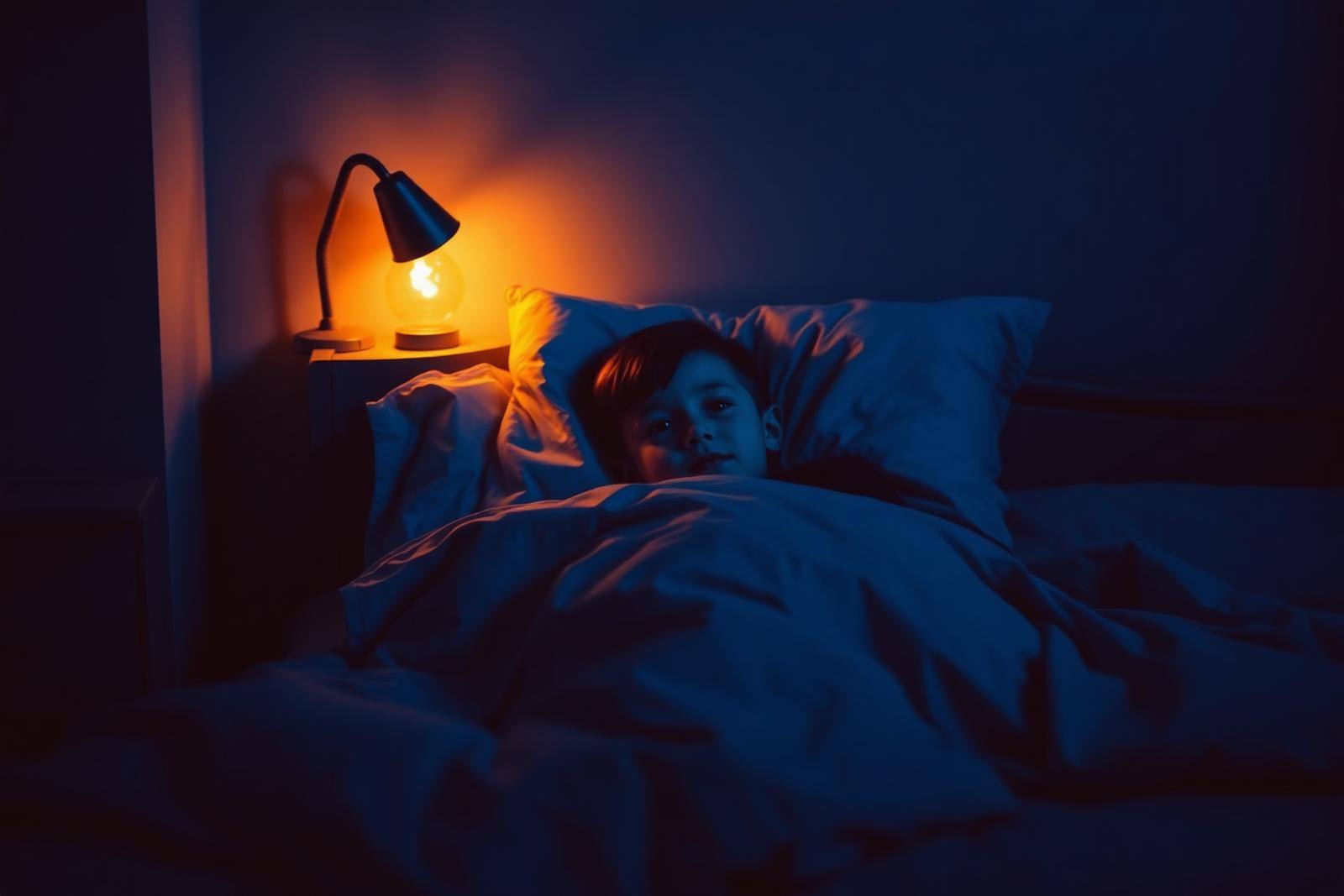
Darkness removes distraction, and thinking gets loud. Many children who 'won't go to bed' are children who cannot be alone with their own minds yet. Fighting that with consequences rarely works. Giving worry an earlier, structured slot — a ten-minute worry time at 6pm, written down and closed — reliably reduces the 9pm doorway visits.
Teenagers are not being lazy
In adolescence, the circadian rhythm genuinely shifts later — melatonin release moves back by up to two hours. A teenager who cannot sleep at ten and cannot wake at seven is describing biology, not attitude. The realistic interventions are protecting a fixed wake time, getting bright light early, keeping the last hour dull, and charging phones outside the bedroom by negotiation rather than confiscation.
Sleep is not the reward for a calm day. It is the thing that makes a calm day possible.
Sian Trombley, Canadian Certified Counsellor
What you can try this week
Fix the sequence
Choose four to six steps and run them in the same order nightly, no matter the timing.
Move the worry earlier
Give anxious thinking a slot at 6pm so it does not claim 9pm.
Dim the last hour
Lower light and lower stimulation, including bright screens and energetic conversation.
Anchor the wake time
Consistent mornings set the following night. Fix wake first, bedtime follows.
- Sleep loss in children looks like behaviour: irritability, impulsivity, inattention, emotional fragility.
- The order of the routine matters more than its length or its start time.
- Bedtime resistance is frequently anxiety, not defiance — the dark is when thinking gets loud.
- Light, timing and temperature are levers; willpower is not.
- Teenage body clocks genuinely shift later. Early starts, not laziness, create the deficit.
What does the ninety minutes before bed actually look like in your home?
Which step of the routine is negotiable, and could it stop being?
What is your own sleep like — and what would help it?
Printable resources
Recommended Thrive courses
This article is educational and is not a substitute for individual clinical advice. Comments are closed so the Journal stays a calm place to read.
Share this
Keep going
You may also like
Courses, worksheets and pathways from the same part of the library.
- ResearchThe Research LibraryPeer-reviewed parenting and child mental health research, translated into plain language.Read
- Thrive GuideThrive GuideAsk a question and get warm, evidence-informed guidance drawn from the Thrive library.Read
- Thrive Care PlanThrive Care PlanA short check-in that turns how your week actually went into one focused plan.Read
- Thrive ToolThrive ToolsPremium printable workbooks and therapeutic tool kits.Read
- CollectionThe Resource LibraryFree printable worksheets, scripts and planners for families.Read
- JournalAfraid of the Dark at NineA nine-year-old afraid of the dark isn't regressing. Their imagination has simply outpaced their ability to reason it away, and that gap needs a specific kind of help.Read