The Light Left On: Night-Time Fears in Children
Night-time fear is not a stalling tactic. It is a young brain doing exactly what it was built to do at the worst possible hour.
Reviewed by Sian Trombley, CCCFounder, Thrive Family Company
8 min read
Best for parents of children who are…
- finding it hard to settle or stay asleep
- worrying often, or asking the same question again and again
- having big feelings that arrive faster than words

Share this
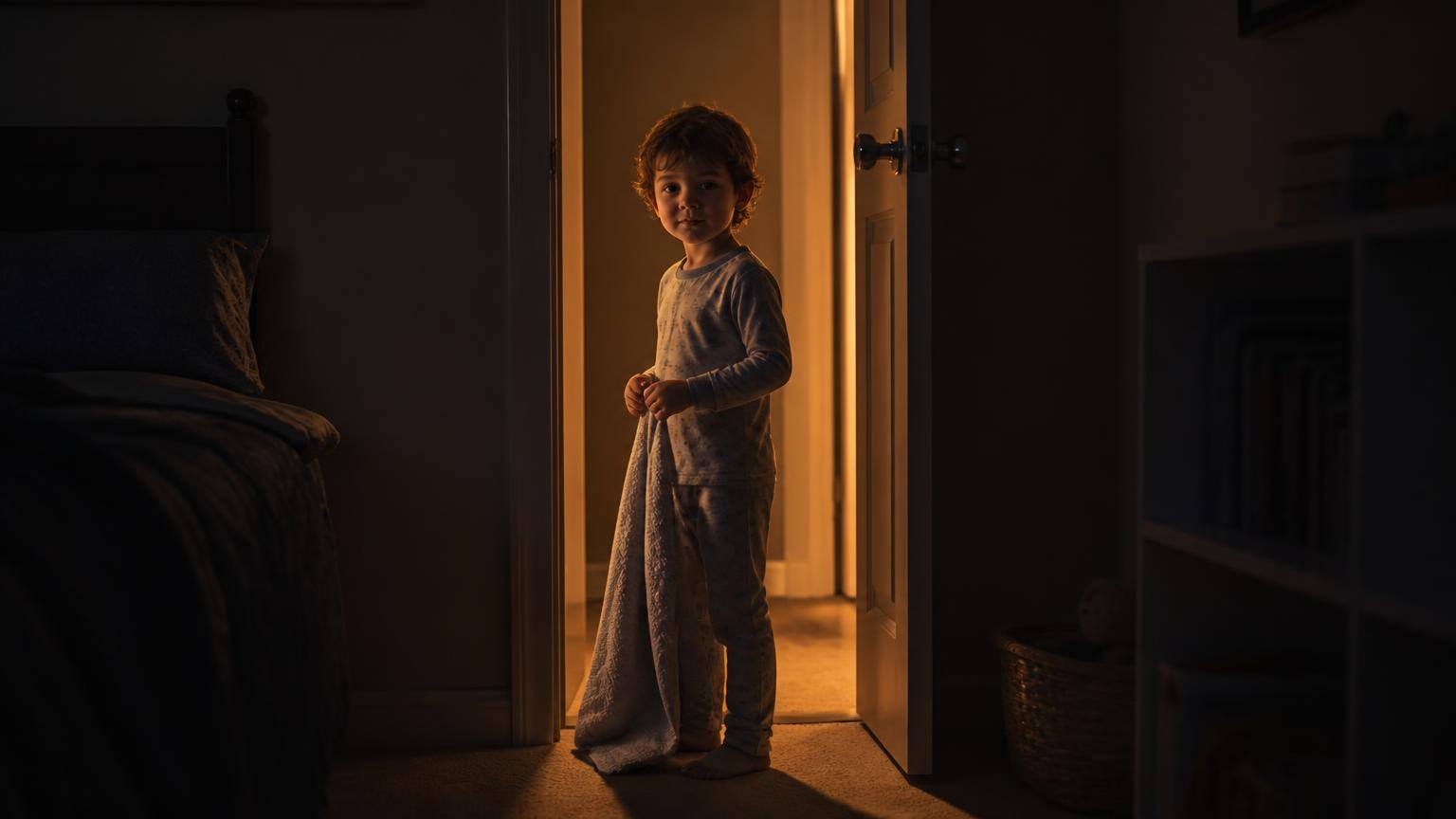
The day was fine. Dinner was fine. Then the lights go off and a competent, funny, brave child becomes someone who cannot be left alone for ninety seconds. Nothing in the room has changed. What has changed is how much of it they can see.
Fear of the dark is not a character flaw and it is not manipulation. It is a predictable output of a developing brain. Vision is a child's primary safety-checking system. Remove it and the brain does not simply switch off — it substitutes imagination for evidence. Imagination, at 8pm, in a quiet house, is not a neutral narrator.
Why night is the worst hour for a worried mind
Three things stack up after lights-out. There is no distraction, so the thoughts have the floor. There is no adult nearby narrating reality. And the child is tired, which lowers the brain's capacity to talk itself down. A worry that would have taken thirty seconds to dismiss at lunchtime takes forty minutes at eleven at night.
The monster-check problem
Almost every parent has knelt down and shone a torch under the bed. It is a loving act and it works for one night. The difficulty is what it teaches: the room required checking, an adult is the one qualified to check it, and safety is something granted from outside rather than something the child can conclude for themselves.
Build the staircase, then walk down it slowly
If you currently lie beside your child until they sleep, going cold turkey usually produces three catastrophic nights, a frightened child, and a parent back on the floor by Thursday. Graded steps work far better because they never take away more support than the child can absorb in one move.
- 01Name where you are now
In the bed, on the bed, chair by the bed — whatever it is, say it out loud without judgement. This is the bottom step.
- 02Agree the destination
'You fall asleep on your own, and I check on you twice.' Written on paper, on the wall, in your child's handwriting if possible.
- 03Move one step every three settled nights
Chair by the bed, chair halfway, chair in the doorway, hallway with door open, timed check-ins. Never skip two steps in one night.
- 04Hold the step when it wobbles
A hard night means repeat the step, not retreat two. Retreating teaches that distress reverses the plan.
What to change in the room
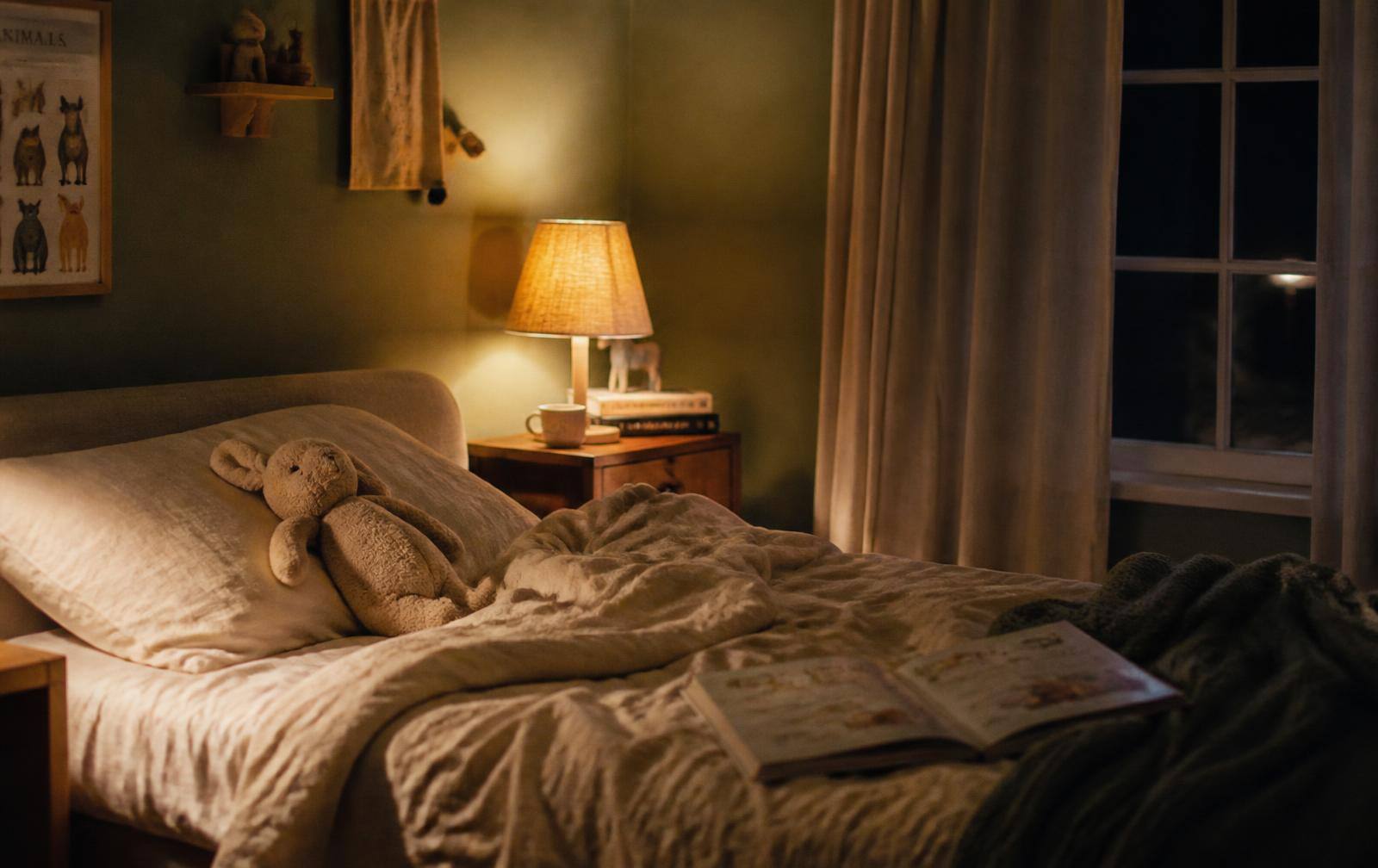
- One warm light that stays on all night — inconsistency is worse than brightness.
- Doors in a fixed position. Half-open, every night, the same half.
- Screens out of the bedroom, especially anything watched in the hour before bed.
- A soft, repetitive sound if silence is what magnifies the noises outside.
- Nothing new introduced at bedtime — new toys, new bedding, new anything can wait for daylight.
When it is worth asking for more help
Occasional night fear is ordinary. Persistent, escalating fear that keeps a child from sleeping most nights, follows a frightening event, comes with panic symptoms, or spills into daytime refusal to be alone anywhere deserves proper assessment. So does a parent who has not slept properly in months — exhaustion is a clinical fact, not a personal failing.
For most families the arc is slower than they want and shorter than they fear. Six weeks of dull, identical, gently shrinking bedtimes, and the light on the landing is the only support left.
A landing light is not a habit to break. It is a small piece of evidence that somebody is still awake for them.
Sian Trombley, Canadian Certified Counsellor
What you can try this week
Build a 'staircase' together
Write five steps from where you sleep now to where you want to be — chair by the bed, chair at the door, doorway, hallway, check-ins. Move one step every three good nights.
Give the light a job
One warm, low, unchanging light source. Not overhead, not blue, not on a timer that clicks off mid-sleep and startles them awake at 1am.
Do the worry work at teatime
Five minutes at the table to name the scary thought and answer it once. Bedtime is for winding down, not for cross-examining a fear.
- Darkness removes visual information, and an anxious brain fills the gap with threat.
- Fear of the dark peaks between four and eight and is developmentally ordinary.
- Searching the room for monsters teaches the child that the room needed searching.
- Independence is built in small, pre-agreed steps, not overnight.
- A dull, identical bedtime does more than a comforting speech.
What am I doing at bedtime now that I could not sustain for another six months?
Does my child know exactly what tonight will look like before it starts?
Am I checking under the bed to reassure them, or to reassure me?
Printable resources
Recommended Thrive courses
This article is educational and is not a substitute for individual clinical advice. Comments are closed so the Journal stays a calm place to read.
Share this
Keep going
You may also like
Courses, worksheets and pathways from the same part of the library.
- JournalAfraid of the Dark at NineA nine-year-old afraid of the dark isn't regressing. Their imagination has simply outpaced their ability to reason it away, and that gap needs a specific kind of help.Read
- JournalThe Science of Sleep: Why Bedtime Falls Apart and How to Rebuild ItSleep sits underneath everything: mood, attention, behaviour, appetite for hard things. Here is what the evidence says about why bedtime collapses, and how families rebuild it.Read
- ResearchThe Research LibraryPeer-reviewed parenting and child mental health research, translated into plain language.Read
- Thrive GuideThrive GuideAsk a question and get warm, evidence-informed guidance drawn from the Thrive library.Read
- Thrive Care PlanThrive Care PlanA short check-in that turns how your week actually went into one focused plan.Read
- Thrive ToolThrive ToolsPremium printable workbooks and therapeutic tool kits.Read