Afraid of the Dark at Nine
Why night fears in older children are different from toddler fears, and what actually helps.
Reviewed by Sian Trombley, CCCFounder, Thrive Family Company
8 min read
Best for parents of children who are…
- worrying often, or asking the same question again and again
- finding it hard to settle or stay asleep
- going from calm to overwhelmed very quickly
- being hard on themselves

Share this
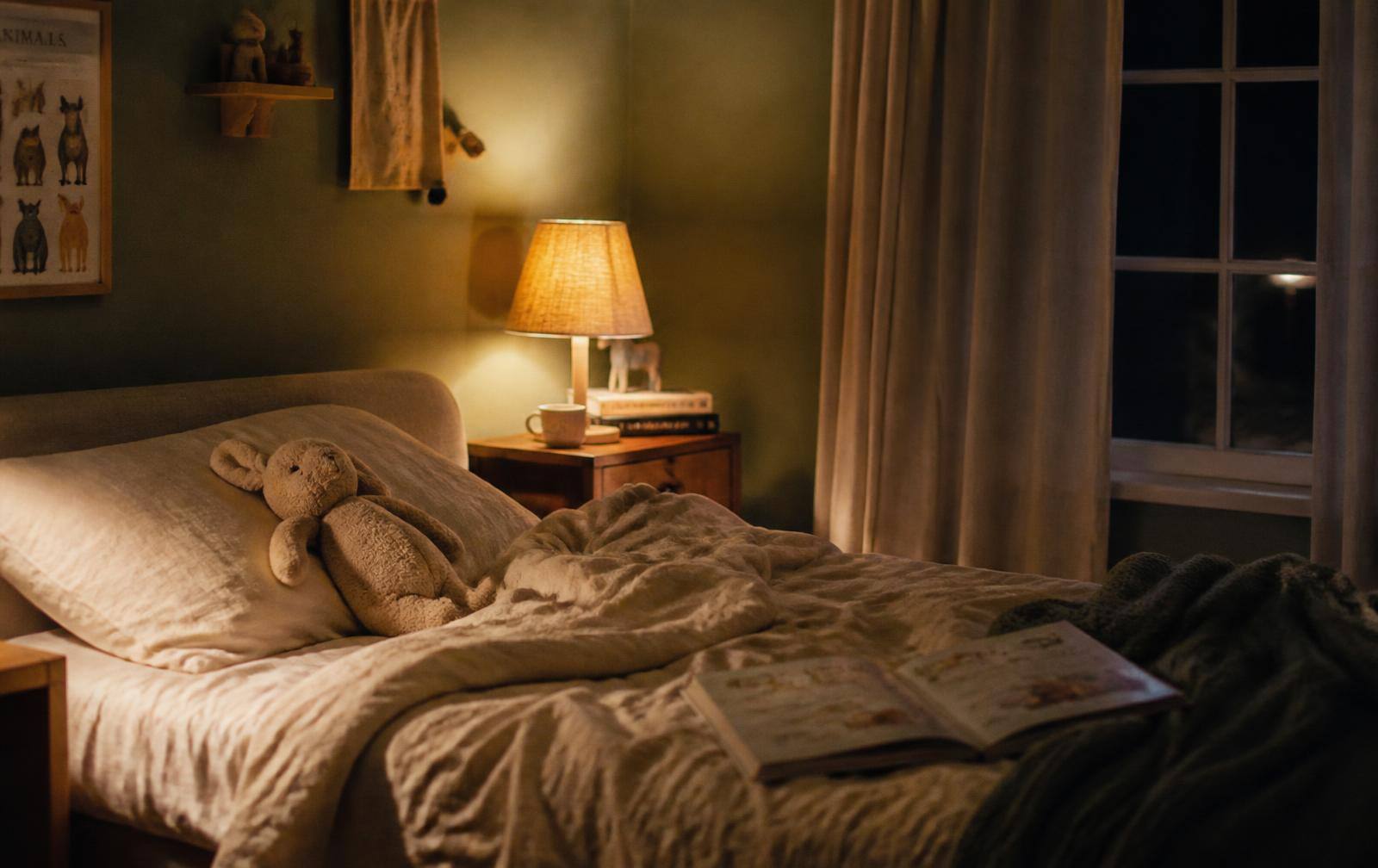
Your nine-year-old was sleeping through the night by five. Now the landing light has to stay on, the door has to stay open exactly six inches, and someone has to check under the bed before goodnight. It feels like a step backwards. It usually isn't.
Night fears in middle childhood are extremely common and are driven by something quite specific: at this age, imagination becomes vivid and detailed well before the brain's reasoning systems can reliably talk it down in the dark, when visual information is scarce and the mind fills the gaps. It is a mismatch of developing skills, not a sign of fragility.
What genuinely helps
- Ask what specifically they picture, rather than treating the fear as vague and unanswerable
- Build a graded ladder of independence rather than expecting a sudden return to sleeping alone
- Give them a concrete tool — torch, breathing count, a phrase to use — rather than only reassurance
- Keep bedtime routines calm and predictable so the fear isn't compounded by rush or conflict
- Avoid frightening media in the hour before bed, even content that seems mild
- Celebrate small wins specifically, so progress is visible to your child
Common parental mistakes
A graded plan for the next few weeks
- 01Talk it through in daylight
Ask what they picture happening, without correcting or minimising the answer.
- 02Agree a starting point together
Door open, hallway light on, parent nearby but not in the room, as the first small step.
- 03Add a coping tool
A torch under the pillow, a counted breathing pattern, or a short phrase they say to themselves.
- 04Extend the distance gradually
Every few nights, increase the physical distance or reduce the check-ins slightly.
- 05Track and celebrate
A simple chart marking each independent night builds visible momentum and pride.
Fear of the dark at nine is rarely about the dark. It is about being the only one awake with your own thoughts.
Sian Trombley, Canadian Certified Counsellor
What you can try this week
Name it without minimising
'Your imagination is really good at night, and that can make things feel more real than they are' validates without dismissing.
Build a graded ladder
Move from door open and parent nearby, to door open and parent downstairs, to door closed with a check-in — over several weeks, not one night.
Give them a tool, not just comfort
A torch, a specific breathing count, or a 'worry postponement' phrase gives your child something to do rather than something to be rescued from.
- Night fears in middle childhood stem from vivid imagination outpacing reasoning, not regression.
- Dismissing the fear as babyish tends to increase secrecy and distress.
- Graded exposure, done in small steps, is more effective than sudden independence demands.
- Excessive reassurance-seeking rituals can prolong rather than resolve the fear.
- A child's own coping plan, built with them, works better than one imposed on them.
Is my response building my child's confidence, or quietly reinforcing that they can't manage this alone?
What specifically are they imagining, and have I actually asked?
Have we agreed a plan together, or am I deciding the steps for them?
Printable resources
Recommended Thrive courses
This article is educational and is not a substitute for individual clinical advice. Comments are closed so the Journal stays a calm place to read.
Share this
Keep going
You may also like
Courses, worksheets and pathways from the same part of the library.
- ResearchThe Research LibraryPeer-reviewed parenting and child mental health research, translated into plain language.Read
- Thrive GuideThrive GuideAsk a question and get warm, evidence-informed guidance drawn from the Thrive library.Read
- Thrive Care PlanThrive Care PlanA short check-in that turns how your week actually went into one focused plan.Read
- Thrive ToolThrive ToolsPremium printable workbooks and therapeutic tool kits.Read
- CollectionThe Resource LibraryFree printable worksheets, scripts and planners for families.Read
- JournalThe Science of Sleep: Why Bedtime Falls Apart and How to Rebuild ItSleep sits underneath everything: mood, attention, behaviour, appetite for hard things. Here is what the evidence says about why bedtime collapses, and how families rebuild it.Read