Why Anxious Children Sleep Differently
Bedtime is the first moment all day with no distraction, no noise and nothing to do but think. For an anxious child, that is not rest. That is exposure.
Reviewed by Sian Trombley, CCCFounder, Thrive Family Company
9 min read
Best for parents of children who are…
- finding it hard to settle or stay asleep
- worrying often, or asking the same question again and again
- going from calm to overwhelmed very quickly

Share this
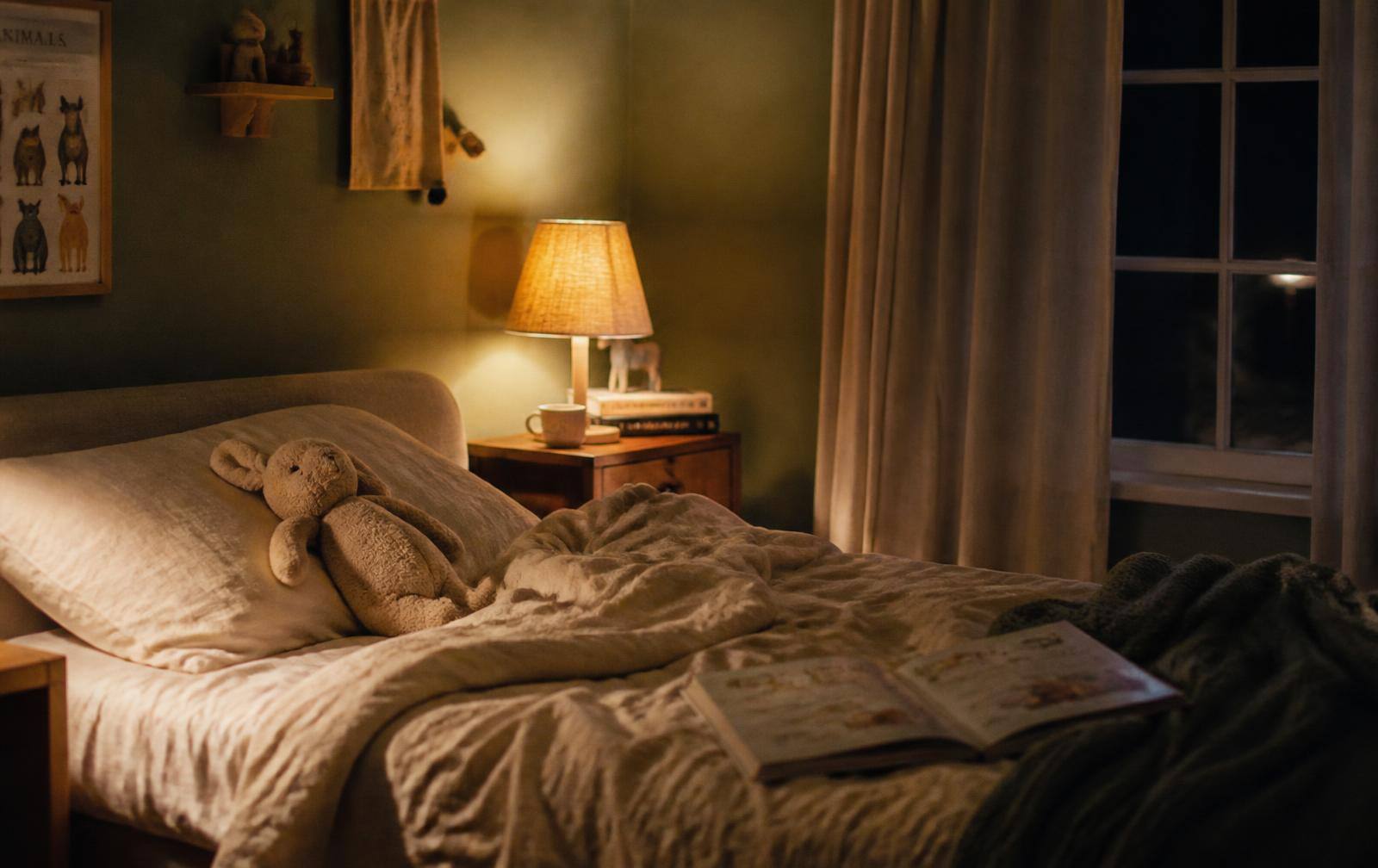
The lamp is still on. The book stopped being read forty minutes ago. Downstairs someone is waiting to hear the third request for water, which is not really about water and never was.
Anxious children do not sleep badly because they are difficult. They sleep badly because sleep requires the exact thing anxiety refuses to permit: letting go of vigilance in the dark, alone.
What is different about the anxious sleeper
- Longer to fall asleep, with an active, narrating mind rather than a restless body.
- Repeated checking — questions, requests, appearing on the landing.
- More frequent waking, and full alertness rather than drowsy resettling.
- A dread of bedtime that begins hours earlier, sometimes at dinner.
- Physical complaints at night: stomach aches, racing heart, needing the toilet.
Rebuilding the night
- 01Fix the wake time first
Same time daily, weekends included. Sleep pressure is built by consistent mornings, not by earlier bedtimes.
- 02Create a genuine wind-down
Forty minutes, dim, no screens, same order every night. Predictability is itself sedating for an anxious system.
- 03Schedule worry earlier
A written worry slot at teatime moves the processing out of the dark and out of the bed.
- 04Answer once
One honest answer, then a warm holding line. Repeated answering is treatment for you, not for them.
- 05Fade your presence gradually
Move your chair a metre further each few nights. Sudden withdrawal spikes anxiety; planned fading builds competence.
“You cannot argue a child into sleep. You can only make the dark less lonely and the worry less urgent.”
Sian Trombley
Words for the doorway
When to seek help
Ask for support if difficulties persist beyond four to six weeks of a consistent routine, if daytime functioning is suffering, if there is early-morning waking alongside low mood, or if night-time distress includes panic symptoms. Both childhood anxiety and paediatric insomnia respond well to structured treatment.
Anxiety does not wait for a convenient hour. It waits for the lights to go out.
Sian Trombley, Canadian Certified Counsellor
What you can try this week
Move worry to 5pm
Fifteen minutes, at the table, with a pen. Worries written in daylight are far smaller than worries thought about in the dark.
Answer once, then hold
"We've answered that one. I know it's uncomfortable. You can manage this." Warm, brief, unmoving. The discomfort is the treatment.
Anchor the morning, not the night
The same wake time seven days a week rebuilds sleep pressure faster than any bedtime rule and survives holidays better.
- Bedtime is when distraction ends, which is why worry arrives then.
- Reassurance relieves in the moment and strengthens the loop across weeks.
- A fixed wake time matters more than a fixed bedtime.
- Worry needs a scheduled slot earlier in the day, in daylight.
- Persistent early waking with low mood needs clinical review.
How many times a night am I answering the same question?
What does my child think will happen if they cannot sleep?
Is our evening genuinely slowing down, or just getting later?
Printable resources
Recommended Thrive courses
This article is educational and is not a substitute for individual clinical advice. Comments are closed so the Journal stays a calm place to read.
Share this
Keep going
You may also like
Courses, worksheets and pathways from the same part of the library.
- JournalWhere the Worry Goes: Nail Biting, Hair Pulling and Worry HabitsYou have asked them to stop a hundred times. They agree, sincerely, and their hand is back at their mouth within a minute. Telling is not the intervention.Read
- JournalThe Child Who Cannot Fall Asleep Without YouYou are not creating a bad habit. You are the last piece of regulation between a busy day and the dark.Read
- Learning PathwayAnxiety & WorryA guided Learning Pathway from Thrive Family Company.Read
- CollectionAnxiety & WorryEverything Thrive publishes on anxiety & worry — articles, courses, worksheets and research.Read
- Thrive Resource GuideAnxiety & WorryTherapist-reviewed books, apps, websites and tools for anxiety & worry.Read
- WorksheetAnxiety Bravery LadderA graded plan for facing one fear, one small rung at a timeRead