Article
ADHD Burnout in Children Is Real
It is not that they have stopped trying. It is that trying has become more expensive than they can currently afford.

Practical, evidence-informed support for worry, fear, avoidance and the physical side of anxiety — plus the everyday routines that make a worried child feel steadier.
Start here“When worry starts making the decisions, it rarely announces itself as anxiety. It can look like stomach aches before school, endless questions at bedtime, sudden avoidance, or a child struggling with something they managed easily just last month. The work isn’t simply to make the worry disappear. It’s to understand what’s happening underneath it—and respond with enough safety, steadiness, and support that their world begins to feel manageable again.”
A short introduction to childhood anxiety — what may be happening beneath the worry, how our responses can unintentionally reinforce it, and how courage grows through small, supported steps.
Narrated · 1 min 4 sec
One thing to understand, one way to learn it properly, one thing to try this week.
Plain-language summaries of the studies behind the guidance — what was found, how strongly, and what it does and doesn't mean at home.
The books, apps, podcasts and organisations we actually recommend to families living with anxiety — reviewed by a registered therapist, and narrowed down to what earns its place.

The complete foundation for understanding and responding to childhood anxiety — from the physiology of worry to the slow, steady work of building courage.
10 modules · $99 · Available now
A structured journey through anxiety & worry — built to be taken in order, or started wherever you are today.

The foundations every parent needs first.
Compassionate steps for goodbyes that stick.

A gentle plan to return to the classroom.
Support the shy or anxious social learner.

For parents of children with obsessive worry.

Small courageous steps, one rung at a time.
Six Focused Course Bundle — every focused course in Anxiety & Worry, $199.
Complete Pathway — Foundations plus every course in Anxiety & Worry, $249.
It is not that they have stopped trying. It is that trying has become more expensive than they can currently afford.
Thirty printable cards across joy, sad, anger, fear and calm — with a regulation map, weekly notes and a fridge reminder.
This reflection examines how your child’s internal rhythms and nutritional patterns influence their capacity to manage daily stresses. We will look beyond simple nutrition to understand how the timing, sensory experience, and social environment of eating shape their nervous system.
For the child whose stomach hurts on Sunday evening, and the household that has learned to brace for it.
Plain-language summaries of the studies behind the guidance — what was found, how strongly, and what it does and doesn't mean at home.
It is not that they have stopped trying. It is that trying has become more expensive than they can currently afford.
A nine-year-old afraid of the dark isn't regressing. Their imagination has simply outpaced their ability to reason it away, and that gap needs a specific kind of help.
The books, apps, podcasts and organisations we actually recommend to families living with anxiety — reviewed by a registered therapist, and narrowed down to what earns its place.
Grief in childhood arrives in fragments: a question at bedtime, a hard week at school, a sudden fury over something small. The work is to stay reachable.
One is about a goal. One is about capacity. One is a nervous system going offline. Reading them correctly is the difference between a hard ten minutes and a hard evening.
The letter arrives, and three weeks of dread begin. By the day of the appointment the fear has had more practice than the child has.
It is not oversensitivity. It is a pain response to social threat — and telling a child to toughen up adds to the injury it was meant to prevent.
Perfectionism is not high standards. It is the fear of what a mistake will prove about you.
A child with emetophobia isn't being dramatic about a stomach bug. They are managing a specific, treatable phobia that has taken over daily decisions.
She is polite at school and dysregulated at home. That contrast is not inconsistency — it is often the clearest signal there is.
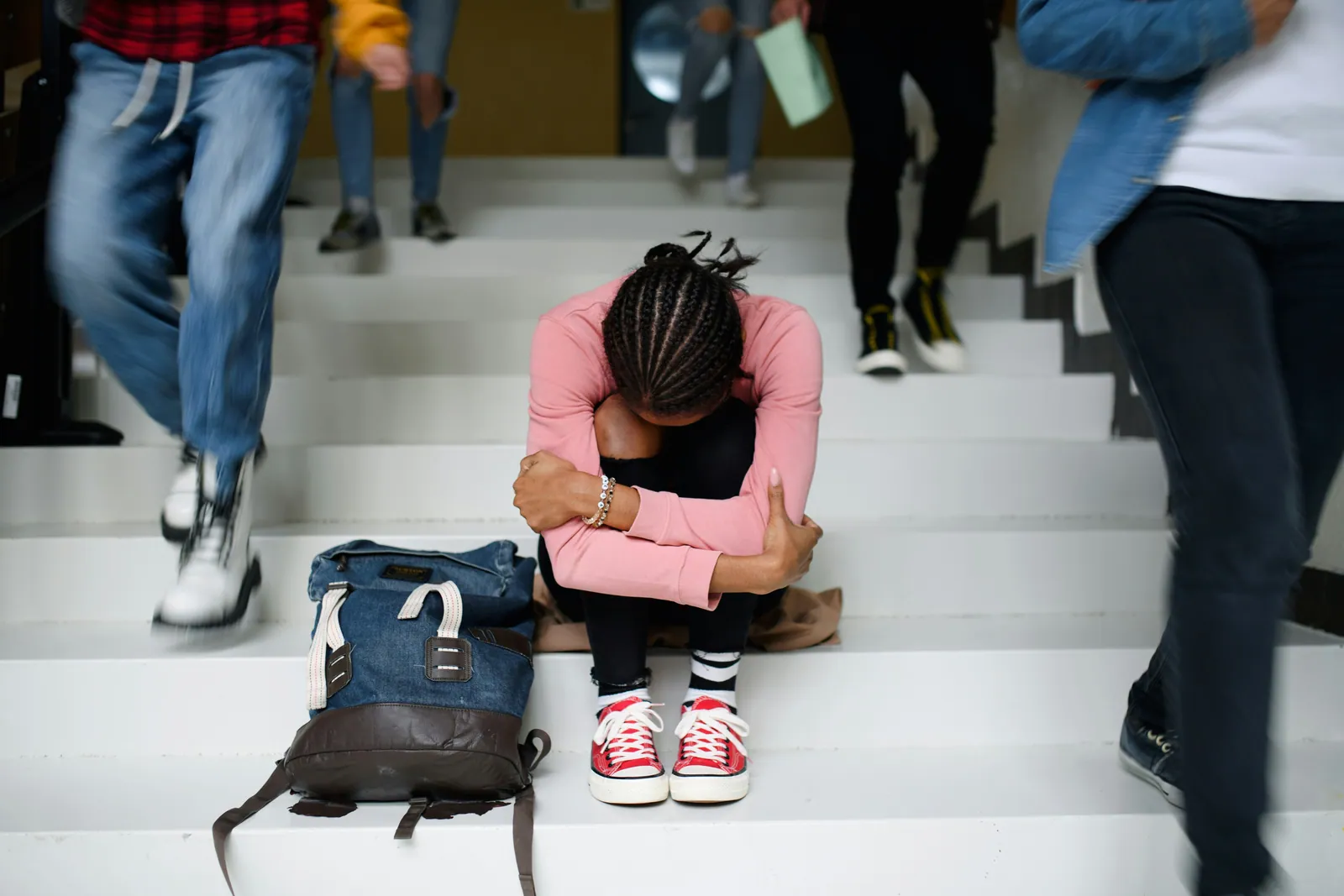
They know the material. At nine o'clock they are crying on the stairs saying they know nothing. Both things are true at once.
Revision fixes a knowledge problem. Test anxiety is a physiology problem, and more revision usually makes it worse.
Nothing is going wrong. The grades are excellent, the teachers are delighted, and your child cannot start an essay without crying and cannot stop once they have.
When the nervous system is overloaded, language fails. Sensory breaks speak directly to the body, helping children reset before they reach meltdown.
They never get detentions. They never complain to teachers. But the moment the front door closes behind them, their shoulders collapse and the silent exhaustion spills out.
A child who cannot bear an imperfect letter is not being fussy. They are managing fear with control, and the page is where you can see it happening.
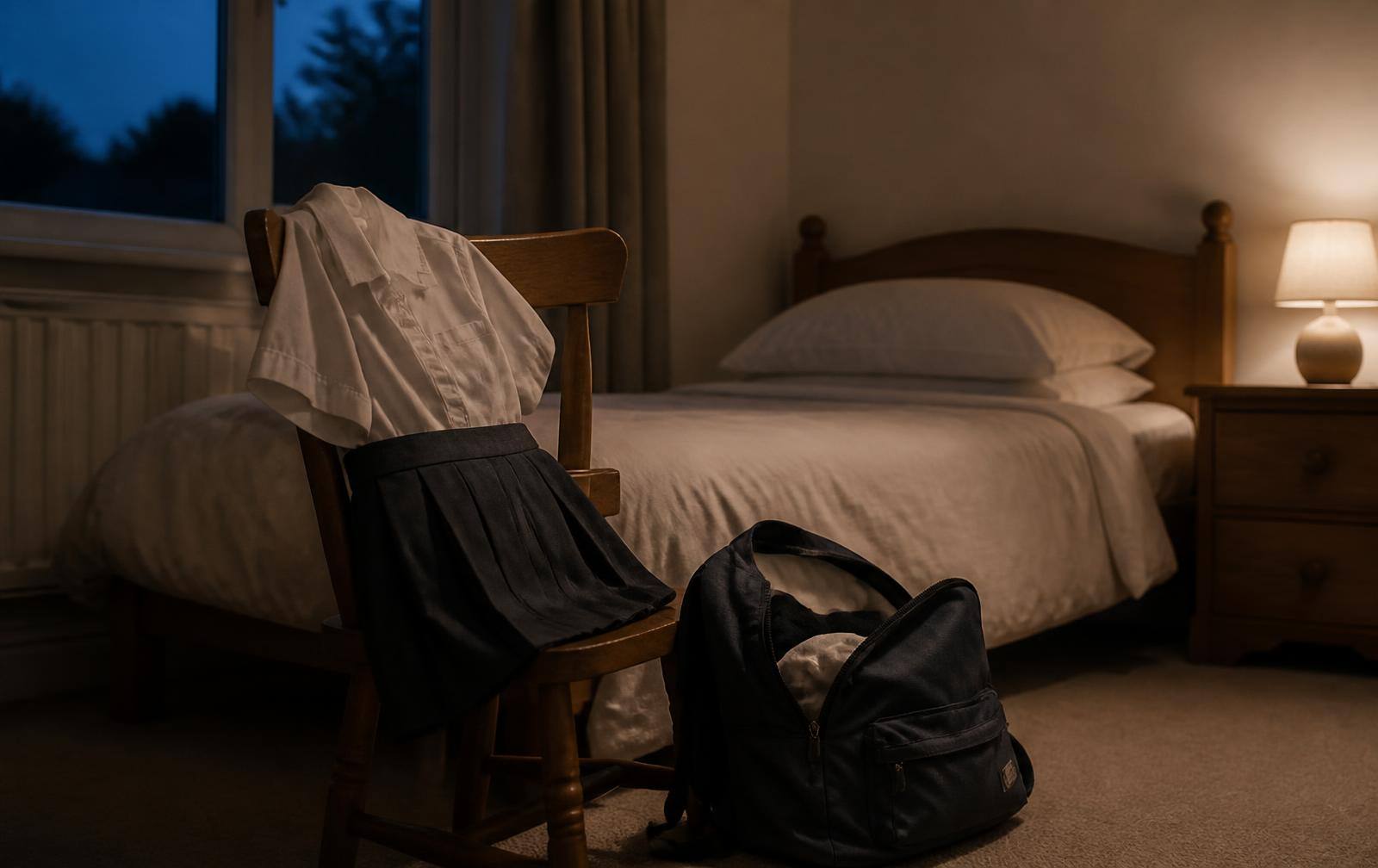
By six o'clock the mood has changed. The uniform is out, the bag is half-packed, and something in your child has gone quiet. This is not the school day. It is the imagining of it.
Mornings, homework, transitions, bedtime — the ordinary hours where this work is really done.
This reflection provides a quiet space to consider the invisible pressures your child carries from classroom to home. It helps you identify where their resistance meets your support and where the environment might be asking too much.
Thrive Guide can help you find the courses, tools and resources that fit what your family is navigating right now.