The Quiet Worrier Nobody Notices
Not all anxious children ask questions or seek reassurance. Some go very quiet, over-prepare, and hold their breath until they get home.
Reviewed by Sian Trombley, CCCFounder, Thrive Family Company
8 min read
Best for parents of children who are…
- worrying often, or asking the same question again and again
- going from calm to overwhelmed very quickly
- needing extra emotional support at the moment

Share this
We are trained to look for anxiety in loud places: tantrums at the school gate, repeated reassurance questions at bedtime, or panic attacks before tests. But there is a large group of children whose anxiety makes no noise at all.
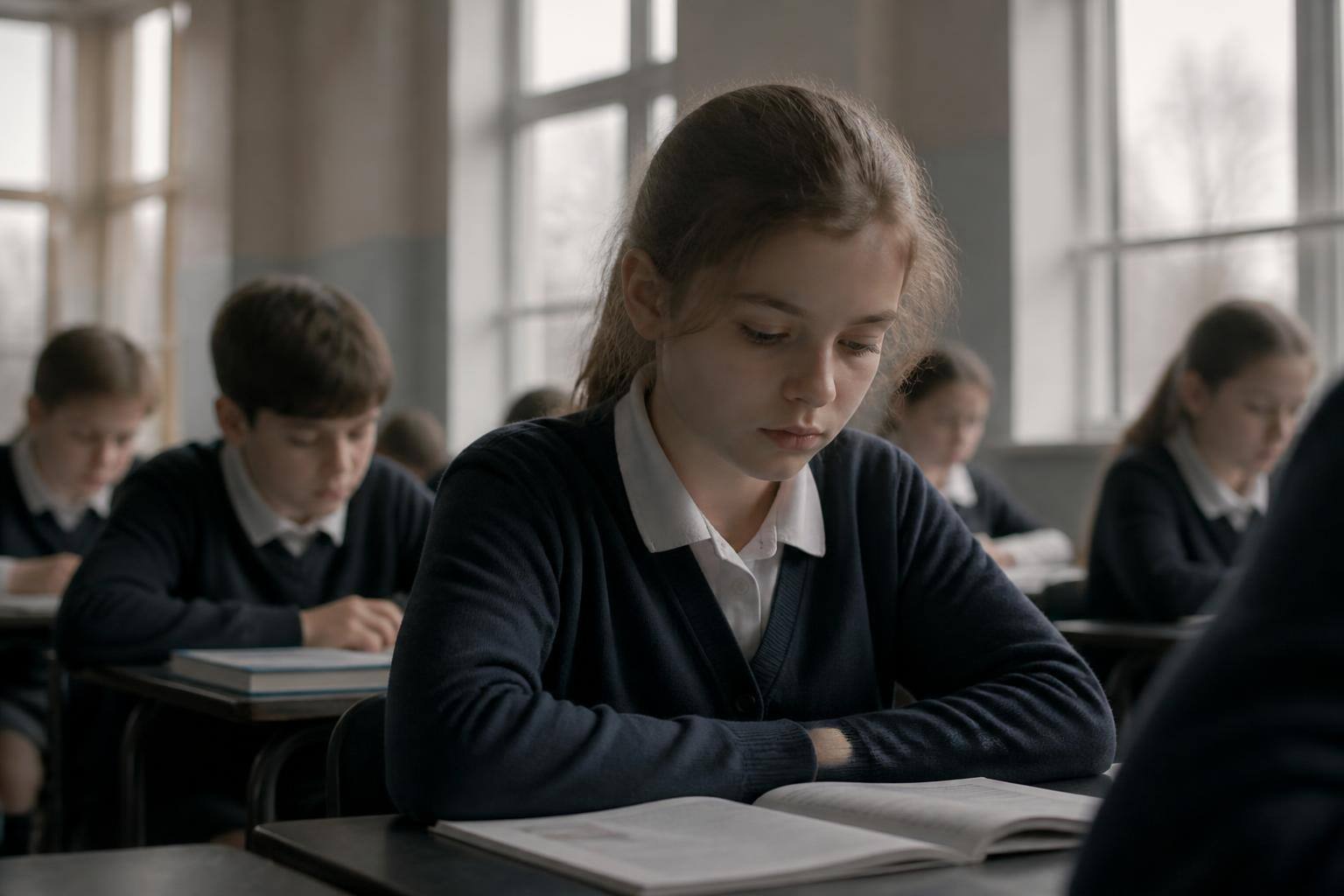
The quiet worrier is punctual, polite, and follows instructions to the letter. Yet inside, their nervous system is running a marathon of anticipation, checking rules, memorizing expectations, and terrified of making a mistake.
How to spot internalized anxiety
- Somatic complaints: Sunday evening stomach aches or mysterious morning headaches with no medical cause.
- Over-preparation: Packing school bags hours early or obsessively checking schedules.
- People-pleasing: Extreme distress if an adult raises their voice, even if directed at someone else.
- After-school collapse: Melting down in tears or irritability the moment they return to safety at home.
Opening the door without pressure
Practical ways to help at home
- 01Honor their communication style
Never force a quiet child to perform emotion on demand. Offer writing, drawing, or shared quiet activities.
- 02Teach somatic vocabulary
Help them connect body sensations to emotions so they can recognize when their worry meter is rising.
- 03Advocate gently with teachers
Let teachers know your child is sensitive to classroom atmosphere so they can offer quiet check-ins.
- 04Celebrate self-advocacy
When your child asks for help or sets a boundary, praise their bravery explicitly.
The child who worries quietly is not managing better. They are managing alone.
Sian Trombley, Canadian Certified Counsellor
What you can try this week
Use side-by-side conversations
Avoid eye-contact-heavy interrogation. Try asking curious questions while driving, folding laundry, or walking the dog.
Normalize silent body signals
Teach your child how anxiety feels physically: 'Sometimes when my tummy feels tight, my body is telling me it's working hard to be brave.'
Create a worry drop-box
Put a small notebook or jar in their room where they can write or draw a worry without having to say it aloud first.
- Quiet, cooperative behavior at school can sometimes mask chronic internal hypervigilance.
- Internalized anxiety frequently shows up as somatic complaints: stomach aches, headaches, or muscle tension.
- Direct questioning ('What are you anxious about?') often causes a quiet worrier to freeze or deny the feeling.
- Parallel conversations (in the car, while drawing, or walking) reduce interpersonal pressure and allow children to open up.
- Teaching children that 'brave includes asking for help' prevents isolation.
Do I assume my child is calm simply because they are quiet and compliant?
What somatic complaints has my child mentioned over the past month?
How can I celebrate my child's voice when they share something uncomfortable?
Printable resources
Recommended Thrive courses
This article is educational and is not a substitute for individual clinical advice. Comments are closed so the Journal stays a calm place to read.
Share this
Keep going
You may also like
Courses, worksheets and pathways from the same part of the library.
- JournalThe Rituals Nobody Talks About: OCD in ChildrenChecking the light switch. Redoing the goodnight. Asking the same question in the same words. Compulsions are not habits — they are attempts to stop something terrible.Read
- Learning PathwayAnxiety & WorryA guided Learning Pathway from Thrive Family Company.Read
- JournalWhen Anxiety Shows Up as AngerAnger is not the opposite of anxiety. It is often its loudest translation.Read
- CollectionAnxiety & WorryEverything Thrive publishes on anxiety & worry — articles, courses, worksheets and research.Read
- Thrive Resource GuideAnxiety & WorryTherapist-reviewed books, apps, websites and tools for anxiety & worry.Read
- WorksheetAnxiety Bravery LadderA graded plan for facing one fear, one small rung at a timeRead