The Child Who Holds It Together All Day and Falls Apart at 3:30
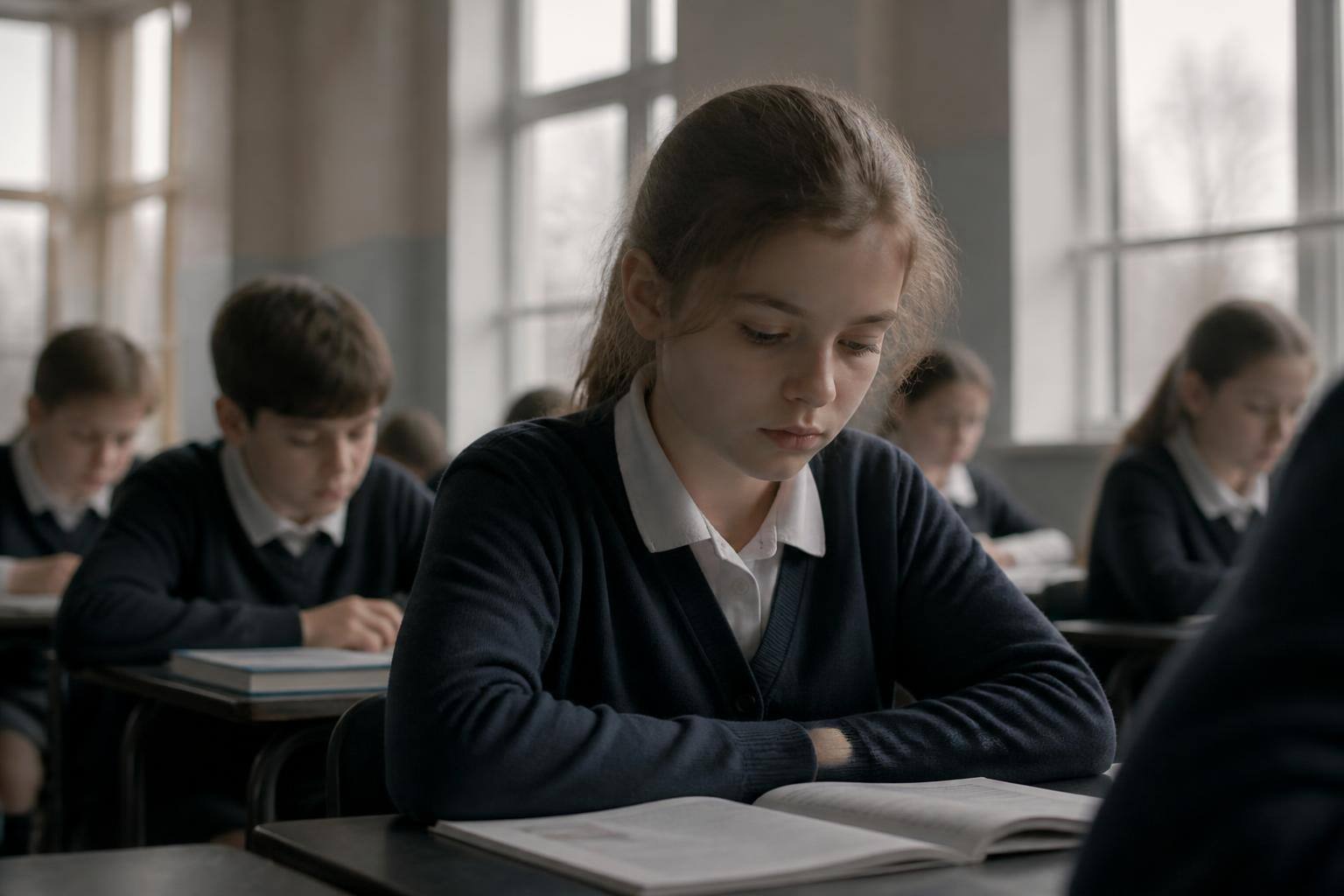
Teachers describe a model student. You open the car door and get a stranger. This is not bad behaviour — it is the bill arriving for six hours of self-control.
Reviewed by Sian Trombley, CCCFounder, Thrive Family Company
9 min read
Best for parents of children who are…
- going from calm to overwhelmed very quickly
- finding school days hard to get through
- having big feelings that arrive faster than words

Share this
At 3:29 the classroom door opens and a composed, cooperative child walks out. By 3:34 they are furious about the wrong snack, the wrong seat, the wrong tone in your voice — and you are standing in a car park wondering what you did wrong.
Nothing. You are watching one of the most misread phenomena in family life: a child who has spent six hours regulating themselves for other people, arriving at the one place where they no longer have to.
What is actually happening
- 01School is regulation work
Sitting still, waiting turns, ignoring noise, reading the room, managing friendships, tolerating being corrected. Every one of those is effortful control, and children do them continuously.
- 02Capacity is finite
Effortful control draws on developing executive systems. Sustained use depletes what is available for the next demand — and the child cannot feel this happening.
- 03Safety releases the brake
The moment your child sees you, the performance requirement ends. The nervous system does not ease off gently; it drops.
- 04The first demand becomes the trigger
"How was your day?" is not the cause. It is simply the first request made to a system with nothing left to give.
Why the usual responses backfire
The ten-minute landing
This is the single highest-yield change most families can make, and it costs nothing. For the first ten minutes after school, remove every demand you can.
- 01Greet warmly, briefly, and then stop talking.
- 02Offer food and water without asking whether they want it — put it where they can reach it.
- 03Allow silence, music, or one low-stimulation activity of their choosing.
- 04Delay all logistics: homework, clubs, tidying, plans, and the words "quickly, before".
- 05Wait for them to speak first. They almost always do, and what they say is usually the thing that mattered.
Conversation starters that work later
- "Was today a loud day or a quiet day?"
- "Who were you with at lunch?"
- "What was the easiest part? What was the heaviest?"
- "Do you want me to just listen, or do you want ideas?"
When to seek professional help
“Children do not save their worst behaviour for the people they love least. They save their truest self for the people they trust most.”
The child who falls apart at half three has not had a bad day. They have had a controlled one, and your car is the first safe place.
Sian Trombley, Canadian Certified Counsellor
What you can try this week
Protect the first ten minutes
No questions, no instructions, no plans. Snack, water, quiet. Talk after the nervous system has landed — usually somewhere around minute twelve.
Feed before you speak
Have something protein-based and physically available before pickup. Low blood sugar and depleted regulation look identical from the outside and compound each other.
Build one predictable landing ritual
Same snack spot, same music, same order of events, every day. Predictability costs the brain almost nothing, and that is the entire point.
- Holding it together all day is effortful work, and effort has a cost that gets paid later.
- The collapse happens at home because home is safe — it is a sign of attachment, not disrespect.
- Questions, instructions and transitions in the first ten minutes reliably trigger it.
- Food, water, movement and silence prevent more meltdowns than any consequence system.
- Children who mask difficulties at school (anxiety, ADHD, autism) collapse hardest.
What do I ask for in the first ten minutes after school — and could it wait?
Am I reading the collapse as behaviour, or as information?
What is my child spending their control on all day that no one at school can see?
Printable resources
Recommended Thrive courses
This article is educational and is not a substitute for individual clinical advice. Comments are closed so the Journal stays a calm place to read.
Share this
Keep going
You may also like
Courses, worksheets and pathways from the same part of the library.
- ResearchThe Research LibraryPeer-reviewed parenting and child mental health research, translated into plain language.Read
- Thrive GuideThrive GuideAsk a question and get warm, evidence-informed guidance drawn from the Thrive library.Read
- Thrive Care PlanThrive Care PlanA short check-in that turns how your week actually went into one focused plan.Read
- Thrive ToolThrive ToolsPremium printable workbooks and therapeutic tool kits.Read
- CollectionThe Resource LibraryFree printable worksheets, scripts and planners for families.Read
- JournalWhen Your Child Says "I Hate You"Children say the worst thing they know to the safest person they have. That is the whole mechanism.Read