Routine 14
Weekly rhythms · The dread that starts before the week does
Sunday Night
A shape for Sunday that keeps the weekend from ending at four in the afternoon.
- Who it's for
- Ages 7–17. School worry, transition anxiety, or a hard term.
- When it runs
- Every Sunday. Late afternoon to bedtime.
- Approx. time
- A Sunday evening, not a project. Flexible by design.
The friction
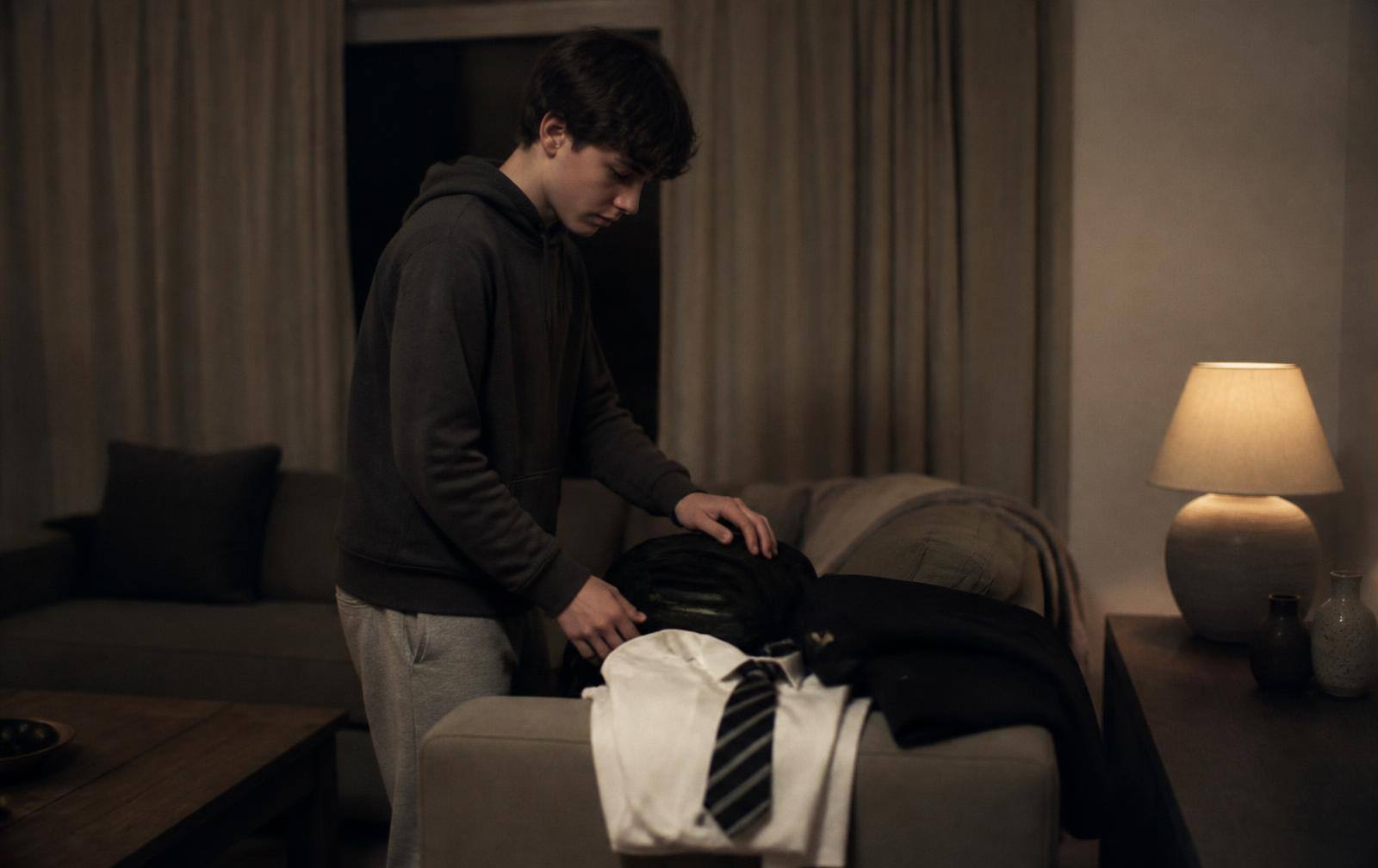
The mood changes somewhere around four o'clock.
Nobody says anything about school, and the whole house knows that is what it is.
By seven there are tears, a stomach ache, or a flat refusal to talk about Monday.
The last hours of the weekend go on managing a week that has not started.
Why it breaks down
Anticipation is often harder than the thing
For many children the worst part of a school week is Sunday evening. Anxiety runs ahead of experience — the imagined Monday is unbounded, while the real one has lessons, breaks and an end time.
Sunday has no structure to hold it
Unstructured hours plus an approaching demand is a reliable recipe for dread. A Sunday with a small shape in it leaves fewer empty rooms for worry to occupy.
The unspoken thing grows
Households often avoid mentioning school to protect the evening. The avoidance tends to make Monday larger. Naming it briefly and early usually shrinks it.
Set this up first
- Everything for Monday done before Sunday lunch: bags, kit, forms, uniform. The visible readiness is half the intervention.
- One good thing in the diary for Sunday evening — a programme, a meal, a game. Something the week cannot take away.
- One good thing in the diary for the week, named out loud, so Monday is not the only landmark.
The sequence
Late morning
Monday, dealt with in fifteen minutes
Do the practical part while the day is still open: pack, sign, wash, find. Doing it at seven in the evening puts school in the room right before bed.
Afternoon
Outside, together, no agenda
A walk, the park, the shops. Physical and shared beats screens and separate for the specific job of keeping Sunday from tightening.
Around five
The one question, asked sideways
Ask about the week specifically rather than generally, while doing something else. One question, then let it go whatever the answer.
"Anything on this week you're not looking forward to?"
After that
If something comes up, make it smaller and concrete
Find the actual moment they are dreading — a lesson, a lunch hall, a person — and plan for that one thing, not for school in general. Vague worry cannot be solved; a specific one can usually be made survivable.
"So it's Tuesday PE. What would make Tuesday PE a bit less bad?"
Evening
The good thing, protected
The meal, the film, the thing you do every Sunday. Ordinary pleasure at the end of a Sunday is not avoidance; it is what stops Sunday becoming a countdown.
Bedtime
Bed on time, and one line about Monday
Say something small and true. Optimism about the whole week is not believable; naming one fixed point is.
"Monday's just Monday. I'll be there at half three."
When it doesn't work
They refuse to talk about it at all.
Stop asking and stay nearby. Some children need the question in the car on Monday morning, or not at all. Presence without pursuit is still doing something.
Sunday night has become Monday morning refusal.
That is a bigger signal. Talk to the school this week — a named adult, a soft start, somewhere to go at break can change things quickly. Persistent refusal deserves support beyond a routine.
The dread has spread to Saturday.
Move the practical prep to Friday afternoon and keep Saturday deliberately full. When anticipation is widening, structure and shorter empty stretches usually help.
Make it yours
Younger children
Walk through the shape of Monday out loud: who collects them, what happens at lunch, when they will see you. Certainty about the edges of the day matters more than reassurance about the middle.
Teens
Do not ask twice. Make food, be in the kitchen late, and let the conversation happen at eleven o'clock if it happens at all.
When you dread Monday too
Say so, briefly and without unloading. A child who learns that adults also find Sunday evening heavy carries less shame about it.
What to say
Instead of
"You'll be fine, it's only school."
Try
"Sounds like Mondays have been hard lately. What's the worst bit?"
Invites the specific worry instead of closing it down, which is the only way it gets smaller.
Instead of
"Stop thinking about it and go to sleep."
Try
"Fifteen minutes on tomorrow, then we're done talking about it tonight."
Contains the worry in a defined slot so it does not take the whole evening.
Instead of
"Have you done all your homework? Is your bag packed? What about your kit?"
Try
"Bag, kit, homework. Fifteen minutes and then Sunday's ours again."
One short block of preparation beats a running audit that turns Sunday into an inspection.
The minimum viable routine
A hard weekend, or a child already dreading Monday. Tonight, keep:
- 01Bag and uniform ready, done together, quickly.
- 02One question asked sideways, and no follow-up if they do not want it.
- 03Bed on time with one warm line about tomorrow.
Nothing has to be solved tonight. Getting to Monday morning rested is the aim.
Try it for a week
Pick the parts that look most useful and run them for seven days. Then look at what actually happened:
- What time did the Monday preparation happen, and did it help?
- Did the sideways question get a real answer?
- How did Sunday evening feel compared with the week before?
- Is the same worry coming back each week, and does school need to know?
Then adjust. The aim is not adherence to the sequence; it is a rhythm that makes this part of the day easier to run.
Thrive printable
Weekly Family Reset Planner
One page for the look-ahead, so Sunday holds less of it.
Included with Member
Download the printable →Keep this line
Sunday is not the week. Do not let the week take it early.
A note from Sian
Sunday evening tells you something about how school is going that a Tuesday rarely does. Treat it as information rather than as behaviour to manage.
If it is the same worry every week, take it to the school. Most of what makes a school week bearable for an anxious child is arranged by adults, not endured by the child.
Thrive Routines are psychoeducational family wellbeing guidance. They are not therapy, diagnosis or medical advice, and they are not a substitute for support from a professional who knows your child.