Routine 15
Weekly rhythms · Two days with no shape
The Weekend Reset
Enough structure for a weekend to feel restful, without rebuilding the school week inside it.
- Who it's for
- Any household, especially those with several children and competing weekend commitments.
- When it runs
- Saturday and Sunday.
- Approx. time
- A shape for two days, not a timetable. Flexible by design.
The friction
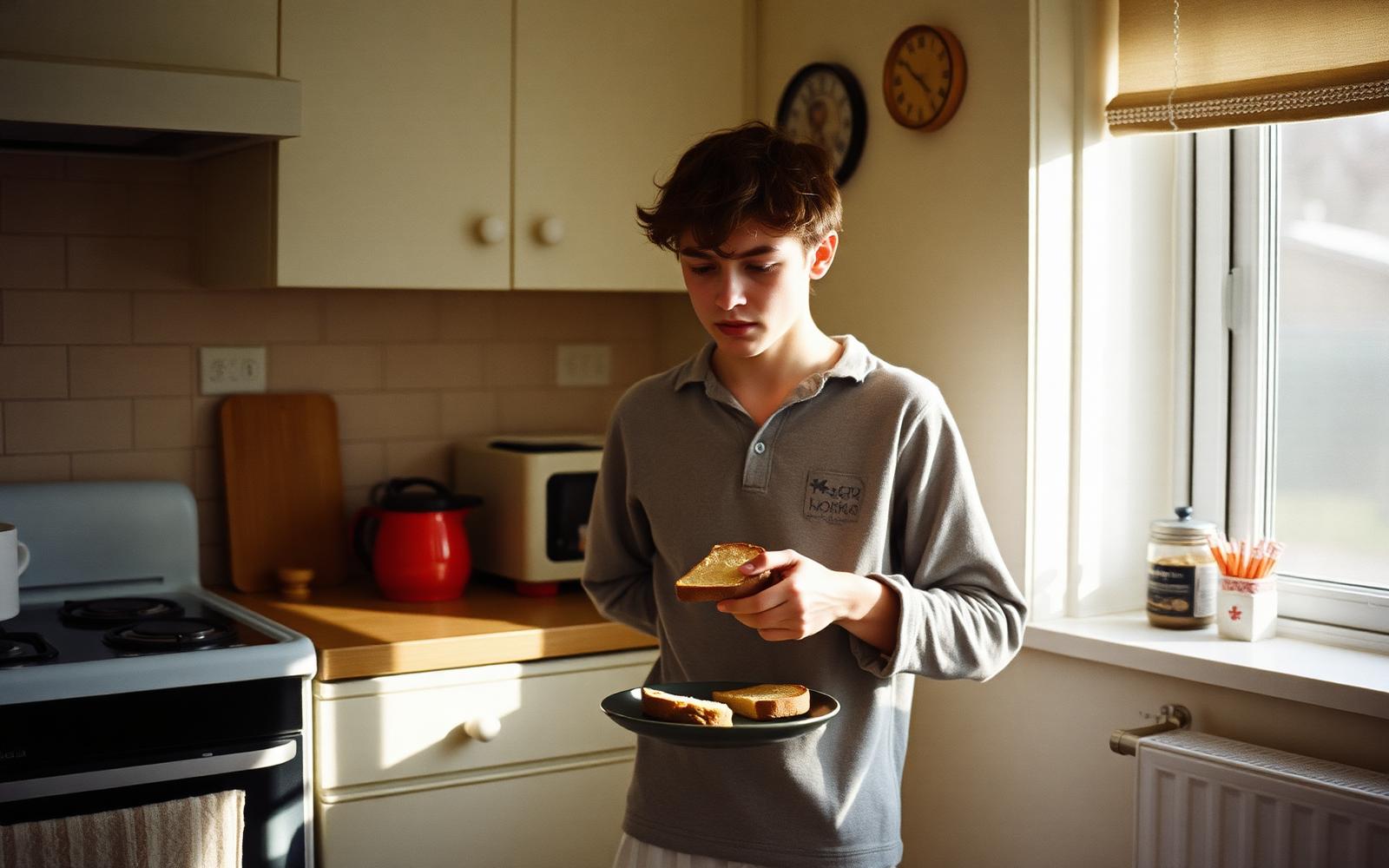
It is Sunday afternoon and nobody is quite sure what happened to Saturday.
There were four separate lifts, one supermarket run and a lot of screens.
You feel like you have been on duty for two days without a single restful hour.
The children are irritable and the house is worse than it was on Friday.
Why it breaks down
Rest without any shape does not feel restful
Completely unstructured days tend to fill with the lowest-effort option and end with a vague sense of waste. A weekend usually needs a few markers, not a schedule, before it starts to feel like a break.
The invisible work still has to happen
Washing, food, admin and lifts do not pause. When none of it is named or shared, it lands unevenly on one adult, who then arrives at Monday having had no weekend at all.
Everyone wants a different weekend
One child wants people, another wants their room, one adult wants the house sorted and the other wants to be out of it. Unspoken competing needs is where most weekend friction comes from.
Set this up first
- Write down what is actually fixed this weekend: matches, work, visits. Look at the real space before planning anything.
- Name the weekend jobs and split them, out loud, on Friday or Saturday morning.
- Protect one block per person that is genuinely theirs, including both adults.
- Agree one thing you will do together. One is enough.
The sequence
Friday evening
Look at the two days, briefly
Five minutes with the calendar. Name what is fixed, what needs doing and what everybody is hoping for. This conversation prevents most of Sunday's resentment.
"What's everyone hoping to actually do this weekend?"
Saturday morning
A slow start, deliberately
No alarms if the schedule allows. Late breakfast, nobody dressed. A slow start is a marker in itself and children register it.
Saturday midday
The jobs block, everyone in
Forty-five minutes, timed, all hands. Shared and finite is the difference between a household task and a Saturday-long grievance.
Saturday afternoon
Out, together, ordinarily
The one shared thing. It does not need to be an outing; a walk, a swim, a supermarket trip with company all count.
Sunday
Individual space, protected
Each person gets a real block of their own. Rest that has to be negotiated for is not rest.
Sunday evening
Hand over to the school-week reset
Stop the weekend deliberately rather than letting it fray into Monday. The Sunday Night routine picks up from here.
When it doesn't work
Sport swallows the entire weekend.
Count the hours honestly and decide as a family whether that is the trade you want. If it is, protect one genuinely empty half-day and treat it as non-negotiable.
The jobs never get shared.
Make them visible and finite. A named list and a timer changes the dynamic far more than asking for help in the moment does.
The children are on screens all weekend.
Add one anchor, not a rule. A planned thing on Saturday afternoon reduces screen hours more effectively than a limit you have to police.
Sunday feels heavy by four o'clock.
Move whatever admin remains to earlier in the day and keep the late afternoon soft. Sunday evening carries enough already.
Make it yours
Teens
They may want most of the weekend elsewhere. Keep one shared point, agreed in advance, and let the rest go.
Two households
Shape matters more when the weekend moves between homes. Keep the markers recognisable in both places rather than identical.
Neurodivergent children
Unstructured time can be harder, not easier. A visible plan for the two days, even a loose one, often reduces Saturday meltdowns.
What to say
Instead of
"Nobody ever helps around here."
Try
"Forty-five minutes on the house, all of us, then the rest of the day is free."
Finite and shared, with a visible end, is what makes it possible to say yes to.
Instead of
"You've been on that thing all day."
Try
"We're heading out at two. Get your time in before then."
Puts a marker in the day rather than a judgement on how they spent it.
Instead of
"I never get a minute to myself."
Try
"I'm taking two hours on Sunday morning. When do you want yours?"
Names your own need as a plan rather than a complaint, and invites the same in return.
The minimum viable routine
Illness, a bad week, nothing left in anyone. This weekend, keep:
- 01Food in the house.
- 02One hour outside, all together, however short a version of that is.
- 03Uniform and bags ready before Sunday evening.
A weekend where everyone rested and nothing got done is not a wasted weekend.
Try it for a week
Pick the parts that look most useful and run them for seven days. Then look at what actually happened:
- Did each person get a block of their own, including both adults?
- How long did the jobs actually take when everyone did them together?
- What did the shared thing turn out to be, and was it worth repeating?
- How did Sunday evening feel compared with last week?
Then adjust. The aim is not adherence to the sequence; it is a rhythm that makes this part of the day easier to run.
Thrive printable
Weekly Family Reset Planner
One page for the Friday-evening look-ahead.
Included with Member
Download the printable →Keep this line
A weekend does not need a timetable. It needs three or four markers and one hour that belongs to each person.
A note from Sian
Almost every family I see wants weekends to feel different from the week, and then organises them exactly like the week. A small amount of structure, chosen together, is what protects the unstructured parts.
If one adult is doing all the invisible weekend work, no amount of planning will fix the resentment. That is a conversation to have on its own.
Thrive Routines are psychoeducational family wellbeing guidance. They are not therapy, diagnosis or medical advice, and they are not a substitute for support from a professional who knows your child.