Where the Worry Goes: Nail Biting, Hair Pulling and Worry Habits
Bitten nails, pulled hair, chewed sleeves, picked skin. Body-focused habits are not bad manners — they are anxiety finding an exit through the hands.
Reviewed by Sian Trombley, CCCFounder, Thrive Family Company
8 min read
Best for parents of children who are…
- worrying often, or asking the same question again and again
- becoming overwhelmed by noise, texture or crowds
- showing behaviour that feels out of character
- going from calm to overwhelmed very quickly

Share this
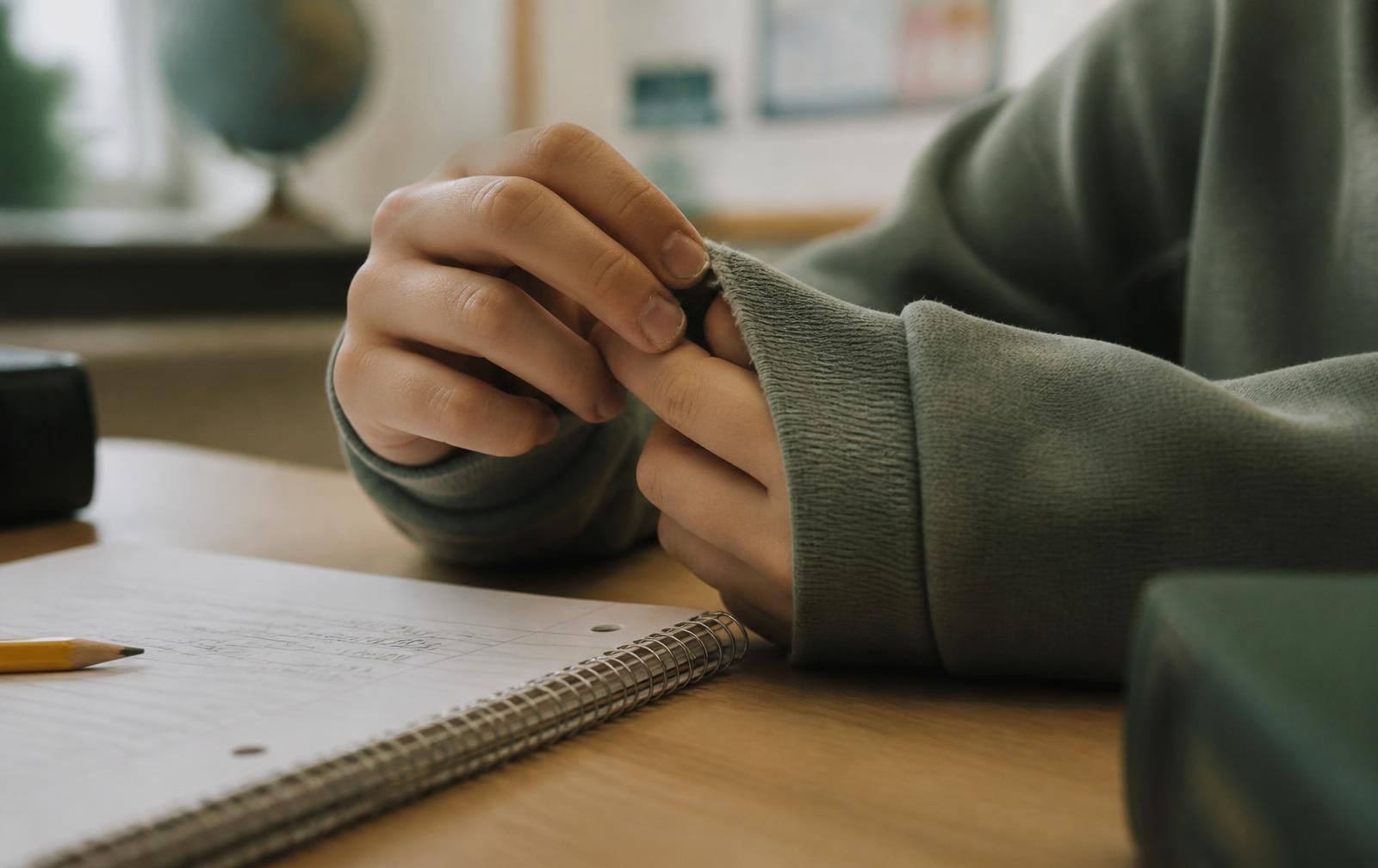
The cuffs of every jumper are chewed through. The nails are down past the quick. There is a small bare patch above one ear that you have started checking for without meaning to. You have asked them to stop, gently and then less gently, and nothing has changed.
These are body-focused repetitive behaviours, and they are far more common in childhood than most parents realise. They are not a sign of poor discipline, and they are only sometimes a sign of significant anxiety. What they reliably indicate is a nervous system doing something with its hands in order to manage its state.
Three different jobs the habit might be doing
- 01Discharging tension
Arousal is high and the body needs an outlet. Common before tests, in waiting rooms, during arguments, or watching something tense.
- 02Providing sensory input
The sensation itself is regulating — pressure, texture, a repetitive rhythm. Common in children who also seek other strong sensory input.
- 03Occupying an idle moment
Boredom, screens, car journeys. This version is the most automatic and the least emotionally loaded.
Why the usual approaches fail
- Bitter nail products: punish the behaviour without replacing its function, and often escalate it.
- Public reminders: add shame, which raises arousal, which increases the habit.
- Sticker charts for 'not doing it': ask a child to succeed at something they cannot yet notice.
- Gloves and plasters: sometimes useful as a short-term prompt, never as the plan.
What actually works: awareness, then a substitute
Habit reversal has two halves and skipping the first is the most common mistake. First the child learns to catch the moment — often by noticing the sensation just before the hand moves. Only then does a competing response help: something incompatible with the habit, brief, and invisible to a classroom.
Treat the pressure, not just the hands
If the tracking week points at a clear pressure — a subject, a friendship, a transition, a person — the habit will usually reduce when that pressure is addressed, without ever being tackled directly. This is the part that gets skipped in favour of managing the visible behaviour, and it is usually the part that matters most.
When to get more help
Seek clinical input where there is noticeable hair loss, bleeding or infected skin, eating of pulled hair, a habit the child is distressed or secretive about, or a sudden escalation after a specific event. Trichotillomania and excoriation disorder are recognised, treatable conditions — and they respond to specialist behavioural work, not to willpower.
For most children, though, this fades. Not because they were told to stop, but because the year got easier and the hands found less to do.
Worry that has nowhere to go does not disappear. It moves into the stomach, the bedtime, the school gate.
Sian Trombley, Canadian Certified Counsellor
What you can try this week
Track before you treat
One week, no comments, just notes. When, where, doing what, with whom. The pattern almost always points at a specific pressure point in the day.
Agree a private signal
Instead of 'stop biting', a touch on the shoulder or a single agreed word. It builds awareness without an audience.
Give the hands a competing job
Fist clench for sixty seconds, hands under thighs, a textured object in the pocket. It must be usable at a school desk without anyone noticing.
- These habits usually regulate arousal — they soothe, discharge or occupy.
- Reminders raise self-consciousness and rarely reduce frequency.
- Awareness comes before change: the child often genuinely does not notice.
- A competing response gives the hands a different job in the same moment.
- Hair loss, bleeding skin or distress about the habit warrants clinical support.
When in the day does this happen most?
Has my commenting on it made it more hidden rather than less frequent?
What pressure in my child's week has never been named out loud?
Printable resources
Recommended Thrive courses
This article is educational and is not a substitute for individual clinical advice. Comments are closed so the Journal stays a calm place to read.
Share this
Keep going
You may also like
Courses, worksheets and pathways from the same part of the library.
- JournalWhen Anxiety Shows Up as AngerAnger is not the opposite of anxiety. It is often its loudest translation.Read
- JournalThe Child Who Keeps EverythingIt is not mess. For this child, every object is holding a piece of something they are frightened of losing.Read
- Learning PathwayAnxiety & WorryA guided Learning Pathway from Thrive Family Company.Read
- CollectionAnxiety & WorryEverything Thrive publishes on anxiety & worry — articles, courses, worksheets and research.Read
- Thrive Resource GuideAnxiety & WorryTherapist-reviewed books, apps, websites and tools for anxiety & worry.Read
- WorksheetAnxiety Bravery LadderA graded plan for facing one fear, one small rung at a timeRead