Guide
The Bedtime Debrief
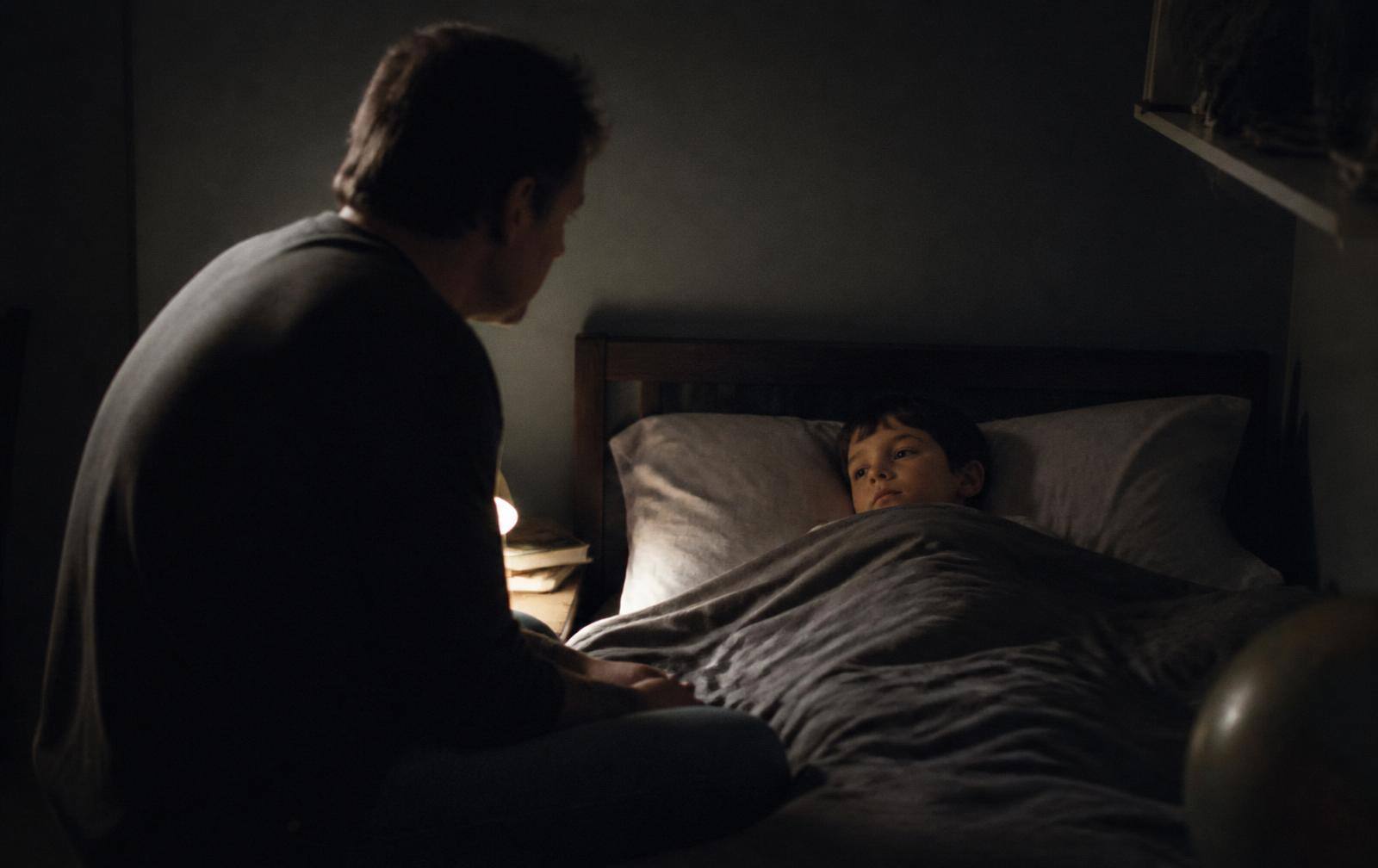
Three minutes in the dark, and why children say more there than anywhere else.

Share this
- Time in real life
- 3 minutes, most nights
- Ages
- 4–14
- Reading
- 7 min
Reviewed by Sian Trombley, CCCFounder, Thrive Family Company
7 min read
Children delay bedtime for the obvious reason and for a less obvious one. Yes, they want to stay up. They also know, without being able to say it, that this is the one part of the day when they have an adult entirely to themselves and nothing is being asked of them.
Most parents spend those minutes on logistics — teeth, water, lights, the fourth request for a story — and leave the room slightly frayed. The debrief is a way of spending three of them differently.
It is the same three minutes. The difference is what you do with them.
Why the dark helps
Low light and no eye contact reduce the social load of speaking, in the same way a car journey or a walk does. Add to that the transition state before sleep, when the day's contents surface unbidden, and you have the conditions in which children tell you the thing they did not tell you at teatime.
This is also why difficult material arrives at bedtime with such inconvenient timing. It is not manipulation. It is the first moment quiet enough for it to be noticed.
The three questions
- 01
"What was the best bit?"
Starts warm and easy. Accept 'nothing' without comment and answer it yourself instead — modelling is more effective than prompting here.
- 02
"What was the hardest bit?"
Hardest, not worst. Hard is neutral and admits difficulty without requiring a complaint. This is the question that carries the information.
- 03
"Anything you're thinking about for tomorrow?"
Catches the low-grade anticipatory worry — the test, the swimming lesson, the friend who was odd at lunch — before it becomes a 2am wake-up.
When something real comes out
- Do not sit up, turn the light on, or change your tone. Any of those signals alarm and closes the door.
- Reflect before you respond: "That sounds like it was horrible." Comfort first, information second.
- Ask one question at a time, and be willing to leave it unfinished. "We'll talk more tomorrow" is a legitimate ending.
- Follow up the next day, briefly, unprompted. That is what proves the channel is real.
- Never use anything from the debrief as evidence in a later argument. Once is enough to close it permanently.
Children do not open up on demand. They open up in the dark, sideways, to someone who is not looking at them.
Sian Trombley
Try this week
- 01Do the three questions four nights out of seven — reliability beats completeness.
- 02Answer the questions yourself first if the child stalls.
- 03Keep it to three minutes even on a good night.
- 04Follow up on one thing the next day, briefly.
- 05Say nothing about behaviour or tomorrow's admin inside those three minutes.
The therapist's perspective
When older children tell me they could talk to a parent about anything, they very often describe a version of this — a specific place and time, usually dark, usually with the adult sitting rather than standing.
For teenagers, the equivalent is the doorway at eleven o'clock when they finally emerge for toast. It is inconvenient and it is the same three minutes. Take it when it comes.
Sian
Founder, Thrive Family Company
Share this
Continue in Daily Practices

The Five Senses Pause
A grounding practice short enough to use in a supermarket car park, and concrete enough to work when breathing exercises are refused.

The Morning Send-Off Sentence
The final ten seconds of a morning tend to be spent on reminders. One consistent sentence instead does something a reminder cannot.

The Evening Inventory
A short, structured way to close a parenting day that neither replays every mistake nor pretends it went well.