The Child Who Needs the Last Word: Arguing With Everything
Every instruction becomes a negotiation, every negotiation becomes a debate, and the debate is never actually about the shoes.
Reviewed by Sian Trombley, CCCFounder, Thrive Family Company
8 min read
Best for parents of children who are…
- showing behaviour that feels out of character
- struggling to say what is really going on
- having big feelings that arrive faster than words

Share this
You said no at 4.40. It is now 5.15, you have explained your reasoning four separate ways, and the case is being reopened on procedural grounds.
What the arguing is protecting
Children with a strong need for the last word are usually managing two things: a sharp sense of fairness, and a low tolerance for feeling powerless. When a decision arrives without any say in it, the argument becomes the only available form of participation.
That is why the fight so often continues after the outcome is settled. They are not trying to change your mind by then. They are trying to leave the exchange with something intact.
Why explaining more makes it worse
Every fresh justification is new material to argue with. Children who enjoy debate hear a third explanation as evidence that the decision is still live — and reasonably so, because a settled matter would not need defending five times.
One clear reason is respectful. Four is an invitation.
- 01Decide before you speak
Say no only when you mean it. Reversals under pressure are what make future arguing worthwhile.
- 02Give one reason, once
Short, honest, final. Then repeat the decision in the same words each time, calmly.
- 03Name the pattern out loud
'We're going round in circles. My answer is the same and I'm going to stop talking now.'
- 04Offer autonomy elsewhere
Order of jobs, timing, method, music. Control that is genuinely theirs reduces the need to seize it here.
- 05Come back later
'Make your case at the weekend and I'll listen properly.' Legitimate influence, on your timetable.
The parting shot
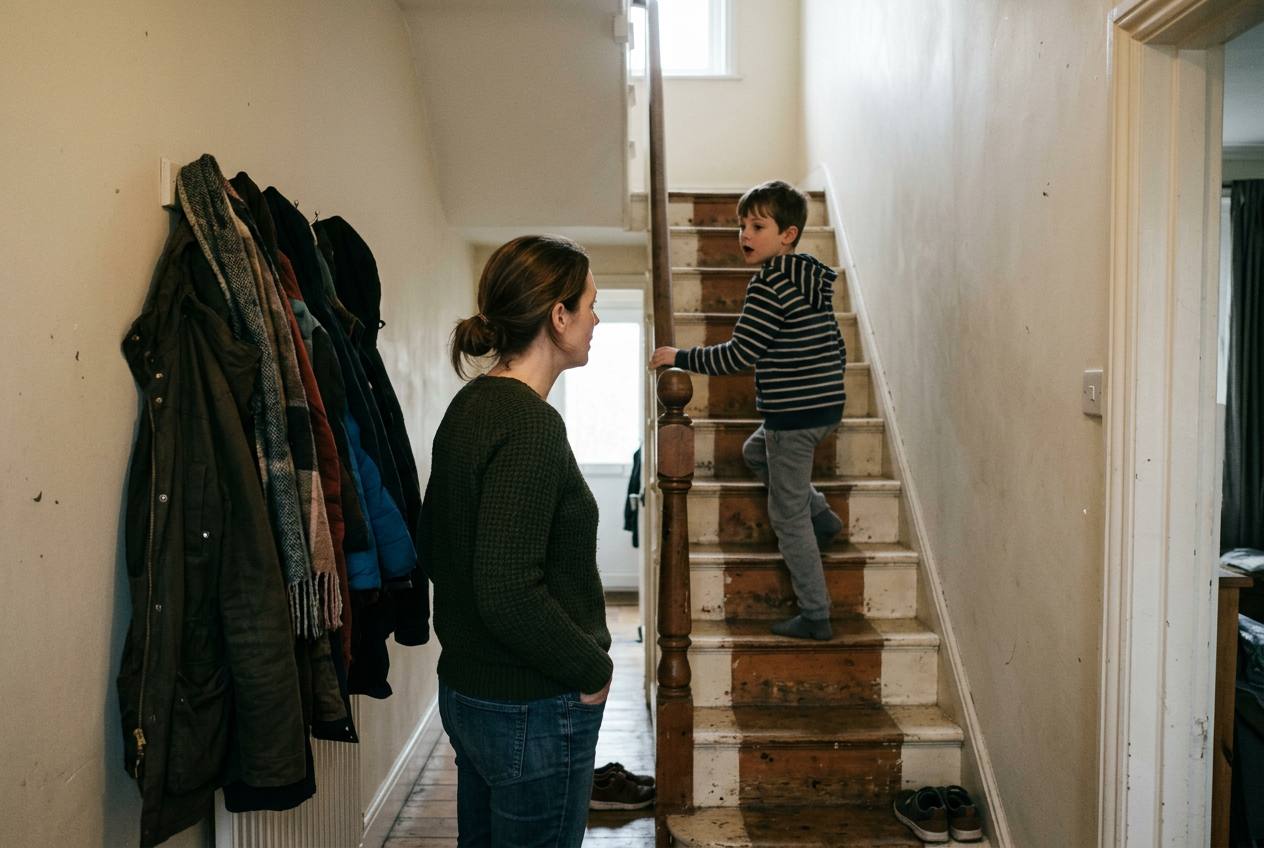
The muttered comment on the stairs is the most commonly escalated moment in family life, and the least worth escalating. Chasing it turns a resolved matter into a fresh conflict, usually about tone rather than the original issue.
Let it go in the moment. If the language crosses a line, raise it later, when everyone is calm and the point can actually be heard.
When arguing is something more
Persistent, intense opposition across every setting, lasting six months or more, with real impairment at home and school, is a different picture and worth discussing with your GP or school. So is arguing that arrives suddenly in a previously easy-going child, which is more often distress than defiance.
For most families, though, this is a temperament to be shaped rather than a disorder to be treated — and the shaping happens through consistency, not volume.
Children do not need a perfect parent. They need a predictable one who returns after hard moments.
Sian Trombley, Canadian Certified Counsellor
What you can try this week
Use the two-sentence rule
Decision, one reason. Then repeat the decision only. No third version, no new arguments.
Hand back real choices
Not whether, but when, how or in what order. Autonomy elsewhere lowers the fight here.
Let the parting shot go
Their last sentence is not a threat to your authority. Reacting to it is what starts round two.
- Arguing is usually about autonomy and dignity, not about winning.
- Every extra explanation reopens a decision you already made.
- Say it twice, then stop talking — repetition without escalation.
- Offer control where you genuinely can, so the boundary is not the only lever.
- Let them have the last word; you keep the decision.
How many times do I explain the same decision?
Where in the day does my child have genuine control?
Am I holding a boundary, or trying to win the exchange?
Printable resources
This article is educational and is not a substitute for individual clinical advice. Comments are closed so the Journal stays a calm place to read.
Share this
Keep going
You may also like
Courses, worksheets and pathways from the same part of the library.
- ResearchThe Research LibraryPeer-reviewed parenting and child mental health research, translated into plain language.Read
- Thrive GuideThrive GuideAsk a question and get warm, evidence-informed guidance drawn from the Thrive library.Read
- Thrive Care PlanThrive Care PlanA short check-in that turns how your week actually went into one focused plan.Read
- Thrive ToolThrive ToolsPremium printable workbooks and therapeutic tool kits.Read
- CollectionThe Resource LibraryFree printable worksheets, scripts and planners for families.Read
- JournalThe Truth About Lying: What Children Are Really ProtectingMost parents respond to lying by tightening the consequences. The children who tell the truth most reliably are the ones for whom honesty costs the least.Read