The Only Time You All Sit Down
The family table is not about the food. It is one of the few remaining moments a family occupies the same room, at the same pace, with nowhere else to be. Here is how to protect it as connection, not correction.
Reviewed by Sian Trombley, CCCFounder, Thrive Family Company
11 min read
Best for parents of children who are…
- needing extra emotional support at the moment
- going through a change at home or at school
- showing more upset than usual and not saying why

Share this
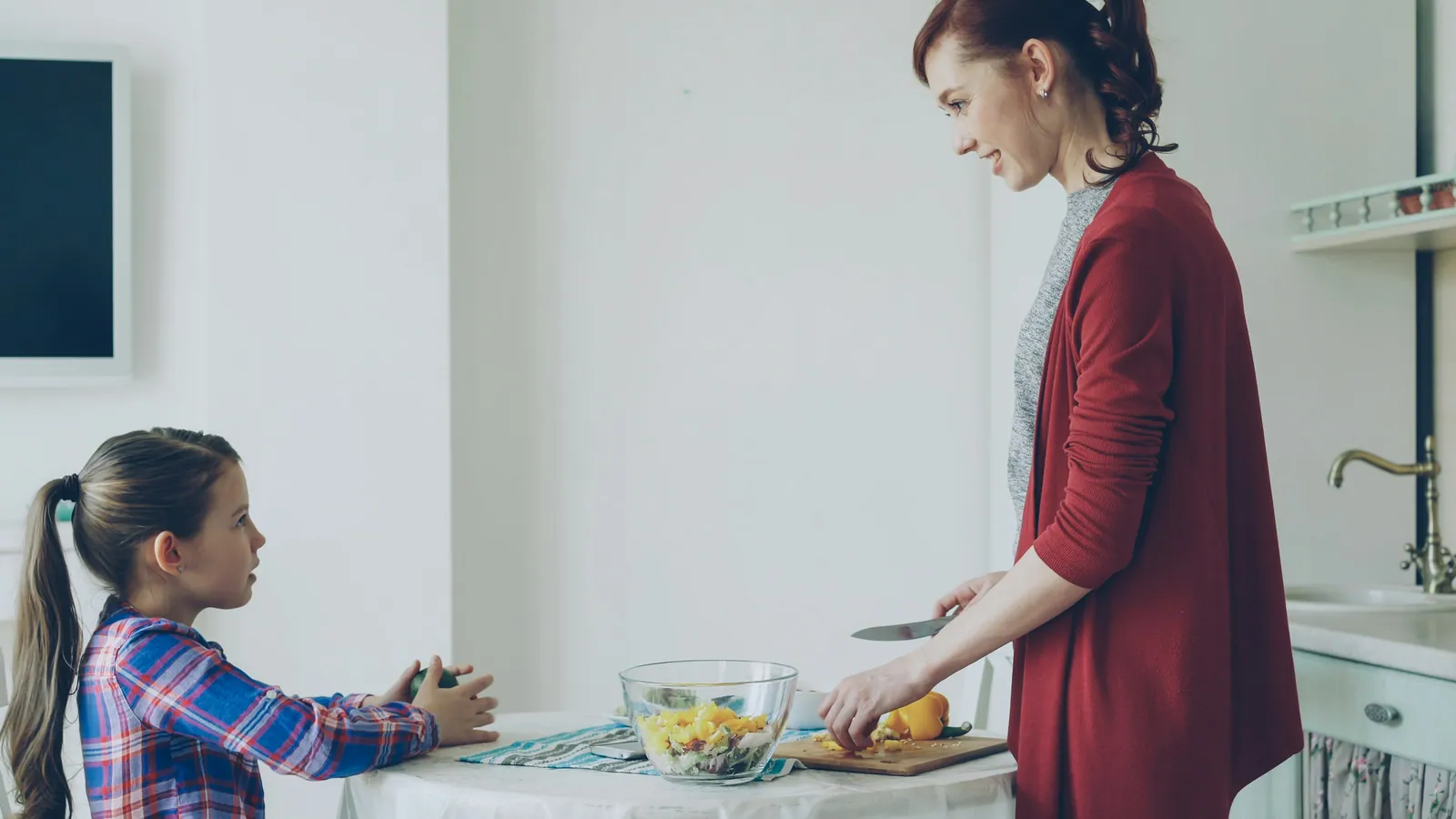
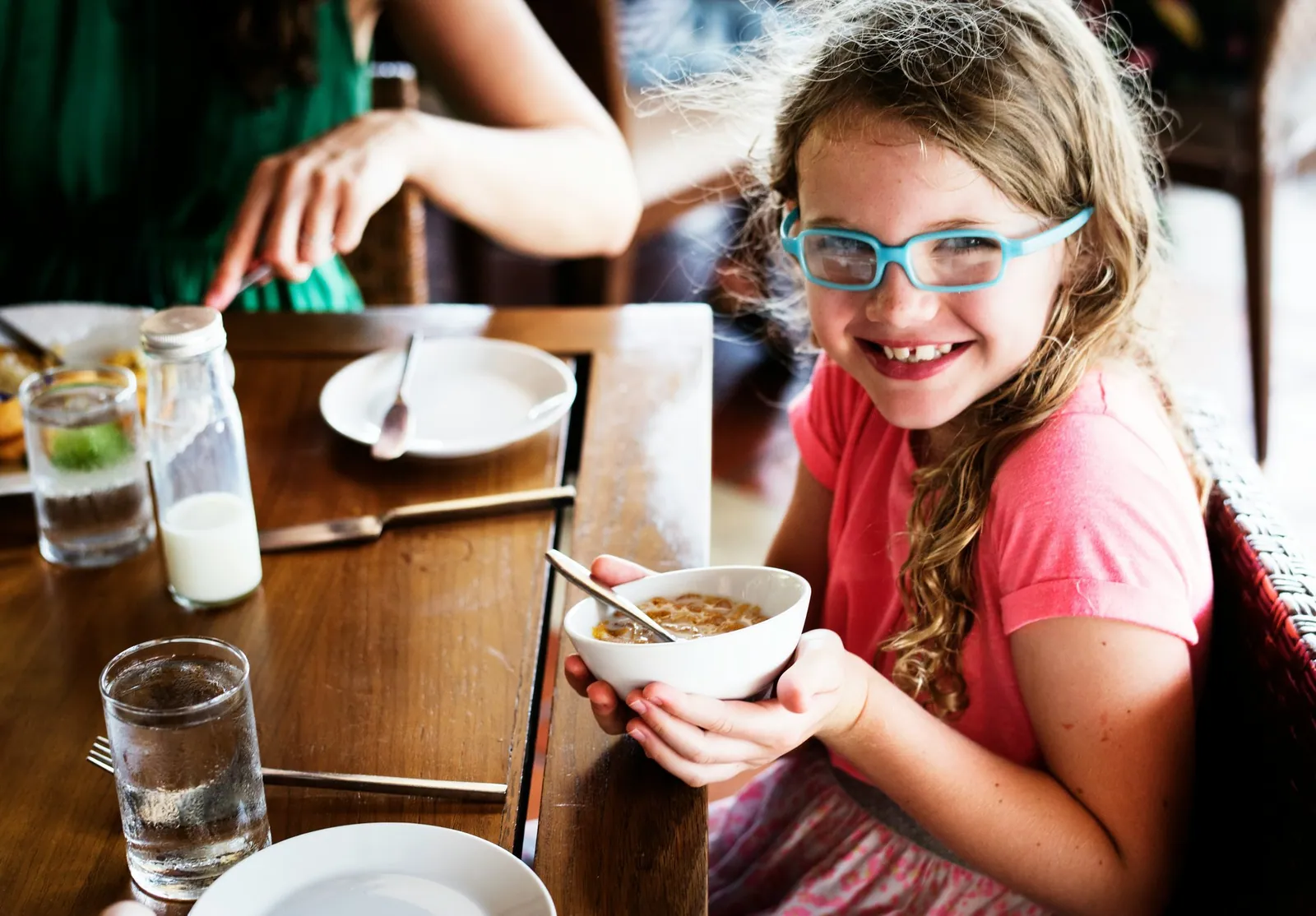
For a lot of families, there is exactly one stretch of the day when everyone is in the same room, at the same pace, with nowhere else pressing to be. For some it is dinner. For others it is a rushed breakfast, or the twenty minutes after the youngest goes down when older kids drift into the kitchen. Whatever shape it takes, it is often the only unstructured, unscheduled overlap in a day otherwise carved up between school, work, activities and screens. This piece is not about food. It is not about getting a reluctant eater to try vegetables, and it never will be — that is not what this time is for. It is about protecting the one part of the day where a family's main task is simply to be near each other, talking, with nothing to achieve. That is a rarer resource than it sounds, and it is worth being deliberate about.
What the table is actually doing
Utter and colleagues' research on family meals and adolescent wellbeing found consistent links between regular shared meals and better mental health outcomes — but the more interesting finding was about mechanism. The benefit tracked much more closely with the emotional tone of the meal than with how often it happened or what was served. Meals held in a warm, conversational, low-conflict atmosphere were associated with real benefit. Frequent meals held in a tense or critical atmosphere showed little to no advantage at all.
This matters because it takes the pressure off the specifics that many parents worry about — the home-cooked menu, the seven-nights-a-week frequency, the picture-perfect table. What the research actually points to is something more available to almost any family: a reliably calm, connected pocket of shared time, however it is arranged.
The trap of turning the table into a courtroom
It is an easy trap to fall into, and an understandable one: the table is often the only time a parent has a captive audience, so it becomes the moment for reviewing the day's mistakes, reminding about unfinished homework, or refereeing a sibling conflict that happened hours earlier. Every one of these has a legitimate place in family life. None of them belong at the one time of day meant to be about connection rather than management.
A child who has learned that sitting down with the family usually means being asked what went wrong, or being reminded of an unfinished task, will start to brace for the table rather than relax into it — and will often go quiet, give minimal answers, or find reasons to leave early. The fix is not complicated, but it requires discipline: agree, as the adults, that correction, reminders and conflict-litigation happen at another time, and protect this one for something else entirely.
Questions that actually open conversation
'How was school' is one of the most efficient conversation-enders available to a parent, mostly because it invites a one-word answer and asks a child to summarise an entire day in a single evaluative term. Specific, curious, slightly odd questions tend to work far better, because they require an actual memory rather than a judgement.
- What's something that made you laugh today?
- What was the most boring five minutes of your day?
- If you could redo one moment from today, which one?
- Who did you sit with, and what did you talk about?
- What's one thing you're looking forward to tomorrow, and one thing you're dreading?
It also helps enormously for parents to answer their own questions honestly, including the unflattering parts of their day. A child who hears a parent admit to a frustrating meeting or a mistake at work learns that this table is a place where real things, not just polished ones, get said out loud.
Making it work with real schedules
Shift work, sports practices, mismatched bedtimes and split custody arrangements all make a nightly shared dinner genuinely unworkable for many families, and it is not worth manufacturing guilt over that. What matters is identifying the pocket of time that is actually realistic and protecting it with the same seriousness other families might apply to a formal dinner.
- 01Find your family's realistic pocket
It might be breakfast, a Sunday brunch, or a short check-in before the youngest's bedtime that older siblings join. Choose based on what is actually achievable most days, not on what looks best.
- 02Set a floor, not a ceiling
Aim for a minimum — three times a week, ten minutes a day — rather than an ambitious ideal you will abandon after a hard week. A modest, kept commitment beats a generous, broken one.
- 03Remove the phone from the table, adults included
A parent glancing at a phone during this time sends a louder message than any rule about screens — children notice hypocrisy quickly, and it costs you credibility on every other screen conversation.
- 04Let the ritual flex with age
A teenager may not want to linger at the table the way a six-year-old does. A shorter, lower-pressure version of the same principle — a specific nightly check-in, a car conversation on the way somewhere — can carry the same weight.
When the table falls quiet
It is common, especially with tweens and teens, for the table to go quiet for a stretch — monosyllabic answers, a preference for eating fast and leaving. This is rarely a sign the ritual has failed. It is often a sign of a developmentally normal pulling away that does not require a parent to work harder at conversation. Staying present without demanding engagement — continuing to sit down together, continuing to ask, without taking a quiet stretch personally — usually outlasts the phase.
Look for any reliable pocket of unhurried shared time — even ten minutes — and protect that instead. The mechanism is shared, unhurried, low-conflict time together, not a specific meal.
Occasional shared viewing is not harmful, but a nightly backdrop of screens tends to crowd out the conversation that gives this time its value — reserve it for occasional, not default.
Briefly de-escalate and defer the fuller conversation to afterwards: 'let's pause this and finish talking about it after dinner' — protecting the meal's tone matters more than resolving the conflict in that moment.
Protecting the one thing that is actually working
Busy families often assume connection needs to be manufactured through a big gesture — a special outing, a planned activity, a heart-to-heart conversation scheduled in advance. Often, the infrastructure for connection already exists in the ordinary, unglamorous pocket of time your family already shares most days. It just needs protecting from correction, from screens, and from the assumption that it will happen anyway without anyone tending to it. Start by naming the one sitting-down moment your family already has, however imperfect, and give it slightly more attention this week than you have been. Not a bigger meal. Not a longer conversation. Just a little more protection, and a little less management.
Children do not need a perfect parent. They need a predictable one who returns after hard moments.
Sian Trombley, Canadian Certified Counsellor
What you can try this week
Protect one sitting-down time, whatever it is
Choose the one meal or moment most realistic for your family to protect most days this week — it might be breakfast, not dinner — and treat it as fixed rather than optional.
Remove the interrogation, add curiosity
Replace 'how was school' with a specific, low-stakes question: 'what's something that made you laugh today?' or 'what was the most boring part of your day?' Odd or playful questions often unlock more than earnest ones.
Ban correction from the table for one week
Agree, out loud, that homework reminders, behaviour reviews and sibling litigation happen at another time, not at the table. Notice what changes in how children show up to it.
- The value of family meal time comes primarily from the emotional atmosphere, not from frequency, menu or how long everyone stays at the table.
- Using shared meal time mainly for correction or interrogation undoes much of its connective benefit.
- The table does not need to be a formal dinner — any reliable pocket of unhurried, screen-free shared time can serve the same function.
- Open-ended, curiosity-based questions produce far more real conversation than closed questions like 'how was your day?'
- Protecting this time requires treating it as non-negotiable infrastructure, not something that happens if the schedule allows.
When your family does sit down together, what is the actual tone in the room — relaxed, rushed, tense, distracted?
How often does the shared meal time get used to correct, remind or manage, rather than simply to be together?
If you had to protect only one pocket of together-time each day, which one would do the most good for your family?
Printable resources
Recommended Thrive courses
This article is educational and is not a substitute for individual clinical advice. Comments are closed so the Journal stays a calm place to read.
Share this
Keep going
You may also like
Courses, worksheets and pathways from the same part of the library.
- ResearchThe Research LibraryPeer-reviewed parenting and child mental health research, translated into plain language.Read
- Thrive GuideThrive GuideAsk a question and get warm, evidence-informed guidance drawn from the Thrive library.Read
- Thrive Care PlanThrive Care PlanA short check-in that turns how your week actually went into one focused plan.Read
- Thrive ToolThrive ToolsPremium printable workbooks and therapeutic tool kits.Read
- CollectionThe Resource LibraryFree printable worksheets, scripts and planners for families.Read
- JournalThe Week Has a ShapeA family does not need a perfect schedule. It needs a shape — a small number of predictable anchors that repeat every week, so a child's nervous system can relax into knowing roughly what comes next. Building that shape reduces far more conflict than any single behaviour strategy.Read