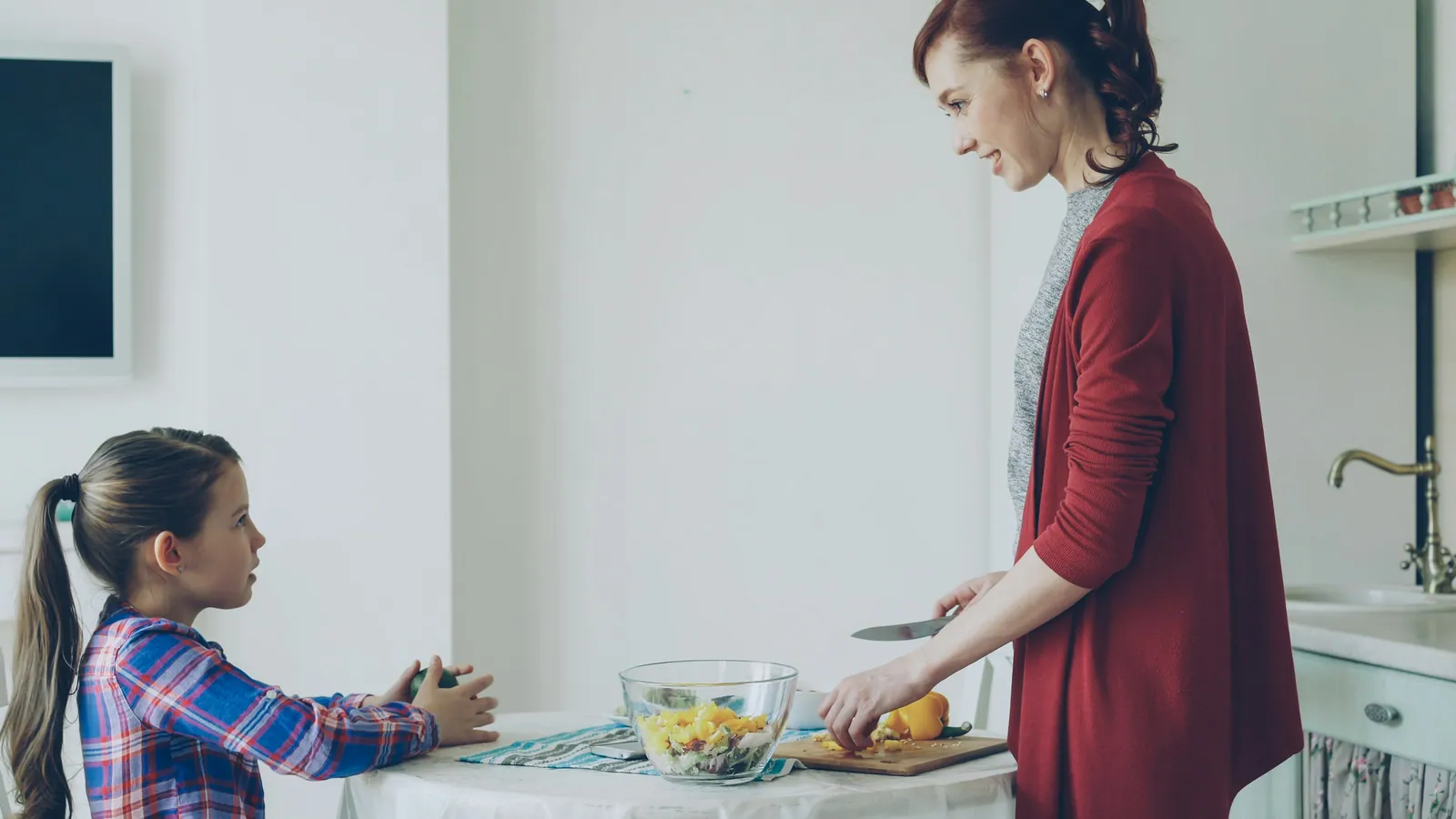
The Table Is Not a Battlefield: Fussy Eating, Without the War
Pressure is the one ingredient guaranteed to narrow a child's diet. What actually widens it is slower, quieter and far less satisfying to the anxious adult holding the fork.
Reviewed by Sian Trombley, CCCFounder, Thrive Family Company
9 min read
Best for parents of children who are…
- showing behaviour that feels out of character
- becoming overwhelmed by noise, texture or crowds
- needing extra emotional support at the moment

Share this
There is a particular silence that falls over a family table when a plate has been pushed forward two inches. Everyone knows what it means. The adult decides, in about a second and a half, whether tonight is a night for encouraging, bargaining or insisting — and none of those three roads ends well.
Selective eating is developmentally ordinary. Most children narrow their diet somewhere between eighteen months and six years; it is an evolutionary sensible caution arriving at precisely the age they become mobile. What determines whether it stays narrow is largely what happens at the table in response.
Why pressure backfires
Pressure — insisting, bribing, rewarding, even enthusiastic praise for eating — makes the food itself less attractive. The child learns that this item is the one adults want something from them about, and the association forms faster than the taste preference ever could.
The division of responsibility
The most durable framework in feeding practice is simple. The adult decides what food is offered, when it is offered, and where it is eaten. The child decides whether they eat and how much. Both jobs are respected, and neither person does the other's.
- 01Fix the structure
Three meals and two or three snacks at roughly predictable times. No grazing in between, water only.
- 02Serve one plate for everybody
Family style, with at least one accepted food present. No separate menus.
- 03Remove commentary
No praise, no persuasion, no counting bites. Food is simply on the table, like the tablecloth.
- 04Repeat without expectation
Keep offering the rejected food regularly and neutrally. Acceptance often arrives on the twelfth appearance, long after everyone stopped hoping.
- 05Let them handle it
Shopping, washing, chopping, serving. Familiarity outside the meal does much of the work inside it.
When it is sensory, not stubborn
For a meaningful minority of children — often neurodivergent ones — refusal is a sensory response rather than a preference. Wet textures, mixed foods, strong smells and unpredictable mouthfeel can be genuinely aversive. The strategies do not change much, but the pace does, and the expectation of a normal-looking diet may need to be set down for a while.
“A child who is not being managed at the table has spare attention. Curiosity lives in that spare attention — nowhere else.”
Sian Trombley
Your job is what is offered and when. Their job is whether and how much. Trouble starts when we swap.
Sian Trombley, Canadian Certified Counsellor
What you can try this week
Serve family style
Everything in bowls in the middle, children serve themselves. Autonomy at the table does more for intake than any amount of encouragement.
Say nothing about eating
For one full week, no comments — not even positive ones. Talk about the day instead. Neutrality is the active ingredient.
Add one safe food to every meal
Bread, rice, fruit — something guaranteed. A child who knows they will not go hungry can afford curiosity.
- Pressure reliably reduces intake — including praise-shaped pressure.
- Adults choose what, when and where; the child chooses whether and how much.
- New foods usually need ten to fifteen neutral exposures, not one brave bite.
- Always include one accepted food on the plate so the meal is never a threat.
- Grazing between meals is the most common invisible cause of refusal at them.
What am I actually afraid of when they don't eat?
How much of the mealtime conversation is about food?
When did eating last feel pleasant in this house?
Printable resources
Recommended Thrive courses
This article is educational and is not a substitute for individual clinical advice. Comments are closed so the Journal stays a calm place to read.
Share this
Keep going
You may also like
Courses, worksheets and pathways from the same part of the library.
- ResearchThe Research LibraryPeer-reviewed parenting and child mental health research, translated into plain language.Read
- Thrive GuideThrive GuideAsk a question and get warm, evidence-informed guidance drawn from the Thrive library.Read
- Thrive Care PlanThrive Care PlanA short check-in that turns how your week actually went into one focused plan.Read
- Thrive ToolThrive ToolsPremium printable workbooks and therapeutic tool kits.Read
- CollectionThe Resource LibraryFree printable worksheets, scripts and planners for families.Read
- JournalSugar and Behaviour: What the Research Actually SaysForty years of studies have looked for the sugar-hyperactivity link. The results are remarkably consistent, and not what most of us were told.Read