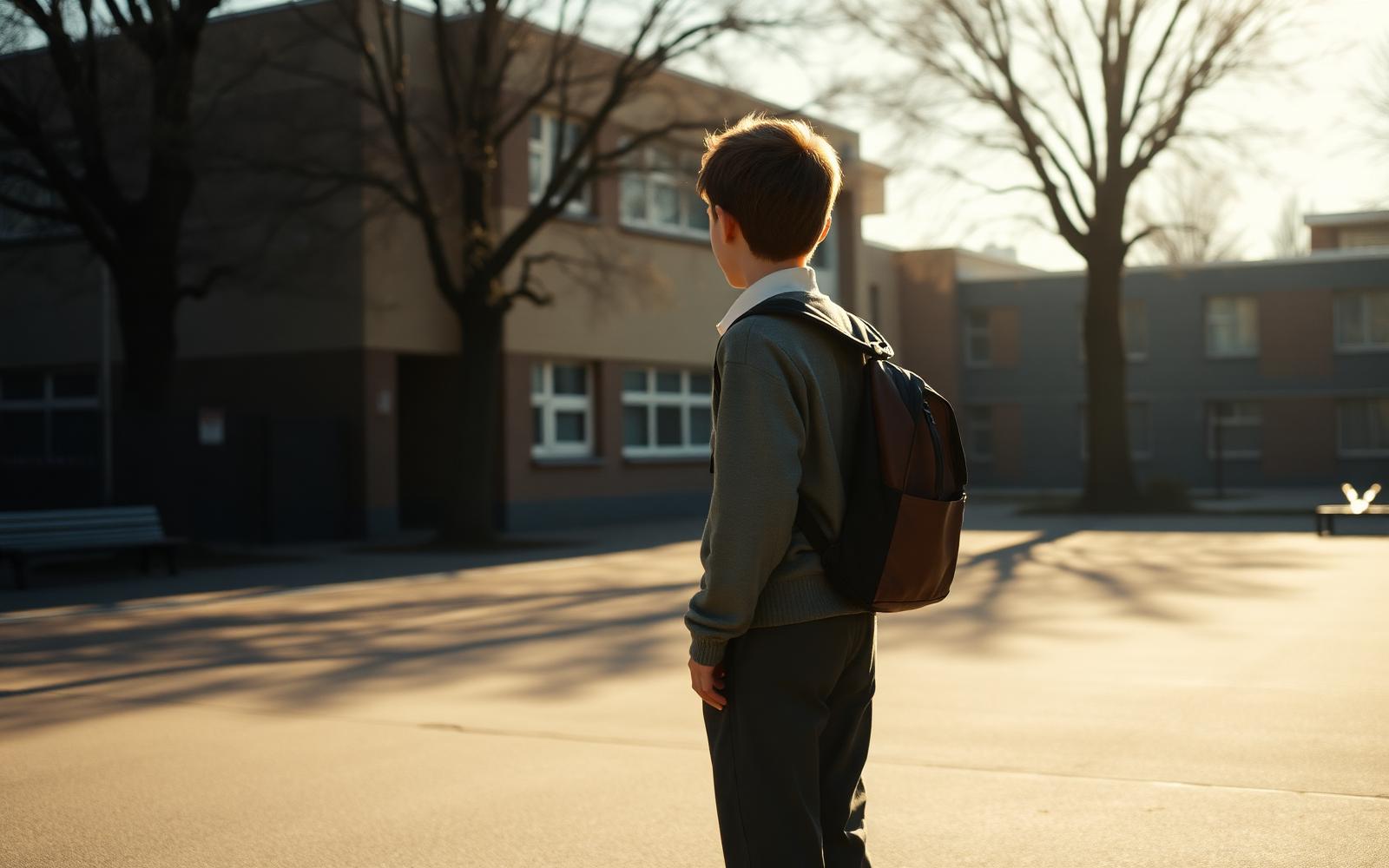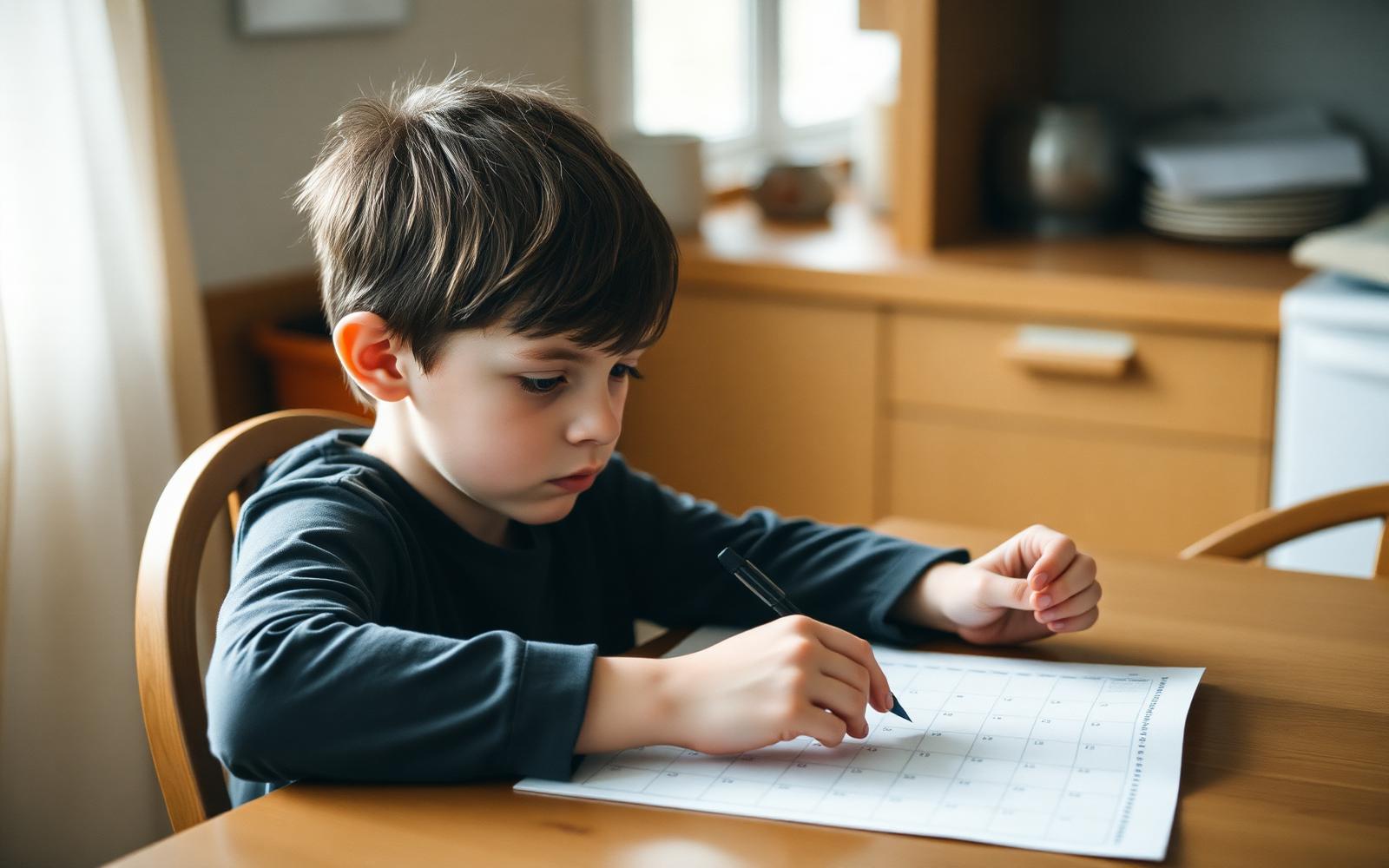
The Party They Will Not Go To
Your child said yes three weeks ago. Now they are in the hallway, coat on, refusing to move.
Written by Sian Trombley · BEd, MACP, CCC
The present is wrapped. The card is signed. Your child asked to go to this party three weeks ago. And now they are standing in the hallway with their coat on, telling you — with complete conviction — that they cannot do it.
This is one of the most common presentations I see in anxious children between seven and twelve, and one of the most misread. Parents often assume the child has changed their mind, or is being difficult, or does not really like the friend. Almost none of that is true. What has changed is not the child's wish to go. It is the proximity of the event.
Why the refusal arrives at the door
Anticipatory anxiety does not build steadily. It spikes sharply in the final minutes before a feared event, when the body begins preparing for something it has decided is threatening. Heart rate rises, the stomach tightens, thinking narrows to a single question: how do I get out of this? Three weeks ago the party was an idea. In the hallway it is a physical state.
What cancelling teaches
When you cancel, something happens within about ninety seconds: the child's distress drops dramatically. Both of you feel relieved. This is precisely the problem. The nervous system has just recorded a very clear lesson — that feeling was unbearable, and avoidance made it stop.
The following invitation is then slightly harder to accept, and the one after that harder still. Over a year or two, a child who was simply nervous about parties can become a child who does not go anywhere. Nothing dramatic caused it. It was accumulated relief.
Shrink the event instead of selling it
Most parents try to persuade: it will be fun, everyone is going, you liked it last time. Persuasion asks the child to argue against their own body, and they will win that argument every time. The alternative is to reduce the size of the ask until it stops being frightening.
- 01Agree a time, not the whole party
Twenty minutes. If they want to stay longer, that is their choice, not your request.
- 02Build a known anchor
One familiar child, one familiar adult, one predictable activity. Novelty is what the anxious brain objects to, not people.
- 03Rehearse the arrival
The hardest ninety seconds is the doorway. Practise it: what they say, where they put the present, who they look for.
- 04Name the exit
'Text me and I will come.' Knowing they can leave is usually what allows them to stay.
- 05Debrief afterwards without triumph
'You did it' is enough. Big celebrations imply the thing was enormous.
When it is more than nerves
Speak to your GP or a therapist if the anxiety is spreading across settings, if your child is losing sleep for days before social events, if they have begun avoiding school, or if the distress includes panic symptoms. These are all highly treatable, and earlier support means shorter work.
Children do not need a perfect parent. They need a predictable one who returns after hard moments.
Sian Trombley, Canadian Certified Counsellor
What you can try this week
Shrink the ask
Agree in advance to twenty minutes rather than two hours. A short attended party counts as a success; a cancelled one does not.
Write the exit plan together
Where you will be, what they say if they want to leave, what happens next. Certainty about the escape route reduces the need to use it.
Name the wave
Tell them the feeling peaks at the door and falls within ten minutes of being inside. Then let them find out you were right.
- The refusal usually arrives at the door, not at the invitation — anticipation peaks in the final minutes.
- Cancelling brings instant relief and makes the next invitation harder.
- Shrinking the event is more useful than talking your child into the whole event.
- An agreed exit plan increases the chance a child will stay, not decrease it.
- Recovery is measured in repetitions, not in one successful afternoon.
When I cancel, whose anxiety drops fastest — theirs or mine?
What is the smallest version of this event my child could genuinely manage?
Am I asking them to feel calm, or to be brave while feeling nervous?
Printable resources
Recommended Thrive courses

Share this article
This article is educational and is not a substitute for individual clinical advice. Comments are closed so the Journal stays a calm place to read.
Keep going
You may also like
Courses, worksheets and pathways from the same part of the library.
- ResearchThe Research LibraryPeer-reviewed parenting and child mental health research, translated into plain language.Read
- Thrive GuideThrive GuideAsk a question and get warm, evidence-informed guidance drawn from the Thrive library.Read
- Thrive Care PlanThrive Care PlanA short check-in that turns how your week actually went into one focused plan.Read
- Thrive ToolThrive ToolsPremium printable workbooks and therapeutic tool kits.Read
- CollectionThe Resource LibraryFree printable worksheets, scripts and planners for families.Read
- JournalThe Edge of the Playground: Social Anxiety in ChildrenEvery time we let them skip the thing, we teach them the thing was genuinely dangerous.Read