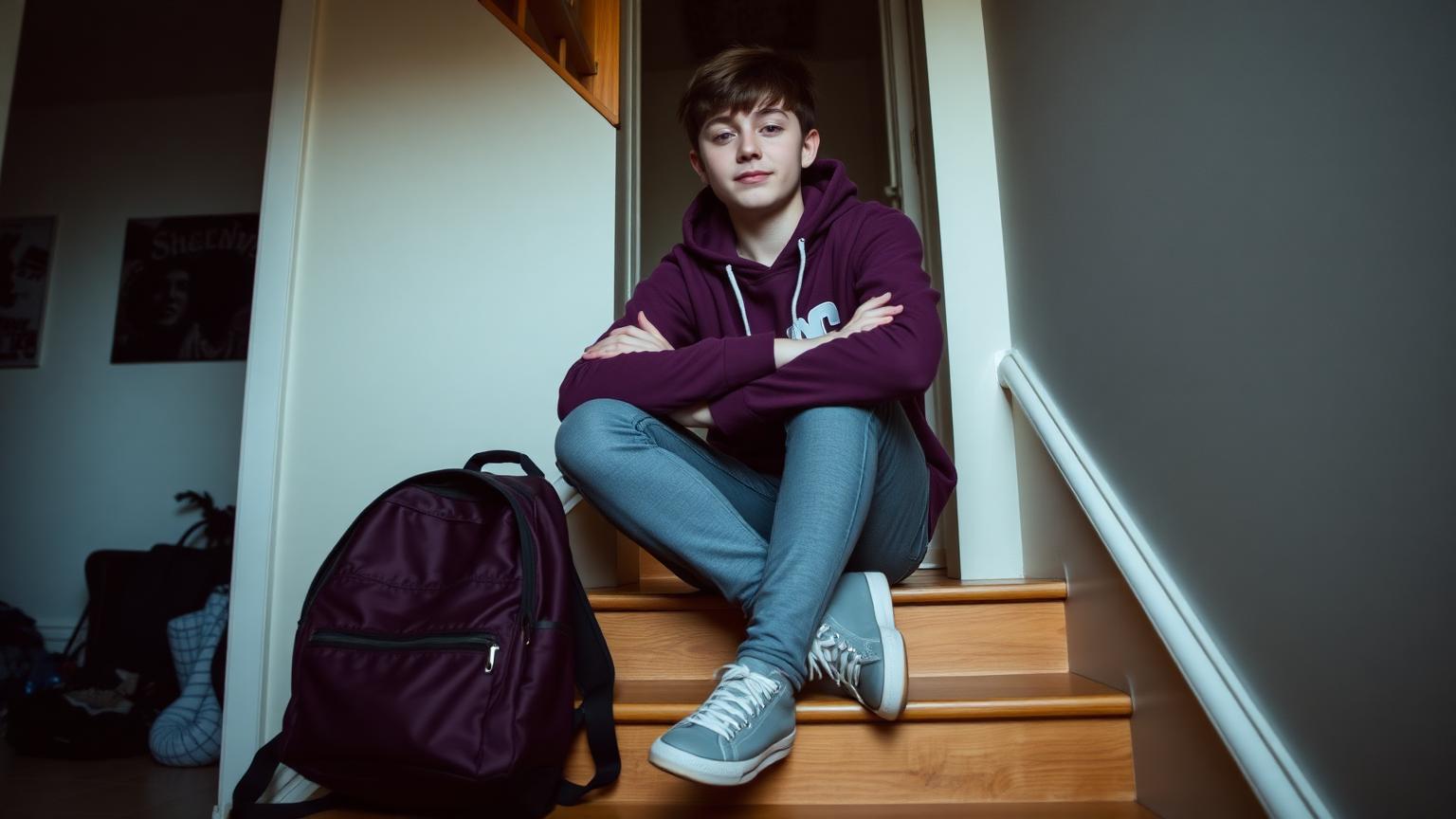
When Teen Anxiety Looks Like Laziness
The essay is not written. The room is a mess. The alarm is ignored. Before you decide they do not care, consider that anxiety can look a lot like avoidance — and avoidance is sometimes the only safe option a brain can find.
Written by Sian Trombley · BEd, MACP, CCC
The deadline passes. The homework stays in the bag. The response to any mention of it is a shrug, an eye-roll, or a door closing. It is easy to conclude that your teenager does not care. But the most common reason teenagers stop trying is not laziness. It is anxiety so intense that doing nothing feels safer than risking failure.
Anxiety in teenagers often does not look like worry. It looks like avoidance. The teen who is not applying to jobs may be terrified of rejection. The teen who never starts the essay may be paralysed by the belief that it will not be good enough. The messy room, the missed alarms, the resistance to conversation — these can all be signs of a nervous system that is overwhelmed, not defiant.
Why avoidance makes sense to an anxious brain
Avoidance is not a character flaw. It is a survival strategy. When a task feels threatening — because it might expose inadequacy, invite criticism, or confirm a negative self-belief — the brain treats it as a danger. Avoiding the task removes the immediate danger. The cost is that the task remains undone, and the anxiety grows because the underlying fear is never tested.
What laziness misses
Calling a teenager lazy does two things: it shames them, and it removes the real problem from view. The label assumes the cause is a lack of will. The reality is usually a combination of anxiety, executive-function overload, low self-efficacy, and sometimes depression or burnout. The word lazy prevents us from helping with any of these.
What to look for beneath the surface
Anxiety-driven avoidance often comes with other clues. Sleep disruption. Irritability. Physical complaints. Social withdrawal. A teen who used to be engaged but now seems flat. These signs do not prove anxiety, but they are worth taking seriously before assuming the problem is motivation.
- Sudden decline in school performance despite past capability.
- Procrastination that seems out of proportion to the task.
- Perfectionism, all-or-nothing thinking, or fear of criticism.
- Avoidance of social situations, phone calls, or new experiences.
- Physical symptoms: headaches, stomach aches, fatigue, insomnia.
- Irritability or withdrawal when asked about school or future plans.
How to respond instead of pushing
The most helpful response is curiosity. Not a lecture. Not a consequence. A genuine question about what is getting in the way. This does not mean you abandon expectations. It means you address the barrier first, then the task.
When to seek professional help
If avoidance has persisted for weeks, is affecting sleep, mood, relationships, or school, or if your teen expresses hopelessness or self-criticism, it is time to speak with a professional. Anxiety and depression are treatable. The earlier support begins, the less entrenched the avoidance pattern becomes.
Children do not need a perfect parent. They need a predictable one who returns after hard moments.
Sian Trombley, Canadian Certified Counsellor
What you can try this week
Replace 'why didn't you?' with 'what got in the way?'
The second question invites problem-solving. The first invites a defensive lie or a shame spiral.
Make the first step absurdly small
'Open the document.' 'Write one sentence.' 'Put one item in the laundry.' Momentum is the antidote to overwhelm.
Name the fear underneath
'I wonder if the hard part is worrying it will not be good enough.' Naming it reduces the power of the unspoken fear.
- Anxiety can look like laziness, avoidance, or apathy in teenagers.
- Avoidance is often a short-term solution to overwhelming fear.
- Pressure usually increases avoidance rather than reducing it.
- Teens need help breaking tasks down, not just reminders.
- A safe relationship is the foundation for motivation to return.
Have I been interpreting avoidance as not caring?
What would my teenager say is the hardest part of getting started?
How can I lower the stakes of asking for help?
Printable resources
Recommended Thrive courses

Share this article
This article is educational and is not a substitute for individual clinical advice. Comments are closed so the Journal stays a calm place to read.