Why Your Child Cannot Find Anything
The water bottle, the reading book, the other shoe. A guide to the disorganised child that does not involve buying more storage.
Written by Sian Trombley · BEd, MACP, CCC
The reading book was in their hand ninety seconds ago. You watched it happen. It has now left the known universe, along with the other shoe, the water bottle and the letter from school that was 'definitely in the bag'.
What is actually going wrong
Putting something down and later retrieving it is a surprisingly complex operation. It requires encoding the location while attention is elsewhere, holding it in working memory, and retrieving it under time pressure. Children with limited working memory capacity — which includes most children with ADHD and plenty without — drop the first step entirely.
Why storage solutions usually fail
A new set of labelled boxes requires a child to make a decision about every object, every time. Decisions cost executive resource, and by four in the afternoon there is none left. Good systems remove decisions rather than organising them.
The four rules that work
- 01One home per item, chosen by the child. Not 'in the kitchen' — on that hook, in that bowl.
- 02Fewer items overall. Every duplicate is another thing to track.
- 03The launch pad: everything that leaves the house waits in one place, packed the night before.
- 04Visual, not verbal: a photograph or drawn checklist at the point of action beats any spoken reminder.
At school
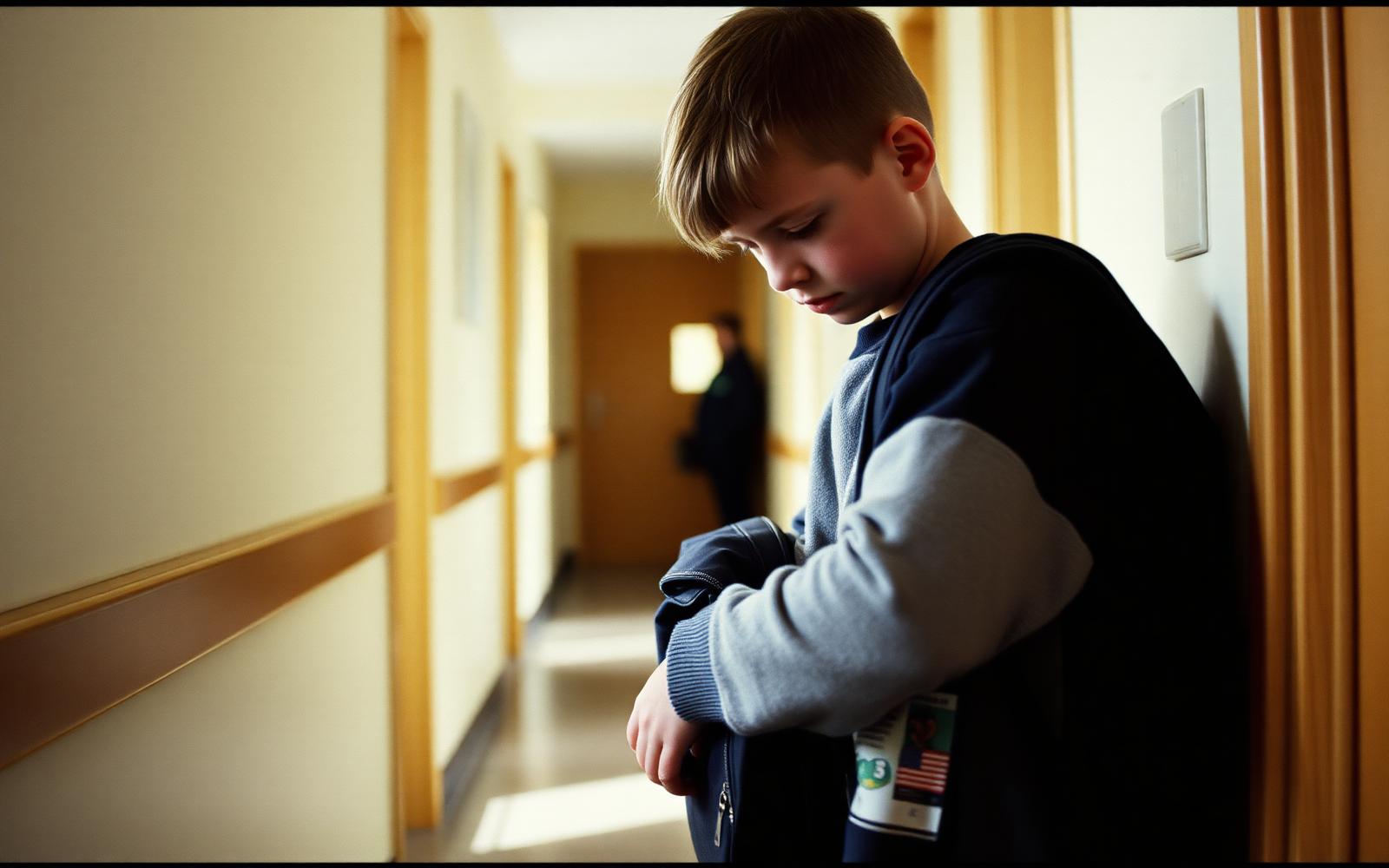
Ask for two small adjustments rather than a general request that your child needs help being organised: a duplicate set of books kept in class, and a named adult who checks the bag at the end of the day. Both are cheap, and both remove the most common failure points.
Children do not need a perfect parent. They need a predictable one who returns after hard moments.
Sian Trombley, Canadian Certified Counsellor
What you can try this week
Create a launch pad
One spot by the door where the bag, shoes and bottle live. Nothing else lives there. Everything leaves from there.
Halve the choices
Two water bottles, not seven. Two jumpers in rotation. A smaller system loses fewer parts.
Photograph the packed bag
Stick the photo inside the bag. Visual matching beats remembering a list.
- Losing things is a working memory issue, not a values issue.
- One fixed location per item beats tidiness in general.
- Fewer possessions means fewer things to lose.
- Checklists must be visual and placed where the action happens.
- The system should require no thinking at 7:50am.
Where does the item usually get lost — is it always the same handover point?
How many decisions does my child make between waking and leaving?
Am I building a system or delivering a lecture?
Printable resources
Recommended Thrive courses

Share this article
This article is educational and is not a substitute for individual clinical advice. Comments are closed so the Journal stays a calm place to read.
Keep going
You may also like
Courses, worksheets and pathways from the same part of the library.
- JournalIt Is Not Laziness: Understanding the Motivation MythCapable, bright, and somehow unable to begin. Laziness is the most common misreading in family life — and the most costly. Here is what is really happening, and how to help.Read
- JournalThe Morning That Unravels: Why Getting Out of the Door Is So HardNobody is being difficult at 7:40am. A brain is being asked to do something it cannot yet do alone.Read
- ResearchThe Research LibraryPeer-reviewed parenting and child mental health research, translated into plain language.Read
- Thrive GuideThrive GuideAsk a question and get warm, evidence-informed guidance drawn from the Thrive library.Read
- Thrive Care PlanThrive Care PlanA short check-in that turns how your week actually went into one focused plan.Read
- Thrive ToolThrive ToolsPremium printable workbooks and therapeutic tool kits.Read