Guide
Ten Minutes That Belong to One Child
The best-evidenced parenting practice there is, and the reason it usually fails.

Share this
- Time in real life
- 10 minutes, three or four times a week
- Ages
- 3–14
- Reading
- 8 min
Reviewed by Sian Trombley, CCCFounder, Thrive Family Company
8 min read
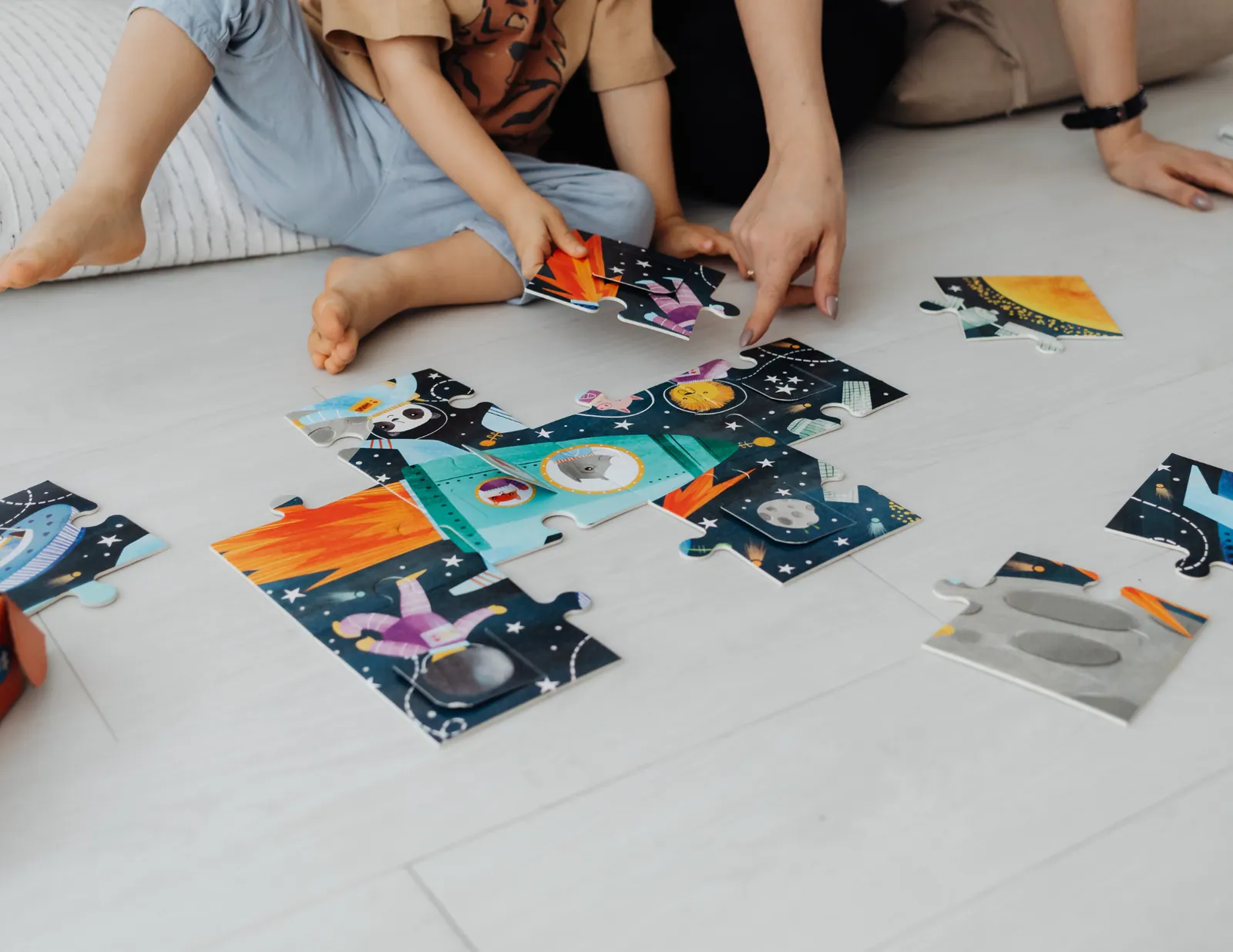
If you asked a room of clinicians which single practice they would give every family, most would not name a discipline strategy. They would name this one: a short, regular, protected stretch of time in which the child decides what happens and the adult does not lead, teach, correct or improve anything.
It sounds so slight that parents routinely skip past it toward something that feels more substantial. It is, in fact, the load-bearing wall.
It is also the practice most often done wrong — not through lack of effort, but because the instincts of a caring adult work directly against it.
What it is actually doing
Children read attention as evidence. Not stated affection — attention: who gets looked at, who gets interrupted, whose ideas are taken seriously. In a busy household, most of the attention a child receives is corrective or logistical, and a child can be deeply loved while accumulating a great deal of evidence that they are mostly a task to be managed.
Ten unstructured, non-directive minutes changes the ratio. It is why the practice — variously called special time, child-led play or one-to-one time — shows up in the evidence base for reducing oppositional behaviour, easing anxiety and repairing sibling rivalry. You are not playing. You are updating a child's belief about their standing in the family.
The three rules
- 01
The child chooses
Anything within reason and within the room: Lego, drawing, a game with rules they invent halfway through, being buried under cushions. Screens are the one exclusion, because a screen becomes the third person in the room and the attention goes to it.
- 02
You describe, you do not direct
Narrate quietly what you see — "you've put the blue one at the top" — instead of questioning, suggesting or praising performance. No "why don't you", no "good boy", no gentle steering toward something more educational. Descriptive attention is the active ingredient.
- 03
It is not conditional
The moment this time can be lost through bad behaviour, it stops being a relationship practice and becomes a reward scheme. A child who has had a terrible day needs it more, not less. Keep it entirely outside the discipline system.
Why it feels so uncomfortable at first
Most adults last about ninety seconds before they teach something. We ask a question to show interest, offer a better way to balance the tower, or turn the moment into a chance to talk about how school is going. Every one of those moves is well meant, and every one hands the lead back to the adult.
Parents often report boredom, restlessness or a low-level guilt about the undone kitchen. That discomfort is worth sitting inside. It is the cost of a kind of attention that has become genuinely rare, and children can tell the difference immediately.
Making it survive real life
- Pick a fixed slot rather than a spare moment: spare moments never arrive.
- Set a timer so the ending is the timer's fault, not yours.
- Ten reliable minutes beat an hour promised at the weekend and lost.
- With more than one child, rotate — three children, three days, everyone knows theirs.
- For teenagers, drop the word play: it becomes a shared task, a drive, a walk to the shop with no agenda attached.
Children do not need more of your day. They need a small, dependable part of it in which they are not being improved.
What tends to change, and when
Families usually notice something within two weeks, and it is rarely the thing they were aiming at. The child asks fewer attention-testing questions at dinner. A sibling argument de-escalates faster. A child who has been withholding conversation starts giving small pieces of their day back, unprompted, in the car.
The behaviour you were worried about often softens too — but as a by-product. You have changed the standing conditions rather than treating the symptom.
Try this week
- 01Choose one fixed ten-minute slot per child and put it in the calendar.
- 02Let the child name it.
- 03Narrate rather than question for the whole ten minutes — no advice, no praise for performance.
- 04Keep it entirely separate from consequences, even on a bad day.
- 05Do it four times, then notice what changed somewhere else.
The therapist's perspective
When a family arrives in my room with a behaviour concern, this is the first thing I ask for, and it is the thing most likely to be quietly abandoned. Ten minutes feels too small to be the answer, so it gets skipped in favour of something more strenuous.
It is not too small. It is the practice with the strongest evidence behind it and the lowest cost of entry in the whole of family life. If you can only manage twice a week, do it twice a week — reliably, and without ever taking it away.
Sian
Sian
Founder, Thrive Family Company
Share this
Continue in Daily Practices

The Five Senses Pause
A grounding practice short enough to use in a supermarket car park, and concrete enough to work when breathing exercises are refused.

The Morning Send-Off Sentence
The final ten seconds of a morning tend to be spent on reminders. One consistent sentence instead does something a reminder cannot.

The Evening Inventory
A short, structured way to close a parenting day that neither replays every mistake nor pretends it went well.