Practice
The Doorway Pause: Ten Seconds That Can Change How You Come Home
Notice what you are carrying in, before you carry it in.

Share this
- Time in real life
- 10 seconds
- The change
- The parent pauses for ten seconds before entering the house, once a day.
- Ages
- Any
- Reading
- 5 min
Reviewed by Sian Trombley, CCCFounder, Thrive Family Company
5 min read
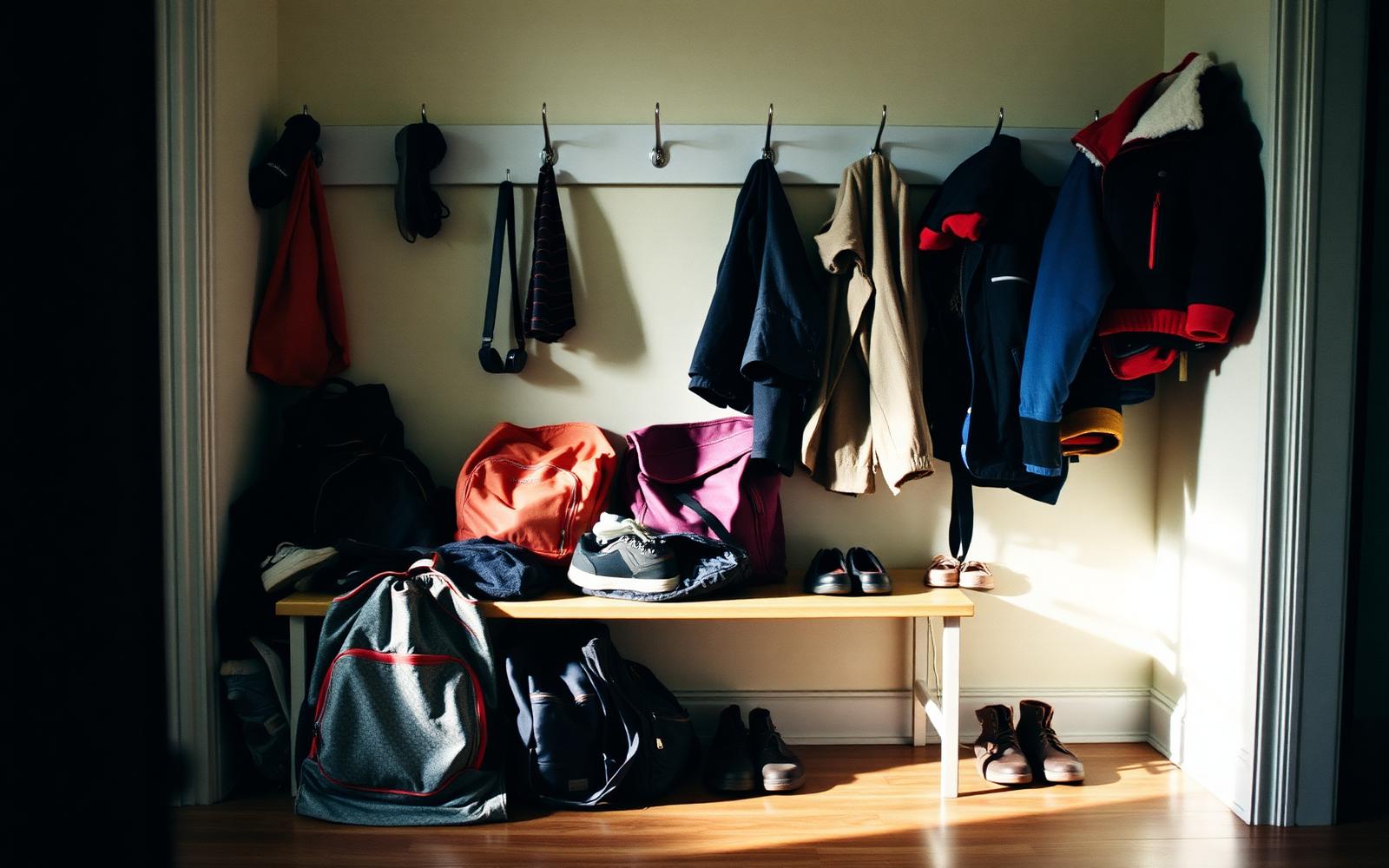
Homes are entered at speed. The door opens and the last hour comes in with you — the meeting that went badly, the traffic, the message you have not replied to — and the first face you see gets the residue of all of it.
The doorway pause is ten seconds spent noticing what you are bringing through the door. It changes nothing about the day. It changes what arrives.
The practice
- 01
Stop before the handle
On the step, in the car, in the lift. Hand off the door, not on it.
- 02
One long breath out
Longer out than in. Ten seconds is enough for two.
- 03
Ask the question
"What am I carrying, and does it belong to the people behind this door?"
- 04
Choose the first sentence
Decide what you will say when you walk in. Almost anything warm and specific — "I'm glad to be home" — outperforms whatever would have come out otherwise.
What to notice
- Speed. Are you still moving at the pace of the last thing?
- Jaw, shoulders, hands. The body reports before the mind does.
- The unfinished thing. Naming it silently is often enough to stop it leaking.
- The expectation. A great deal of doorway irritation is anticipation of the mess or the noise, arriving before the mess or the noise does.
Why transitions matter
Arriving is a transition, and transitions are where mood transfers between environments. The first ninety seconds of a reunion carry disproportionate weight for children, who read tone long before content and who have often been waiting for this moment all afternoon.
You will forget it most days. It still works on the days you remember, and it works particularly well on the days you remember precisely because you are already tense.
Try this week
- 01Pause once a day before entering the house. Just once.
- 02Take one long breath out with your hand off the handle.
- 03Decide your first sentence before you open the door.
- 04Try it before a bedroom door on a difficult evening.
The therapist's perspective
This is the practice parents come back and mention most often, which is likely a function of how little it asks.
If a pause repeatedly reveals that you are bringing home more than can be set down at a doorway, that is worth taking seriously rather than breathing through.
Sian
Founder, Thrive Family Company
Share this
Continue in Daily Practices
The Five Senses Pause
A grounding practice short enough to use in a supermarket car park, and concrete enough to work when breathing exercises are refused.
The Morning Send-Off Sentence
The final ten seconds of a morning tend to be spent on reminders. One consistent sentence instead does something a reminder cannot.
The Evening Inventory
A short, structured way to close a parenting day that neither replays every mistake nor pretends it went well.