Guide
The One-Line Note
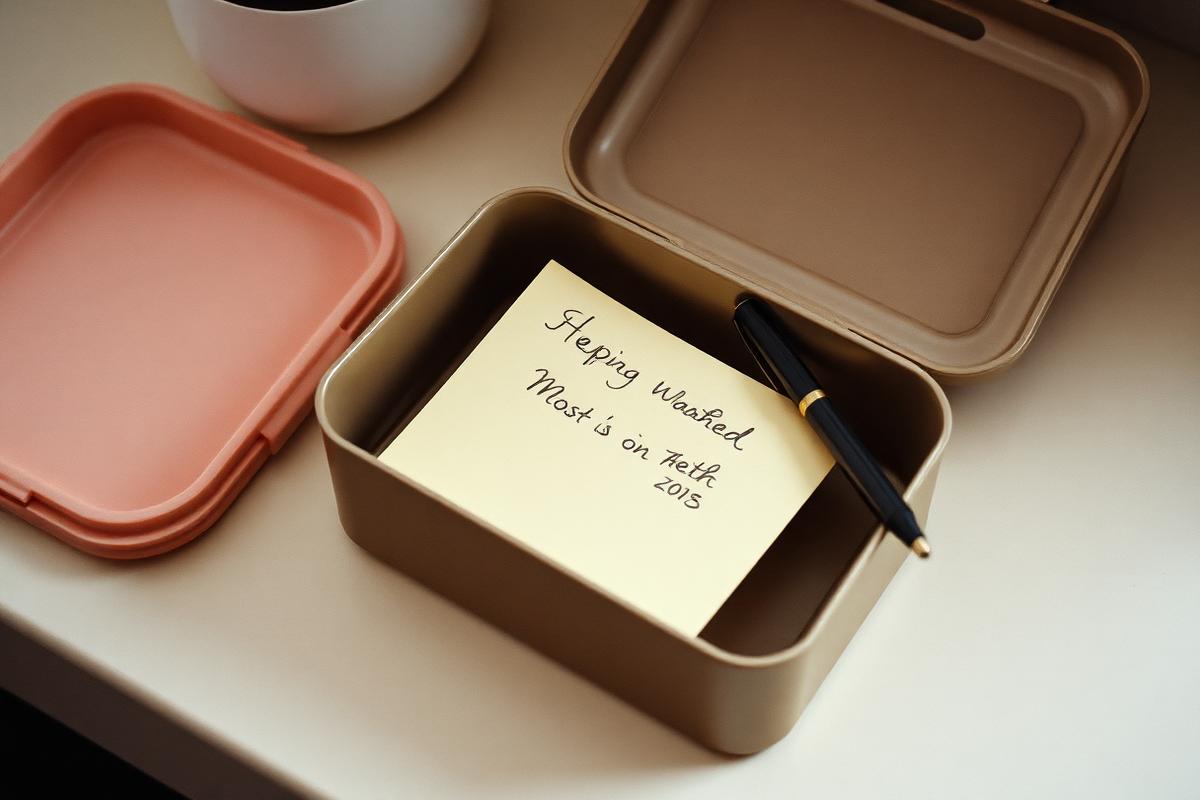
Eleven words on a scrap of paper, and why children keep them for years.

Share this
- Time in real life
- 60 seconds, once a week
- Ages
- 5–18
- Reading
- 6 min
Reviewed by Sian Trombley, CCCFounder, Thrive Family Company
6 min read
Almost every adult I have worked with who kept something from childhood kept a piece of paper. Not a gift. A note in a lunchbox, a line on the back of an envelope, something an adult wrote in thirty seconds and forgot within the hour.
There is a reason for that asymmetry. Spoken affection happens in the middle of everything else — over a bag being packed, half-heard, competing with a radio. Written affection is durable, re-readable and, crucially, not a conversation. Nobody has to respond to it.
This is the smallest practice in Grow and it lasts the longest.
Why writing works differently
Two things are happening. The first is simply repetition without pressure: a note can be read ten times, in private, at the child's own pace, with no adult face attached to it requiring a reaction. The second is specificity. Written praise is almost always more precise than spoken praise, because writing forces you to choose the thing — and specific, process-focused acknowledgement is consistently more useful to children than global evaluation. "You kept going with that piece even though it was hard" builds something. "Clever girl" does not.
For adolescents there is a third factor. A note asks for nothing. No eye contact, no gratitude, no conversation about feelings at a moment they have not chosen. It is affection they can accept without having to perform receiving it.
How to write one
- 01
Name one specific thing you saw
Not a quality — a moment. "You were kind to your brother when he was crying yesterday." Children discount general praise; they cannot discount an observation.
- 02
Keep it under twenty words
A long note becomes a document, and a document requires a response. Short is what makes it re-readable.
- 03
Ask for nothing
No requests, no reminders, no gentle addenda about the PE kit. The moment a note carries logistics it becomes admin and the whole effect is lost.
- 04
Sign it and leave it somewhere unwatched
Lunchbox, pencil case, under a pillow, taped to a laptop. Never handed over in person — the point is that they find it alone.
When they say nothing
- Expect no acknowledgement, especially from teenagers. Silence is not rejection; check the drawer in a year.
- Do not ask whether they found it. Asking converts a gift into a transaction and they will start managing your feelings about it.
- If a child says it is embarrassing, keep writing — but move the delivery somewhere more private.
- Write to each child at slightly different times. Notes that arrive as a matching set read as policy rather than attention.
Say it out loud and they hear it once. Write it down and they can go back for it at midnight, years later.
Sian Trombley
Try this week
- 01Write one note, under twenty words, naming something you actually saw this week.
- 02Remove every request and reminder from it before you leave it.
- 03Put it somewhere they will find it alone.
- 04Do not mention it afterwards.
- 05Write the next one to a different child.
The therapist's perspective
I have watched adults in their forties take a folded piece of paper out of a wallet in a session. Nobody has ever brought in a remembered compliment.
If handwriting affection feels excruciating, that is worth noticing gently rather than overriding. Start with eight words and a signature. It does not have to be beautiful; it has to be true and it has to be theirs.
Sian
Founder, Thrive Family Company
Share this
Continue in Daily Practices

The Five Senses Pause
A grounding practice short enough to use in a supermarket car park, and concrete enough to work when breathing exercises are refused.

The Morning Send-Off Sentence
The final ten seconds of a morning tend to be spent on reminders. One consistent sentence instead does something a reminder cannot.

The Evening Inventory
A short, structured way to close a parenting day that neither replays every mistake nor pretends it went well.