Guide
The Walk That Unlocks a Conversation
Why children tell you more when nobody is looking at anybody.

Share this
- Time in real life
- 20 minutes, twice a week
- Ages
- 6–18
- Reading
- 6 min
Reviewed by Sian Trombley, CCCFounder, Thrive Family Company
6 min read
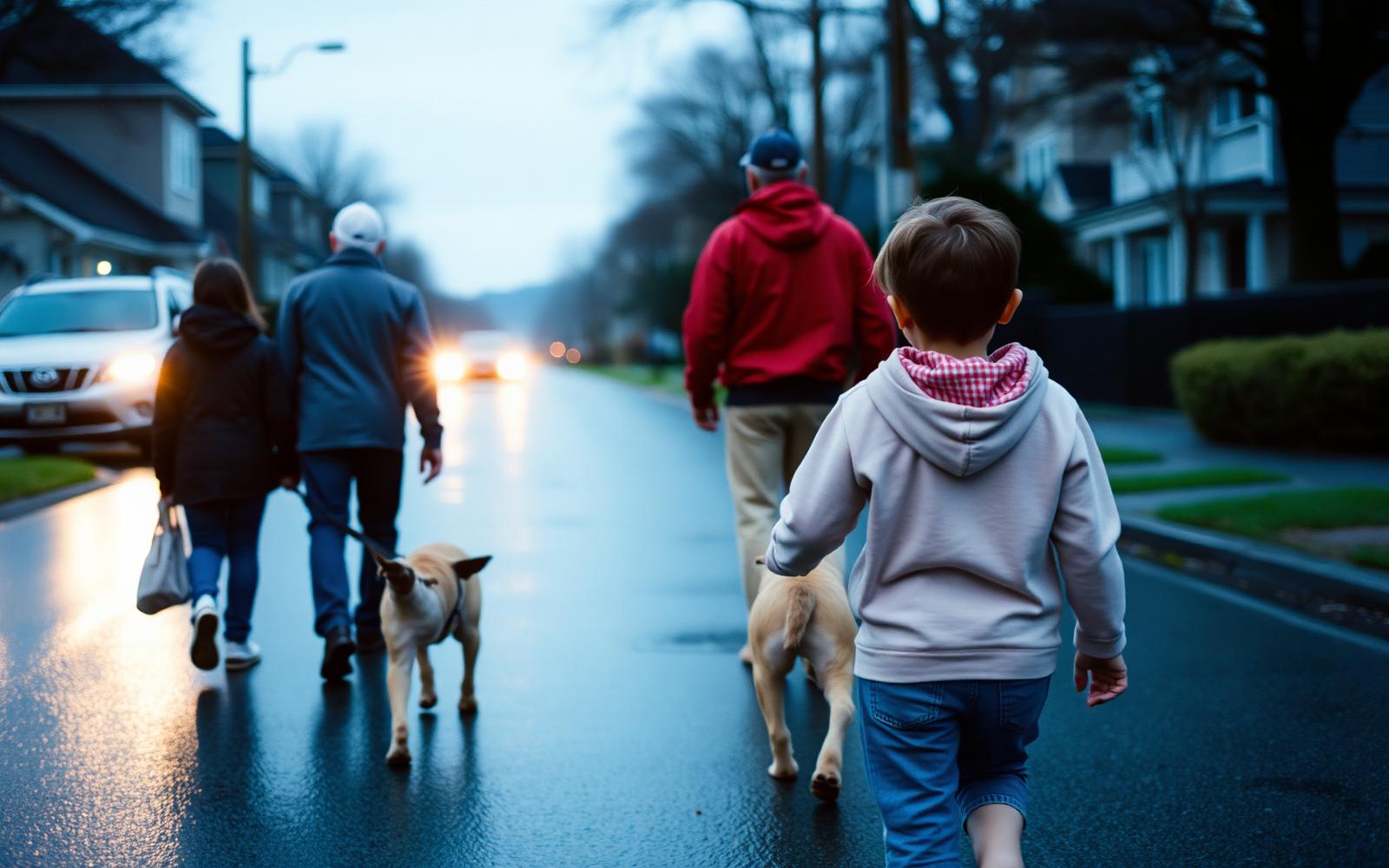
Ask a nine-year-old at the table how school was and you will get "fine". Ask the same child the same question forty minutes into a walk and you will sometimes get the whole thing — the friendship that has gone strange, the teacher who frightens them, the thing they have been carrying since Tuesday.
This is not a trick. Face-to-face conversation is high-load: eye contact, expression management, the sense of being examined. Side-by-side is low-load, and low-load is where difficult material becomes speakable.
It is also the cheapest intervention in this entire pillar.
Why side by side works
Movement occupies the body, so the nervous system settles. Shared focus on the route removes the pressure of eye contact. And there is a natural exit — the walk ends — which makes it safe to start something big, because nobody is trapped in it indefinitely.
Cars work for the same reasons and are the second-best option, particularly for adolescents. Washing up, gardening, walking a dog, driving to a fixture: any activity where two people face the same direction is a conversational asset.
How not to ruin it
- 01
Do not announce the purpose
"I thought we could have a chat" converts a walk into an interview and closes it before you leave the drive. Go for the walk. The conversation is a by-product, not the agenda.
- 02
Tolerate ten minutes of nothing
The first stretch is almost always silence or small talk. This is the warm-up, not the outcome. Most adults abandon the practice during exactly this part.
- 03
Ask smaller questions
Not "how are you?" but "who did you sit with at lunch?" Specific and small is answerable; large and open is an assessment.
- 04
Respond briefly, keep walking
When something real arrives, do not stop, turn, or intensify. Say something short and keep the pace. Escalating your attention is the fastest way to close a door that just opened.
The most useful thing you can offer a child who is struggling is twenty minutes of your shoulder, not your face.
Try this week
- 01Take one twenty-minute walk with one child, with no stated purpose.
- 02Hold the first ten minutes of silence without filling it.
- 03Ask one small, specific question instead of a large open one.
- 04If something real arrives, keep walking and say very little.
The therapist's perspective
I do a good deal of my own work with adolescents while walking, for exactly these reasons. Young people who will not speak in a room will often speak on a path.
If you have several children, walk with one. Individual time is the scarcest resource in a busy family and the one with the largest single effect on how known a child feels.
Sian
Founder, Thrive Family Company
Share this
Continue in Daily Practices

The Five Senses Pause
A grounding practice short enough to use in a supermarket car park, and concrete enough to work when breathing exercises are refused.
The Morning Send-Off Sentence
The final ten seconds of a morning tend to be spent on reminders. One consistent sentence instead does something a reminder cannot.

The Evening Inventory
A short, structured way to close a parenting day that neither replays every mistake nor pretends it went well.