When It Is Hard to Be a Friend: Helping Children Belong
Friendship is the most complex social task we ask of children, and we mostly leave them to work it out at speed, in a crowd, without instruction.
Reviewed by Sian Trombley, CCCFounder, Thrive Family Company
11 min read
Best for parents of children who are…
- finding friendships difficult
- being hard on themselves
- finding school days hard to get through
- struggling to say what is really going on

Share this
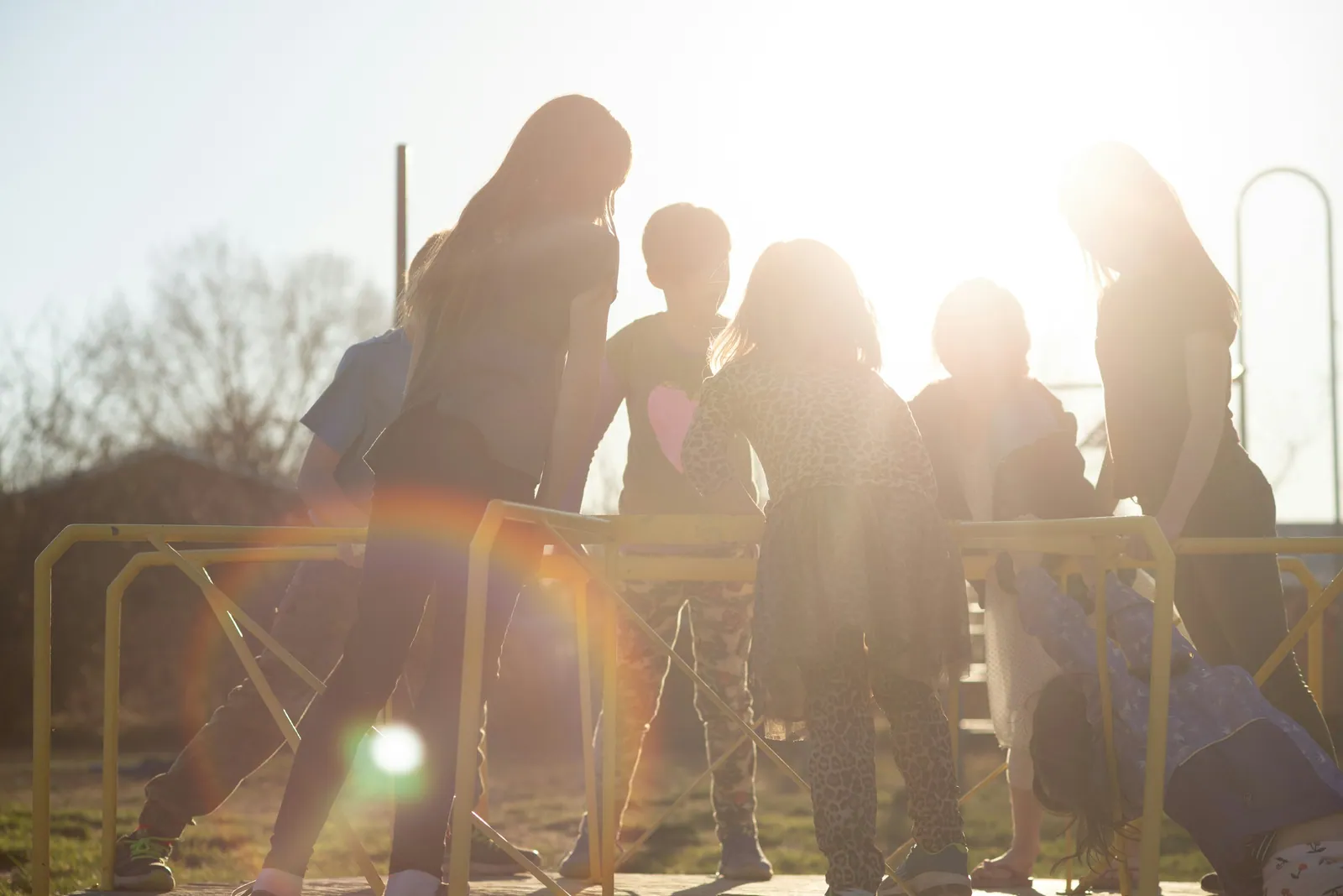
Consider what we actually ask of an eight-year-old at morning break. Read an unfamiliar group from several metres away. Identify the game, the hierarchy and the mood. Choose a moment. Produce a sentence. Tolerate an ambiguous response. Do all of this in under a minute, with an audience, and then repeat it tomorrow.
Adults describe this as "just playing". It is one of the most cognitively demanding social tasks in a child's day, and most children receive no explicit instruction in it whatsoever.
What actually protects a child socially
Parents often measure friendship by volume — invitations, party lists, group chats. The research points elsewhere. What appears most protective is the presence of at least one reciprocal friendship: a relationship both children would name, with genuine mutual pleasure in it.
The Hard-Conversation Map
Five moves that keep a difficult conversation open.
The first ninety seconds after the difficult sentence
"Nobody played with me." The instinctive parental responses are all understandable and all premature: reassurance ("of course they like you"), problem-solving ("tomorrow just ask Sophie"), or escalation ("right, I'm emailing the school"). Each closes the conversation before the useful information appears.
Three different problems that look the same
Most friendship difficulty falls into one of three categories, and they call for genuinely different responses. Treating exclusion as a skills gap leaves a child carrying something that is not theirs; treating a skills gap as bullying misses an opportunity to teach.
- 01Ordinary friction
Mutual, occasional fall-outs that resolve within days. Coach repair and resist intervening. This is the curriculum working.
- 02A skills gap
The child wants in and cannot find the door: joins too loudly, misses cues, changes the game, struggles to lose. Highly responsive to specific rehearsal.
- 03Exclusion or bullying
Repeated, one-directional, with a power imbalance and the same child targeted. This requires adult and school action, not resilience coaching.
What can be taught at home
The skills below are unglamorous and specific, which is exactly why they work. Practise them when nothing is wrong; a rehearsed sentence is available under pressure, an inspiring conversation is not.
- Entering: one memorised line, delivered while joining the existing game rather than proposing a new one.
- Reading the answer: what a yes looks like, what a not-now looks like, and why the second one is not a verdict.
- Losing: practising defeat at home in low-stakes games until it is survivable.
- Repairing: a short apology with a specific offer — "sorry I walked off. Want to play at lunch?"
- Refusing: leaving a game or a group without cruelty, so the child is not trapped by politeness.
- Noticing: asking one question about the other person and remembering the answer until tomorrow.
Engineering the conditions
Friendship forms around shared activity. A lonely child in an unstructured playground is being asked to solve the hardest version of the problem. Structure removes most of the difficulty: a club with a fixed task, a single child invited home for something specific and time-limited, a shared interest with a natural script built in.
- 01Identify one interest your child genuinely holds, not one you wish they held.
- 02Find the smallest, most structured setting for it.
- 03Invite one child, for a short, defined activity — not an open afternoon.
- 04Debrief lightly afterwards: what was easy, what was awkward.
- 05Repeat with the same child before adding anyone new. Familiarity does most of the work.
“Children do not need to be liked by everyone. They need one person who chooses them back, and an adult at home who does not panic when that takes a while.”
Sian Trombley
When to involve school or seek support
Contact the school when difficulty is persistent rather than passing, when the same child is repeatedly targeted, when your child is reluctant to attend, or when you are hearing about incidents you cannot see. Seek professional guidance if social distress is affecting sleep, mood, appetite or attendance, if your child expresses hopelessness about themselves, or if you have concerns about their safety.
One steady friend does more for a child's confidence than a crowd that tolerates them.
Sian Trombley, Canadian Certified Counsellor
What you can try this week
Listen for ninety seconds before helping
When the difficult sentence arrives, reflect it back and add nothing. "That sounds lonely." Then wait. Most children continue talking, and the second half is where the information is.
Rehearse one entry line
Practise a single specific way into a group — "can I be on your team?" — until it is boring. Children rarely fail to join because they lack courage; they fail because they have no rehearsed sentence.
Engineer one shared-interest hour
A club, a class, a single invited child. Friendship forms around shared activity far more reliably than around unstructured social space.
- One genuine reciprocal friendship matters more than being widely liked.
- Friendship is a set of teachable micro-skills, not a personality trait.
- Ask what happened just before — the pattern is usually in the entry or the exit.
- Distinguish ordinary friction, exclusion, and bullying; each needs a different response.
- Structured, shared-interest settings do more for a lonely child than pep talks.
What was your own experience of friendship at this age, and how much of it is in the room?
Are you responding to your child's distress, or to your memory of it?
What does your child actually want from you here — help, or company?
Printable resources
Recommended Thrive courses
This article is educational and is not a substitute for individual clinical advice. Comments are closed so the Journal stays a calm place to read.
Share this
Keep going
You may also like
Courses, worksheets and pathways from the same part of the library.
- ResearchThe Research LibraryPeer-reviewed parenting and child mental health research, translated into plain language.Read
- Thrive GuideThrive GuideAsk a question and get warm, evidence-informed guidance drawn from the Thrive library.Read
- Thrive Care PlanThrive Care PlanA short check-in that turns how your week actually went into one focused plan.Read
- Thrive ToolThrive ToolsPremium printable workbooks and therapeutic tool kits.Read
- CollectionThe Resource LibraryFree printable worksheets, scripts and planners for families.Read
- JournalThe Group Project: When Your Child Carries the Whole TeamThey are not doing everyone's work because they are generous. They are doing it because they cannot tolerate the risk of it being done badly.Read