Kindness Is a Skill, Not a Temperament
Empathy is not something children either have or lack. It is a capacity that grows in specific conditions — and quietly stalls in others.
Reviewed by Sian Trombley, CCCFounder, Thrive Family Company
9 min read
Best for parents of children who are…
- needing extra emotional support at the moment
- going through a change at home or at school
- showing more upset than usual and not saying why

Share this
Almost every parent says they want a kind child. In a well-known Harvard survey, roughly four in five young people reported that their parents cared more about achievement or happiness than about caring for others — and they were not guessing wildly. They were reading what actually gets asked about at dinner.
The gap between what we value and what we transmit is where most kindness parenting goes wrong. Not because parents are hypocritical, but because kindness is taught in the small unremarked moments, and achievement is discussed in the loud ones.
Empathy runs on spare capacity
Consider what empathy actually asks of a brain: notice another person's state, imagine an internal world different from your own, tolerate the discomfort of their distress, and choose to act. A child in fight-or-flight can do none of this. This is why the same child can be tender at bedtime and vicious at 4pm — it is not inconsistency of character but of capacity.
The four conditions that grow empathy
- 01Their own feelings are taken seriously. Children who are told 'you're fine' learn to override internal signals — including the ones that register somebody else's pain.
- 02Feelings are named routinely, in themselves and in others, until emotional vocabulary is automatic.
- 03Harm can be repaired without humiliation. Shame makes children defend themselves; repair makes them think about the person they hurt.
- 04They see it modelled where it costs something — patience with a slow cashier, generosity when tired, apology from an adult to a child.
What to do when your child is unkind
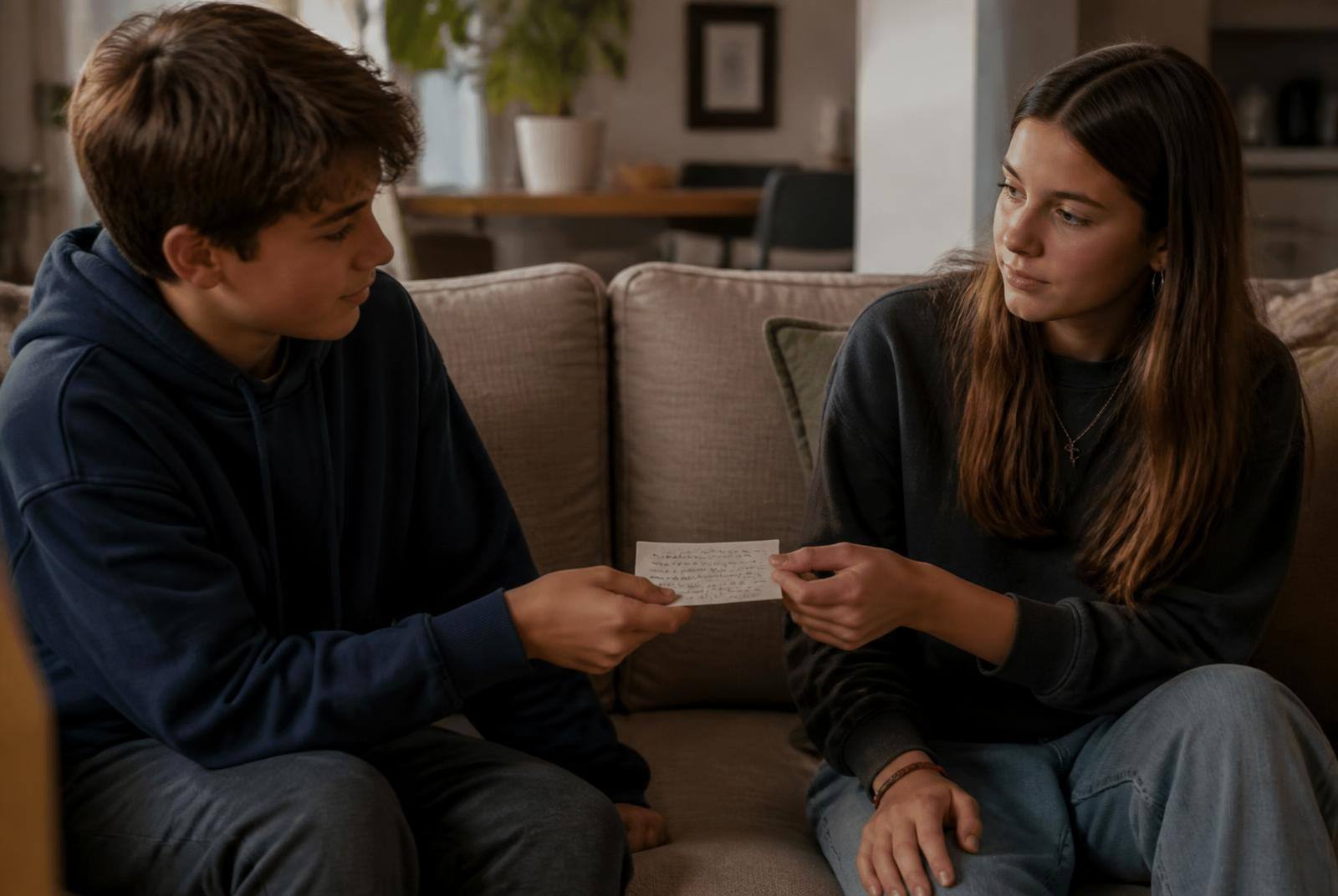
Deal with it privately, not in front of the audience. Public correction produces shame, and shame produces self-protection rather than reflection. Later, when everyone is calm, work through three questions: what happened, what did the other person feel, what will you do to put it right. Then let it be finished. Children who are reminded of their worst moment do not become kinder; they become defended.
The teenage version
Adolescents can seem to lose empathy overnight. Some of this is developmental — the social brain is being rebuilt, and self-focus is genuinely heightened. Much of it is exhaustion and peer pressure. The intervention that works best at this age is not moral instruction but exposure: real responsibility for someone or something that depends on them, whether a younger sibling, a job, an animal, or volunteering they chose themselves.
A forced apology teaches the performance of remorse. Ask for repair instead — an action that helps the other person — and let genuine apology follow when it is real.
Extremely normal. Siblings receive the unregulated version because they are safe. Work on regulation and fair systems rather than on kindness lectures.
Temperament influences the starting point, but empathy is highly responsive to environment. Both anxious and highly sensitive children often need help managing empathy rather than growing it.
Kindness is not a temperament children are born with. It is a habit they see practised on the days it is inconvenient.
Sian Trombley, Canadian Certified Counsellor
What you can try this week
Narrate one stranger's inner world
'That man looks like he's had a long day.' Perspective-taking is a muscle, and it strengthens by casual use, not by lecture.
Replace apology with repair
Instead of forcing 'sorry', ask 'what would help them feel better?' Repair requires thinking about the other person; a mumbled apology does not.
Praise a private kindness
Notice something they did when nobody was watching. That is the version worth reinforcing.
- Empathy requires regulation — an overwhelmed child cannot access it.
- Shame reliably reduces kindness; repair reliably builds it.
- Children copy how you treat the waiter, not what you say about kindness.
- Name feelings out loud, including your own, in ordinary moments.
- Kindness that is only ever performed for adults is compliance in disguise.
How do I speak about people who annoy me when my child is in the room?
Do I make room for my child's difficult feelings, or only their pleasant ones?
Is kindness in our house something to be seen doing, or something to be?
Printable resources
Recommended Thrive courses
This article is educational and is not a substitute for individual clinical advice. Comments are closed so the Journal stays a calm place to read.
Share this
Keep going
You may also like
Courses, worksheets and pathways from the same part of the library.
- ResearchThe Research LibraryPeer-reviewed parenting and child mental health research, translated into plain language.Read
- Thrive GuideThrive GuideAsk a question and get warm, evidence-informed guidance drawn from the Thrive library.Read
- Thrive Care PlanThrive Care PlanA short check-in that turns how your week actually went into one focused plan.Read
- Thrive ToolThrive ToolsPremium printable workbooks and therapeutic tool kits.Read
- CollectionThe Resource LibraryFree printable worksheets, scripts and planners for families.Read
- JournalHow Children Actually Make FriendsFriendship rarely starts with a grand conversation. It starts with two children building near each other, repeatedly, until familiarity turns into something warmer. Understanding the actual mechanics of how friendships form changes what parents do to help — less coaching charisma, more engineering conditions.Read