Mindfulness That Actually Works With Children
Most children will not sit still and watch their breath. Fortunately, that was never the point.
Written by Sian Trombley · BEd, MACP, CCC
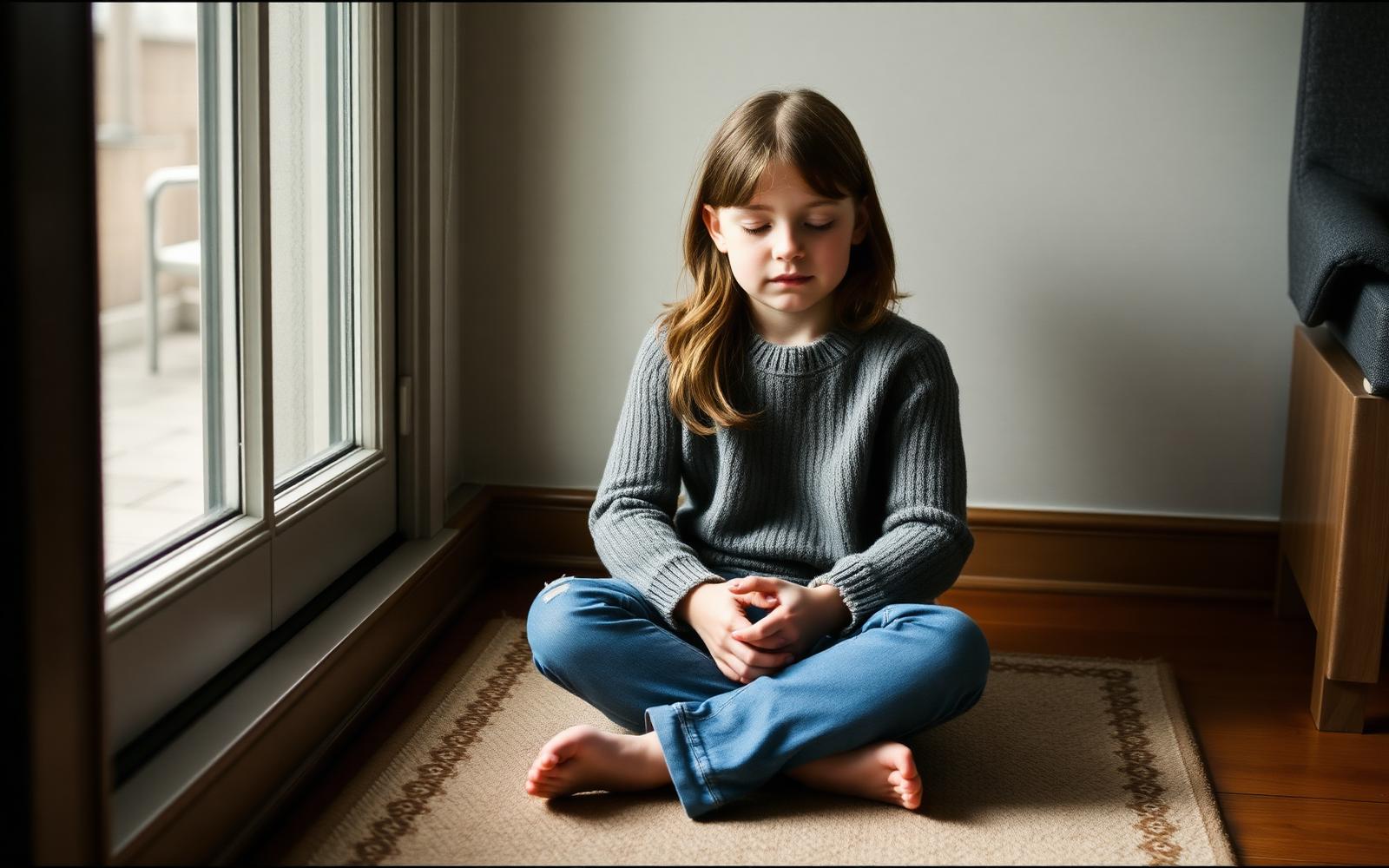
Ask a nine-year-old to sit cross-legged, close their eyes and observe their thoughts, and you are essentially asking them to be bored on purpose while an adult watches. Most will comply for ninety seconds and never volunteer again. This is not a failure of the child.
What mindfulness is for
Mindfulness is the practice of noticing what is happening now, without immediately judging or fixing it. For children, the useful outcome is not serenity. It is the gap — the half-second between a feeling arriving and a reaction leaving. That gap is where every regulation skill lives.
Eight practices that survive real family life
- 01Cloud watching: two minutes on their back outside, describing shapes. The original mindfulness practice, and still the best.
- 02One-bite attention: the first bite of dinner, eaten slowly, described in three words.
- 03Sound map: sit still and count every distinct sound for sixty seconds.
- 04Hand warmth: rub palms together fast for ten seconds, then hold them still and notice the heat fade.
- 05Walking slowly: the last fifty metres to the front door, walked deliberately slowly.
- 06Three good noticings at bedtime: not gratitude, just three things noticed that day.
- 07Weather report: 'what's the weather inside you right now?' answered in one word, no discussion.
- 08Stir and watch: while cooking, watch something change — sauce thickening, bread toasting — without doing anything else.
Why brief and frequent wins
The research is fairly consistent: short daily practice produces better outcomes in children than longer weekly sessions. Sixty seconds a day for a month builds a genuine habit; twenty minutes on a Sunday builds a memory of a strange Sunday.
The parent's part
The strongest predictor of whether a family keeps this going is whether the adult does it too. Not perfectly, and not visibly performing serenity. A parent who says 'I'm going to notice my tea for a minute before we start homework' teaches more than any guided recording.
Children do not need a perfect parent. They need a predictable one who returns after hard moments.
Sian Trombley, Canadian Certified Counsellor
What you can try this week
Pick one anchor moment
One existing daily event — the first minute in bed, the walk to school, waiting for toast — and attach sixty seconds of noticing to it.
Do it with them
Children do not adopt practices they are prescribed. They adopt practices they see adults doing.
Drop the word 'calm'
Say 'let's notice' rather than 'let's calm down'. Otherwise every practice is judged on whether it worked.
- Brief and frequent beats long and occasional.
- Movement-based and sensory practices suit children better than seated meditation.
- Attach the practice to an existing daily anchor or it will not survive the week.
- Mindfulness is noticing, not relaxing — say so, or children feel they are failing.
- Parents practising alongside is the strongest predictor of a child continuing.
Am I offering mindfulness as a skill, or as a way to make my child less inconvenient?
Which moment in our day already repeats without effort?
What is my own relationship with sitting still?
Printable resources
Recommended Thrive courses

Share this article
This article is educational and is not a substitute for individual clinical advice. Comments are closed so the Journal stays a calm place to read.
Keep going
You may also like
Courses, worksheets and pathways from the same part of the library.
- ResearchThe Research LibraryPeer-reviewed parenting and child mental health research, translated into plain language.Read
- Thrive GuideThrive GuideAsk a question and get warm, evidence-informed guidance drawn from the Thrive library.Read
- Thrive Care PlanThrive Care PlanA short check-in that turns how your week actually went into one focused plan.Read
- Thrive ToolThrive ToolsPremium printable workbooks and therapeutic tool kits.Read
- CollectionThe Resource LibraryFree printable worksheets, scripts and planners for families.Read
- JournalBorrowing Calm: How Children Regulate Through UsBefore a child can calm themselves, they have to borrow calm from someone else — hundreds of times. This is how that transaction actually works, and what to do when your own reserves are empty.Read