When a Grandparent Has Dementia
Helping a child hold on to someone who is still here, and still changing.
Reviewed by Sian Trombley, CCCFounder, Thrive Family Company
8 min read
Best for parents of children who are…
- grieving someone or something they have lost
- struggling to say what is really going on
- worrying often, or asking the same question again and again

Share this
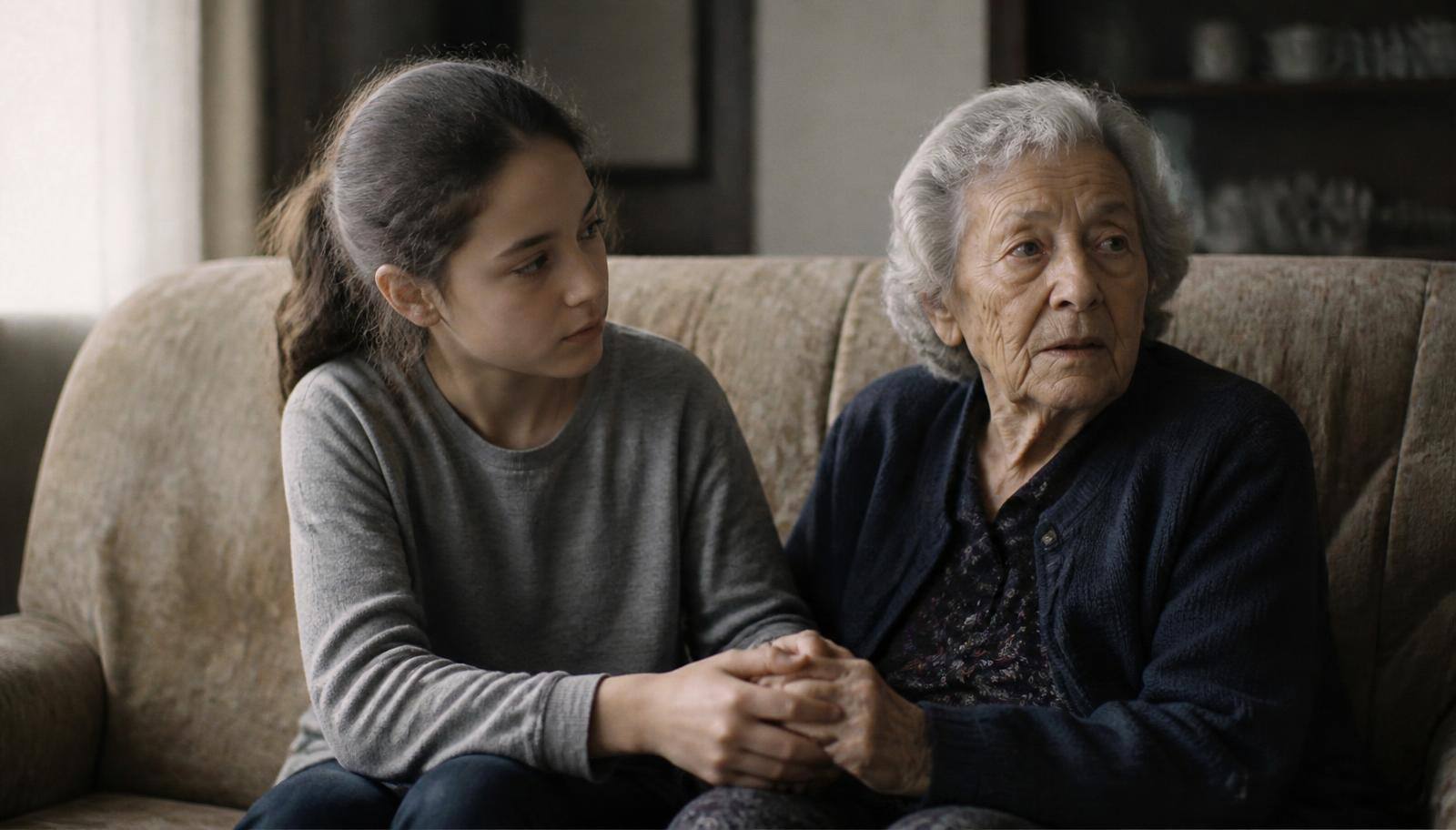
She used to know exactly which biscuit your daughter liked. Last Sunday she called her by your sister's name, twice, and your daughter said nothing on the way home — just looked out of the window for forty minutes. That silence is the beginning of a grief nobody has told her she is allowed to have.
Why this loss is harder than a death
Grief usually has a shape: something ended, and everyone agrees it ended. Dementia offers no such clarity. The person is at the table, wearing their own cardigan, occasionally entirely themselves — and then gone again by pudding. Psychologists call this ambiguous loss, and it is uniquely difficult because there is no moment at which mourning is socially permitted.
Children feel this acutely. They are still learning that people can hold two truths at once, so 'I love visiting Grandad' and 'I dread visiting Grandad' sit inside them as a contradiction they assume must be their fault.
What to actually say
Children need an explanation that is true, short, and mechanical. Mechanism reassures: it converts something eerie into something ordinary and physical.
Making visits survivable
- 01Prepare, briefly
One sentence about what may be different today. Surprises are what children find frightening, not decline itself.
- 02Keep it short and repeatable
Twenty good minutes beats ninety uncertain ones. Frequency builds familiarity; length only builds dread.
- 03Give them something to do
Old photographs, hand cream, a familiar song, a plant to water. Sensory and musical memory often survive long after names go.
- 04Allow an exit
Agree a private signal that means 'I need to wait in the corridor.' Children who can leave usually stay.
- 05Debrief in the car
Not an interrogation. One observation from you — 'that was hard when he asked the same thing four times' — and then silence, so they can fill it if they want.
When they do not want to go
Refusal is information, not defiance. Usually it means the visit has become unpredictable, or the child has seen an adult crying and concluded they must protect everyone by staying away. Ask what the worst part is. The answer is often startlingly specific — the smell of the corridor, the woman who shouts, the moment of saying goodbye — and specific problems can be solved.
Forced visits build resentment that outlives the illness. Negotiated ones — shorter, with a job, with an exit — almost always continue.
What your child is watching
You are also losing a parent, in instalments, while running the logistics of care. Children read that. If you narrate none of it, they learn that this kind of sadness must be hidden. If you narrate all of it, they take on a caring role that is not theirs.
The middle is one honest line and no more: 'I found today sad. I'm alright — I've got people to talk to about it.' That sentence teaches a child that grief is survivable and that adults have their own support. Both are things they will use for the rest of their lives.
Children do not need a perfect parent. They need a predictable one who returns after hard moments.
Sian Trombley, Canadian Certified Counsellor
What you can try this week
Give it its name
Use the word dementia once, plainly, with a one-line explanation. Naming a thing halves it.
Build a visit with a job in it
Bringing photographs, brushing hair, playing one song. A task gives a child somewhere to put their hands and their nerves.
Say the sentence they need
"If she forgets your name, it isn't because she stopped loving you. The illness takes the name, not the love."
- Ambiguous loss — grieving someone still living — is harder for children than a clear ending.
- A short, honest explanation of what dementia does to the brain lowers fear.
- Being forgotten is not rejection, and children need that said out loud.
- Short, structured, sensory visits work far better than long open-ended ones.
- Children take their permission to feel from you. Let them see you sad and steady.
What does my child actually believe is happening — have I ever asked?
Am I protecting them from the illness, or from my own grief?
What is one small role my child could have that makes them feel useful rather than helpless?
Printable resources
This article is educational and is not a substitute for individual clinical advice. Comments are closed so the Journal stays a calm place to read.
Share this
Keep going
You may also like
Courses, worksheets and pathways from the same part of the library.
- ResearchThe Research LibraryPeer-reviewed parenting and child mental health research, translated into plain language.Read
- JournalWhat Children Overhear About MoneyA child cannot do the maths on a mortgage. They can absolutely do the maths on how quiet the kitchen gets after the post arrives.Read
- Thrive GuideThrive GuideAsk a question and get warm, evidence-informed guidance drawn from the Thrive library.Read
- Thrive Care PlanThrive Care PlanA short check-in that turns how your week actually went into one focused plan.Read
- Thrive ToolThrive ToolsPremium printable workbooks and therapeutic tool kits.Read
- CollectionThe Resource LibraryFree printable worksheets, scripts and planners for families.Read