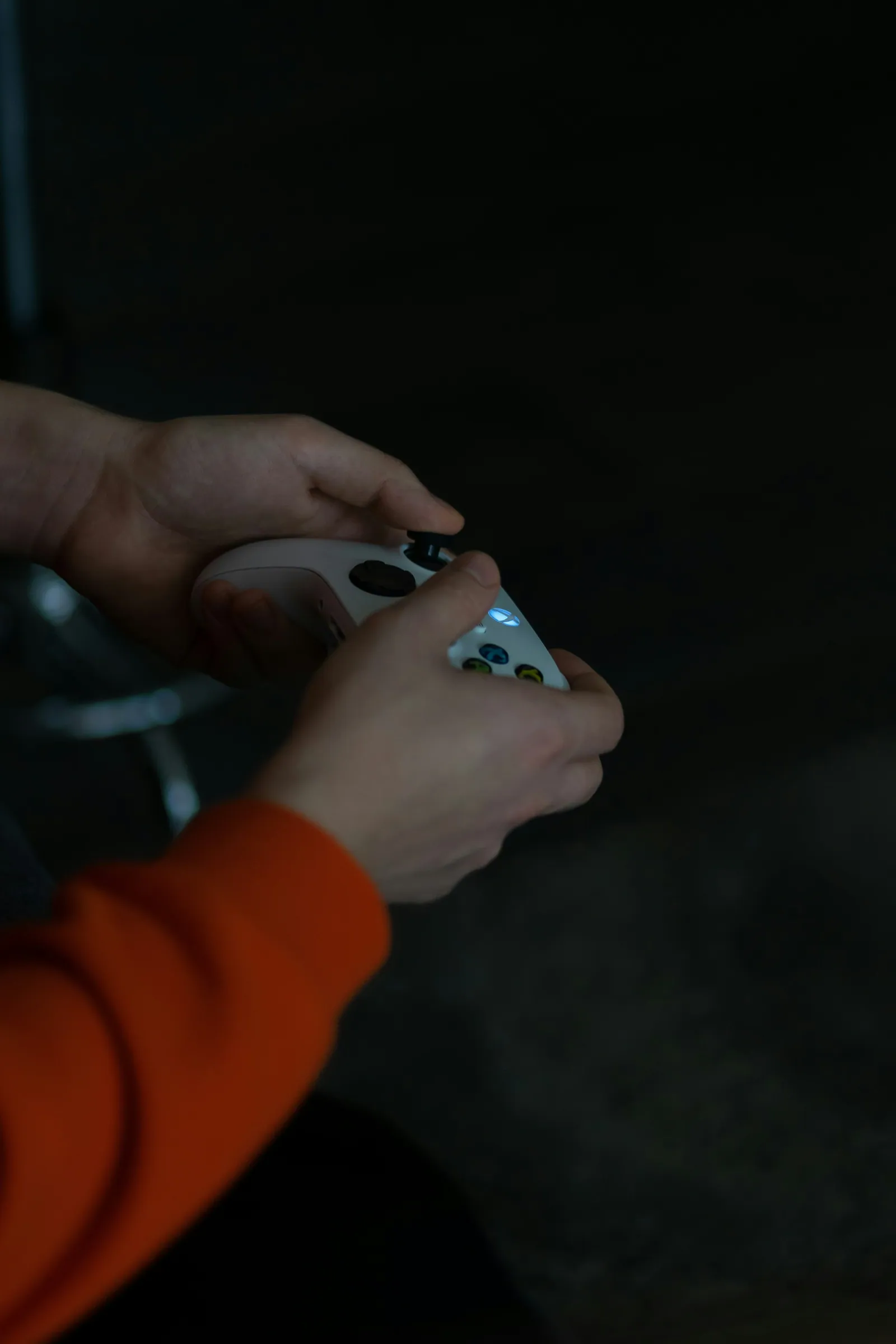
When Gaming Becomes a Problem
Most heavy gaming is not addiction. Knowing which is which is the whole task.
Reviewed by Sian Trombley, CCCFounder, Thrive Family Company
9 min read
Best for parents of children who are…
- withdrawing during the teenage years
- needing extra emotional support at the moment
- going through a change at home or at school

Share this
The headset is on. The reply to your question comes four seconds late and one word long. From the doorway, it looks like your child has gone somewhere you cannot follow — and the not knowing is often harder to bear than the hours.
Here is the uncomfortable clinical truth: most heavy gaming is not a disorder. It is a hobby with a social layer attached, practised intensely at exactly the age when intense practice of anything is developmentally normal. But a minority of gaming genuinely does become compulsive, and the families who catch that early do so by measuring the right things.
The three metrics that matter
- Sleep: is the console costing hours of it, several nights a week?
- School: has attendance, homework or engagement genuinely dropped?
- Friendship: is there any in-person contact left, or has it all moved online?
- Mood off-game: is there flatness, irritability or emptiness when not playing?
- Control: can they stop at an agreed point, most of the time?
- Honesty: is play being hidden, or the time misreported?
Why confiscation backfires
A conversation that works
- 01Start with curiosity
Watch ten minutes. Ask who they play with. This buys more credibility than any rule you set.
- 02Name what you have seen
'You've been getting to bed after one most nights this week.' Specific, factual, no adjectives.
- 03Agree the protected things
Sleep, school mornings, one weekly family meal. Protect those first; the rest is negotiable.
- 04Design an end, not a cap
Games are built to resist stopping mid-match. Agree a finishing point, not a buzzer.
- 05Add before you subtract
Any hour removed needs somewhere to go — sport, a job, a club, time with you.
When to get help
Seek professional input if gaming continues to escalate despite clear harm, if your teenager is aggressive when play ends, if school attendance is dropping, or if gaming looks like it is managing low mood or anxiety. In that last case, the game is the symptom, and treating it as the problem will fail.
Games are designed never to reach a natural end. The problem is not your child's willpower.
Sian Trombley, Canadian Certified Counsellor
What you can try this week
Audit the three metrics
Sleep, school and in-person friendship. If all three are intact, you have a hobby. If two are slipping, you have a pattern worth addressing.
Ask what it gives them
'What's the best part — the game, or the people?' The answer tells you what any limit has to protect.
Negotiate the shape, not the total
Fixed end times and a device that sleeps outside the bedroom beat a daily hour count nobody can police.
- Hours alone do not define a problem — impairment does.
- Games often carry a teenager's entire social life.
- Sudden confiscation escalates conflict without changing use.
- Sleep, school and friendship are the three metrics that matter.
- Replace, don't just remove.
Is my child's gaming replacing something, or providing something?
What would they lose socially if I halved it tomorrow?
Have I ever asked them to show me what they actually play?
Printable resources
Recommended Thrive courses
This article is educational and is not a substitute for individual clinical advice. Comments are closed so the Journal stays a calm place to read.
Share this
Keep going
You may also like
Courses, worksheets and pathways from the same part of the library.
- JournalSurrounded and Alone: Teenage LonelinessThey are messaging constantly. They are also, by their own quiet account, completely on their own. Both things are true, and only one of them is visible.Read
- ResearchThe Research LibraryPeer-reviewed parenting and child mental health research, translated into plain language.Read
- Thrive GuideThrive GuideAsk a question and get warm, evidence-informed guidance drawn from the Thrive library.Read
- Thrive Care PlanThrive Care PlanA short check-in that turns how your week actually went into one focused plan.Read
- Thrive ToolThrive ToolsPremium printable workbooks and therapeutic tool kits.Read
- CollectionThe Resource LibraryFree printable worksheets, scripts and planners for families.Read