I'm Just Not a Maths Person
Maths anxiety is a working-memory problem wearing the costume of a personality trait.
Written by Sian Trombley · BEd, MACP, CCC
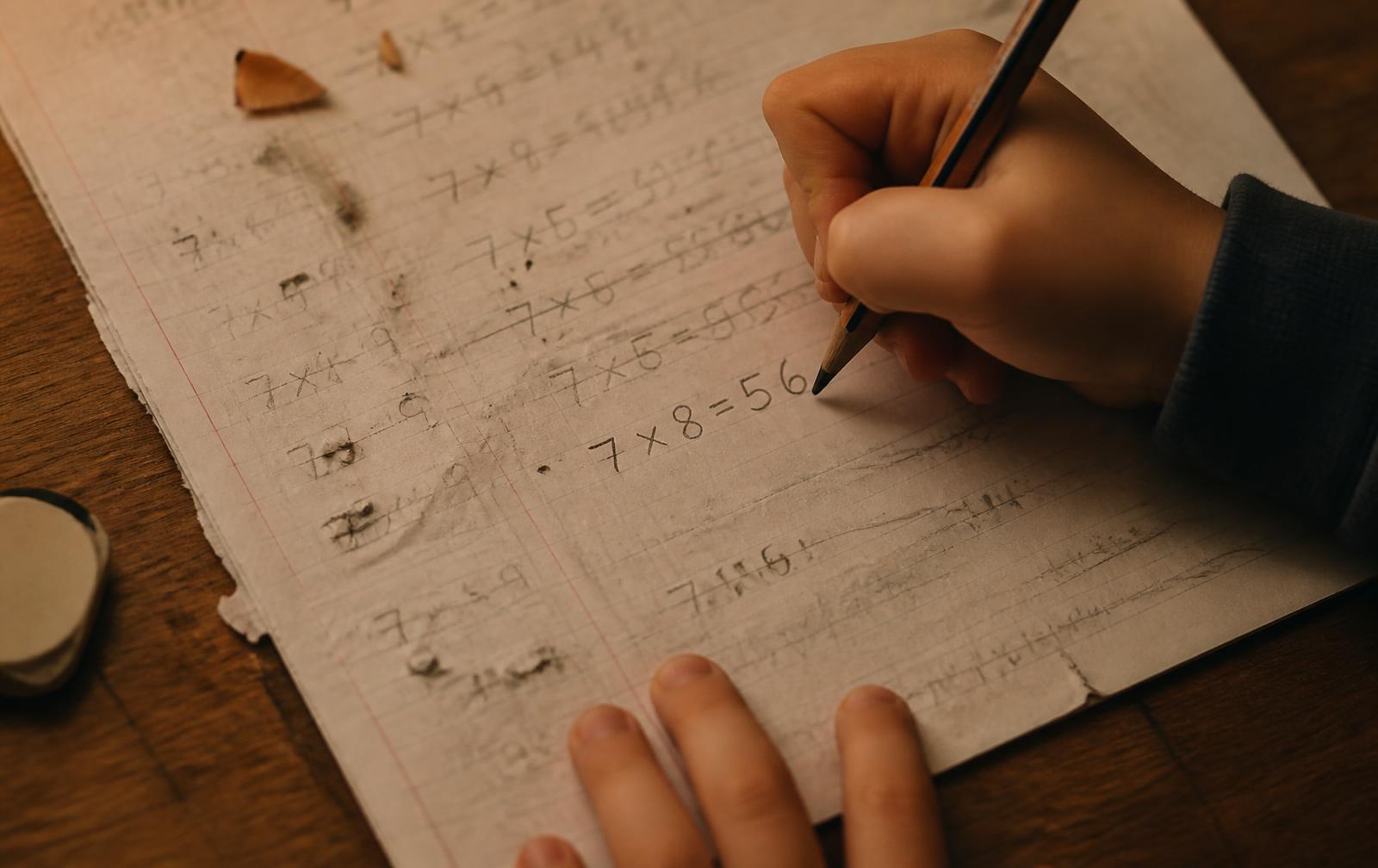
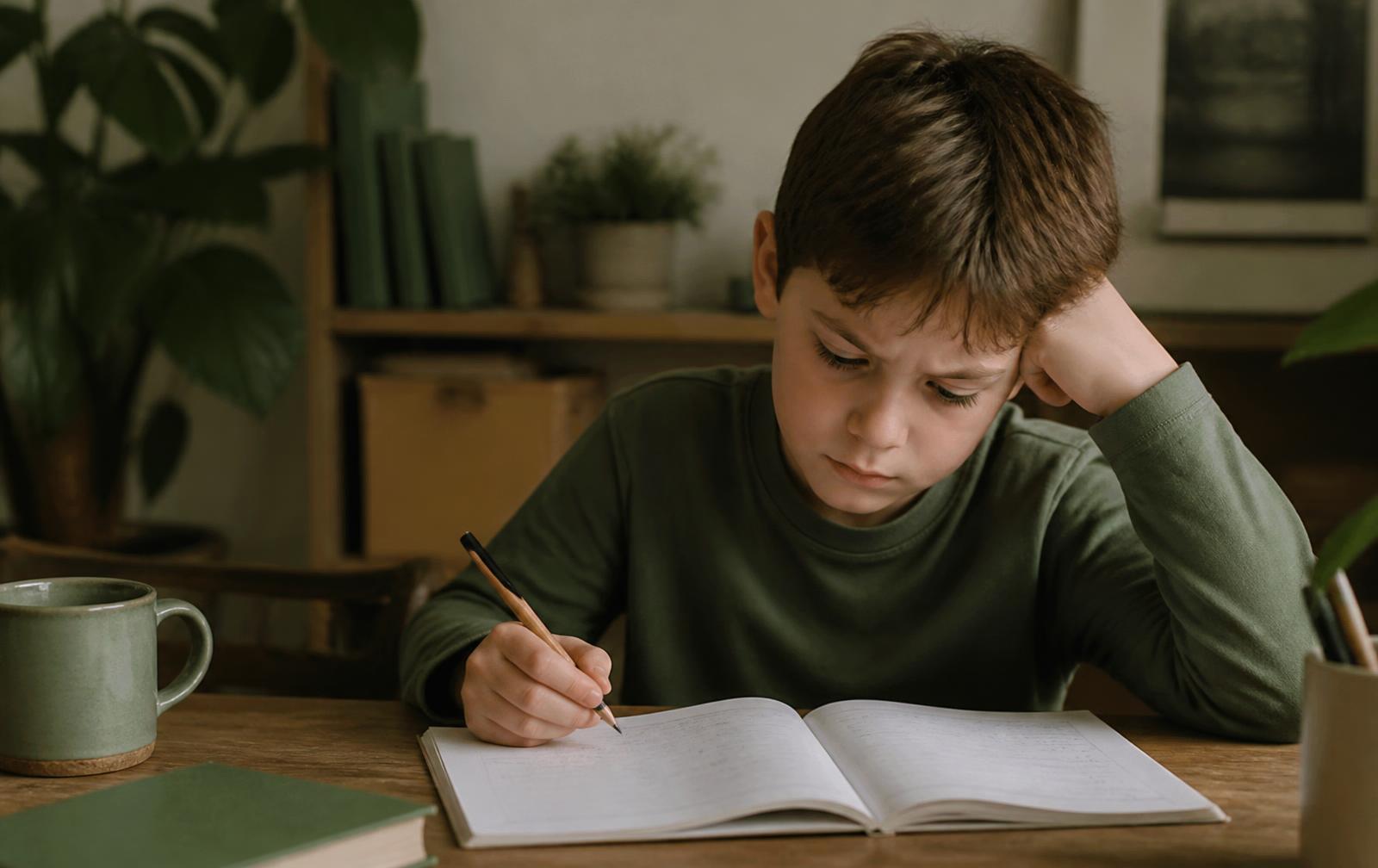
The homework is four questions long. Three of them are done. The fourth one is identical in structure to the first, and the child is staring at it as if it were written in another alphabet.
This is the moment most parents reach for explanation — a clearer method, a worked example, another go. It rarely helps, because the obstacle is not comprehension. Fear has taken up the mental workspace the child needs in order to hold the numbers still while they work on them.
How the loop forms
- 01A public stumble
A wrong answer said aloud, a timed test, a classmate finishing first.
- 02A story forms
'I'm bad at this.' The brain now treats maths lessons as a threat setting.
- 03Avoidance begins
Slower starts, forgotten books, toilet trips during maths. Less practice follows.
- 04Performance dips
The dip is taken as proof of the story rather than a consequence of it.
- 05The identity hardens
By eleven, many children can tell you with total confidence what they are 'not'.
What makes it worse
What to do at the table
- Start with a question they can already do — confidence first, difficulty second
- Let them narrate the steps aloud
- Write the problem down rather than saying it; reading reduces memory load
- Stop at the first sign of a freeze, and return in ten minutes
- Praise the strategy, never the speed
- Keep sessions short: fifteen good minutes beats forty tense ones
Children do not need a perfect parent. They need a predictable one who returns after hard moments.
Sian Trombley, Canadian Certified Counsellor
What you can try this week
Remove the clock
Untimed practice for two weeks. Speed is the single most anxiety-provoking feature of maths and the least important one at home.
Change the sentence
Replace 'I'm not a maths person' with 'I haven't learned this one yet' — every time, without a lecture attached.
Say the steps out loud
Have your child narrate what they are doing. Speaking offloads working memory that fear is otherwise occupying.
- Maths anxiety reduces available working memory in the moment.
- The child's ability has not changed — their access to it has.
- Speed and timed drills reliably make the loop worse.
- Parents' own maths anxiety transmits, especially during homework.
- Short, low-stakes, untimed practice rebuilds confidence fastest.
What does my child's face do in the ten seconds before they answer?
Have I ever said 'I was hopeless at maths too' in a way that felt like permission to stop trying?
Where has speed crept into practice that does not need it?
Printable resources
Recommended Thrive courses

Share this article
This article is educational and is not a substitute for individual clinical advice. Comments are closed so the Journal stays a calm place to read.
Keep going
You may also like
Courses, worksheets and pathways from the same part of the library.
- JournalSeparation Anxiety in Children: Why Longer Goodbyes Make It WorseReassurance relieves the next ninety seconds and funds the next ninety mornings.Read
- JournalSchool Refusal: What Actually Helps When They Cannot Get Through the DoorBy the time a child cannot get through the door, the decision was made hours — often weeks — earlier.Read
- WorksheetSchool Refusal Support GuideA compassionate, structured plan for school-avoidant daysRead
- ResearchThe Research LibraryPeer-reviewed parenting and child mental health research, translated into plain language.Read
- Thrive GuideThrive GuideAsk a question and get warm, evidence-informed guidance drawn from the Thrive library.Read
- Thrive Care PlanThrive Care PlanA short check-in that turns how your week actually went into one focused plan.Read