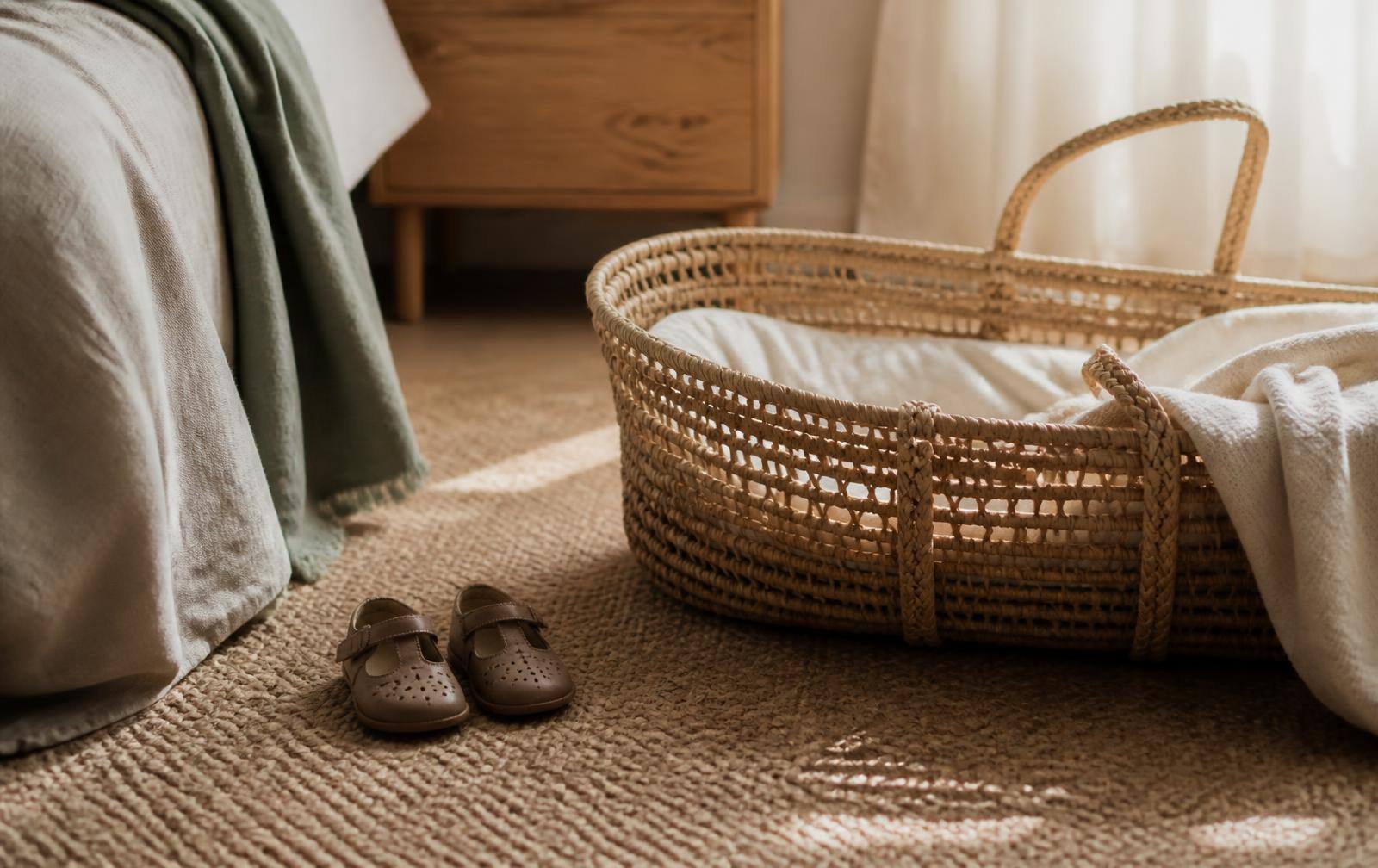
When the New Baby Arrives
The first child does not gain a sibling. They lose a monopoly. Both things are true, and only one of them gets a card.
Reviewed by Sian Trombley, CCCFounder, Thrive Family Company
8 min read
Best for parents of children who are…
- clashing with a brother or sister
- needing closeness and reassurance to feel safe
- having big feelings that arrive faster than words

Share this
The visitors arrive with flowers for the baby and something small in a bag for the older one. The older one is not fooled by the bag. Something enormous has happened, it happened to them, and nobody has asked how they are.
We talk about a new baby as an addition. For a firstborn it is closer to a restructuring. The person who was the whole reason the household existed has been asked, at three or five or eight, to share the two adults who form the centre of their world — with someone who cannot even be resented properly, because everyone keeps saying how lovely they are.
What the behaviour is actually saying
Regression is the most common and most misread response. A toilet-trained child has accidents. A confident sleeper needs company again. Words shrink, baby voices appear, a fork is suddenly impossible. This is not spite. It is a hypothesis being tested: babies get held constantly, so perhaps being a baby is how you get held.
Before the birth
- 01Move the big changes early
New bedroom, new nursery, dropping a dummy, starting school — do them two or three months before the birth, or several months after. Never in the same fortnight.
- 02Be honest about newborns
'She will cry a lot, sleep a lot, and won't play with you for a long time.' Children who are promised a playmate feel cheated on day four.
- 03Name the hard part out loud
'There will be times you wish she wasn't here. That's allowed. You can tell me and I won't be cross.' Permission given in advance prevents behaviour later.
- 04Decide who holds the older child
In the first fortnight, one adult's main job is the firstborn. Agree this before anyone is exhausted and nobody is negotiating at 3am.
The first twelve weeks at home
- Feed times become story times — a book on your knee turns exclusion into inclusion.
- Photographs on the wall of the older child as a baby, being held exactly the same way.
- Visitors briefed to greet the older child first. It costs nothing and lands enormously.
- A basket of activities that only appears during feeds, retired the rest of the day.
- Physical safety supervised without commentary — proximity, not accusation.
If the older child is hurting the baby
Grabbing, pinching and squeezing frighten parents into harsh responses. Keep it simple: block the hand, stay physically close, and address the need rather than prosecuting the act. 'I won't let you hurt her. Come here — you needed me and I was busy.' Punishment teaches the child that the baby's arrival made them bad. Supervision teaches them that they are still held.
Most families find the fog lifts somewhere around the fourth or fifth month. Not because the older child stopped minding, but because they gathered enough evidence that the thing they feared — that they had been demoted — was not true.
A new baby does not divide your love. But it does divide your hands, and your first child feels that immediately.
Sian Trombley, Canadian Certified Counsellor
What you can try this week
Keep one ritual untouchable
Ten minutes, same time, same activity, no baby present, not cancellable. Bath, last story, a walk to the postbox. Small and reliable beats big and occasional.
Stop blaming the baby
Replace 'not now, I'm feeding the baby' with 'in five minutes, when I'm done, and then it's your turn.' Same delay, entirely different message about who caused it.
Let them be the expert, not the helper
'You know how she likes to be rocked — show me.' Competence builds attachment far faster than being asked to fetch nappies.
- Regression after a new baby is a normal bid for care, not manipulation.
- The older child's grief is real: they have lost undivided attention.
- Protecting one small daily ritual matters more than grand gestures.
- Blaming the baby out loud ('we can't, because of the baby') builds resentment.
- Adjustment usually takes three to six months, not a fortnight.
When did I last speak to my older child about something that had nothing to do with the baby?
What behaviour am I labelling 'naughty' that is actually a request to be small again?
Who is holding the older child's grief, and are they getting any help doing it?
Printable resources
Recommended Thrive courses
This article is educational and is not a substitute for individual clinical advice. Comments are closed so the Journal stays a calm place to read.
Share this
Keep going
You may also like
Courses, worksheets and pathways from the same part of the library.
- ResearchThe Research LibraryPeer-reviewed parenting and child mental health research, translated into plain language.Read
- Thrive GuideThrive GuideAsk a question and get warm, evidence-informed guidance drawn from the Thrive library.Read
- Thrive Care PlanThrive Care PlanA short check-in that turns how your week actually went into one focused plan.Read
- Thrive ToolThrive ToolsPremium printable workbooks and therapeutic tool kits.Read
- CollectionThe Resource LibraryFree printable worksheets, scripts and planners for families.Read
- JournalThe Suitcase by the Door: When a Parent Travels for WorkThe suitcase appears on Tuesday and the mood in the house shifts before a single word is said. Children read departure long before they can name it.Read