Nightmares and Night Terrors
A child screaming at night may be awake, dreaming or caught between sleep stages. Knowing which one you are seeing helps you respond calmly and safely.
Reviewed by Sian Trombley, CCCFounder, Thrive Family Company
12 min read
Best for parents of children who are…
- finding it hard to settle or stay asleep
- needing extra emotional support at the moment
- going through a change at home or at school

Share this
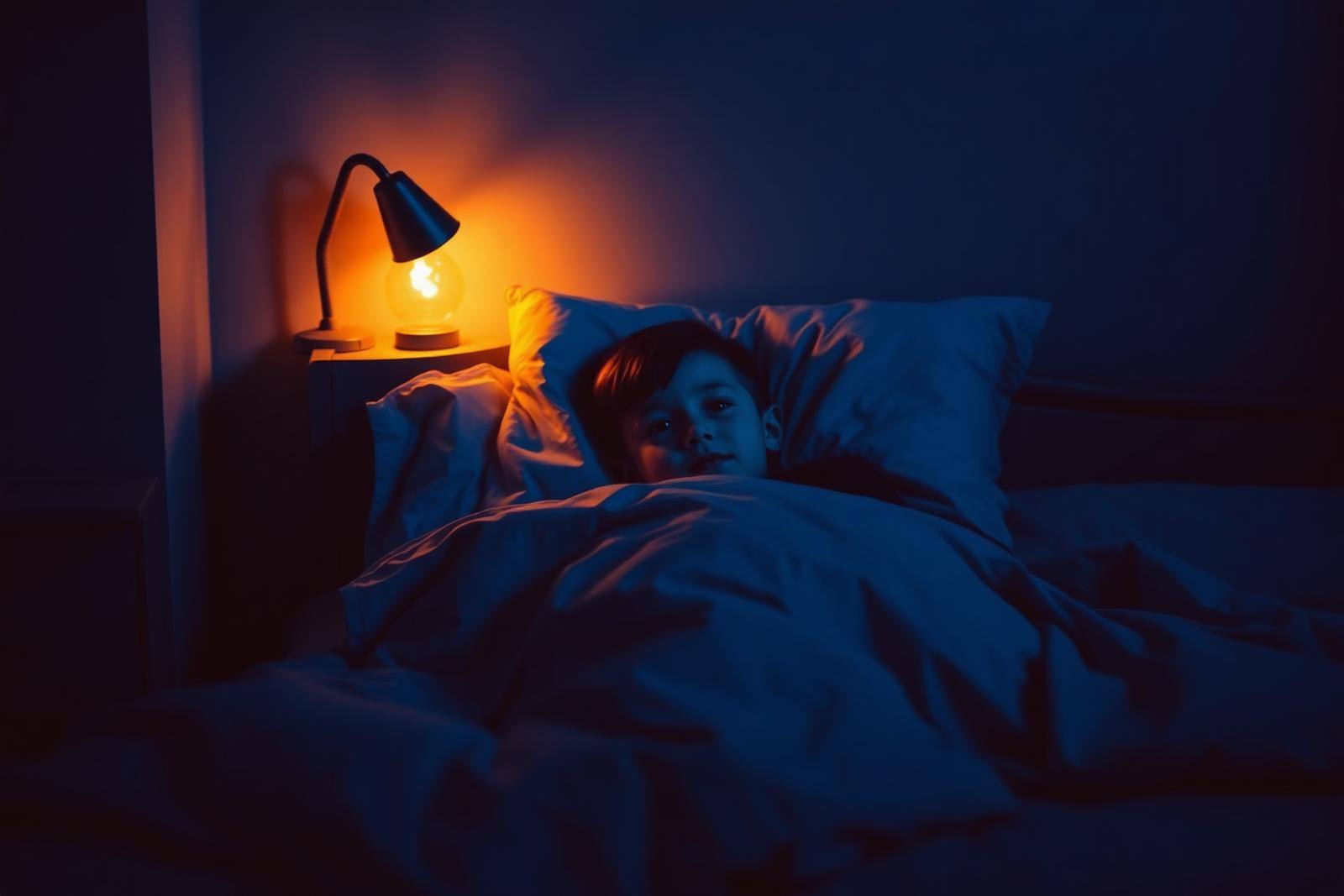
It is 10:40 p.m. The dishwasher is running, you have just sat down, and a scream comes from upstairs. Your eight-year-old is upright in bed, eyes open, face wet with sweat. When you say their name, they look through you and shout, “Go away.” On another night, that same child runs into the hallway crying, wraps both arms around you and says a wolf was chasing them. They can describe its teeth, the forest and exactly where they woke in the story. From the doorway, both events can look like a child waking in terror. Inside the brain, however, they are quite different. The first may be a night terror, a partial arousal from deep sleep. The second is more consistent with a nightmare, a frightening dream that has brought the child fully awake. The useful reframe is not “How do I stop the fear immediately?” but “What state is my child in, and what does this state require from me?” A nightmare calls for connection and help returning to sleep. A night terror calls primarily for safety, patience and less intervention.
The difference between nightmares and night terrors
Nightmares are vivid, disturbing dreams. They are more likely during rapid eye movement, or REM, sleep, which becomes more plentiful later in the night. A child generally wakes fully, knows who and where they are, and can often recall at least part of the dream. They may seek you out, want the light on or resist returning to sleep. Comfort usually reaches them because their waking awareness has returned.
Night terrors, also called sleep terrors, are disorders of arousal from non-REM sleep. They tend to arise from deep sleep, often in the first third of the night. A child may sit up, scream, breathe rapidly, sweat, kick, run or appear intensely frightened. Their eyes may be open, yet they are not meaningfully awake. They may not recognize you and can become more agitated if you question, shake or restrain them.
Timing and memory offer the clearest clues, although no single sign is conclusive. Earlier in the night, confused and unreachable, with little morning memory points towards a night terror. Later in the night, alert and comfort-seeking, with a story to tell points towards a nightmare. Night terrors often last several minutes, occasionally longer. Nightmares end when the dreamer wakes, although fear and difficulty settling may continue.
What to do when a nightmare wakes your child
Go to your child and orient them gently: “You had a frightening dream. You are in your room, and I am here.” Keep your voice low and your language concrete. Offer the comfort your child ordinarily accepts—a hand to hold, a brief cuddle, water or help arranging the covers. You do not need to investigate every dream detail at night. The immediate tasks are restoring safety, reducing arousal and making sleep possible again.
Validate the experience without confirming the dream as a real threat. “That felt very scary” is more helpful than “There is nothing to be frightened of.” If your child asks you to check the wardrobe once, a brief check may help them reorient. Repeated searches, elaborate monster rituals or promises to guard the room all night can unintentionally teach the brain that danger remains present. Return, kindly, to the ordinary bedtime cues.
Talk more in daylight if your child wants to. Ask, “What part stayed with you?” and “Would you like comfort, ideas or just someone to listen?” Consider recent films, games, books, school stress, conflict, grief, illness and changes at home. Nightmares are common and do not automatically reveal hidden trauma. Still, repeated dreams can be one part of a broader picture, especially when accompanied by daytime fear, avoidance or a marked change in behaviour.
Why night terrors need a quieter response
When a night terror begins, first protect your child from injury. Block access to stairs, exterior doors and windows; move hard or sharp objects away if you can do so safely. Stay nearby without crowding. Use few words, such as “You are safe; I am here.” Do not demand eye contact or an answer. Avoid shaking, shouting, splashing water or trying to make your child walk to the bathroom.
Most episodes resolve without treatment. Let your child return to sleep once the arousal passes, and avoid a detailed morning debrief unless they remember something or ask. Pressing for an explanation can create anxiety about an event they did not consciously experience. You can simply say, “You had a restless moment in your sleep. I kept you safe.” The apparent intensity is often far greater for the watching parent than for the child the next day.
Reduce common triggers by protecting sleep duration and consistency. Overtiredness can increase deep-sleep pressure and make partial arousals more likely. Aim for a regular wake time, enough sleep for your child's age and a predictable wind-down. Address fever and illness appropriately, and mention medication changes to the prescriber. If your child snores loudly, gasps, breathes through their mouth or is unusually sleepy by day, request an assessment for disrupted breathing during sleep.
Helping with recurring nightmares
A recurring nightmare deserves attention when it repeatedly disrupts sleep, creates bedtime dread or lingers into the day. Begin with a calm review of sleep, stress and content your child is encountering. Keep wake time steady, make room for worries before bedtime rather than in bed, and reduce frightening media if it appears connected. For older children, late caffeine, irregular sleep and all-night device use can intensify sleep disruption even when they are not the original cause.
Imagery rehearsal is a structured way to change the nightmare while awake. Your child chooses a recurring dream, alters it so that it becomes safer or less distressing, and mentally rehearses the revised version for a few minutes each day. The aim is not to discover a perfect meaning or force a cheerful ending. The child might gain an escape route, shrink the threat, summon help or turn the scene into something ordinary.
Use the approach collaboratively. A ten-year-old might draw the revised story; a teenager may write a short script or imagine it with eyes open. Practise during the day, not immediately before sleep, for about five minutes daily over one or two weeks. Let your child control how much detail they use. If the nightmare is linked to known or suspected trauma, or rehearsal brings overwhelming distress, pause and seek a trauma-informed mental-health professional.
- 01Choose one dream
Invite your child to select a nightmare that repeats or follows a familiar pattern. They need not describe every detail. Ask them to rate how upsetting it feels from zero to ten. Start with a moderately difficult dream rather than the most overwhelming one, particularly if several nightmares occur.
- 02Name the turning point
Identify the moment when the dream becomes frightening. You might ask, “Where would you like the story to begin changing?” This keeps the focus on agency rather than prolonged retelling. If your child cannot identify a point, begin just before the ending or add a helpful character early in the story.
- 03Write a new version
Let your child decide what happens. The wolf may become tiny, a locked door may open or the child may receive a phone that calls instant help. Avoid taking over with the ending you consider most sensible. A personally meaningful revision is more important than realism or adult approval.
- 04Rehearse briefly by day
Once daily, have your child read, draw or imagine the revised dream for approximately five minutes. Keep the practice predictable and stop before it becomes exhausting. They do not need to recreate intense fear. The task is to strengthen familiarity with the alternative storyline, not to endure escalating distress.
- 05Review without pressure
After one or two weeks, ask about nightmare frequency, intensity and recovery rather than demanding that the dream disappear. Continue if it feels useful, revise the story or take a break. Seek professional guidance if nightmares remain frequent, significantly impair functioning or appear alongside substantial anxiety, low mood or trauma symptoms.
When screaming at night needs professional attention
Arrange a non-urgent appointment with your family doctor, paediatrician or qualified sleep clinician when episodes occur often, worsen, cause injury, disrupt the household substantially or leave your child tired and impaired during the day. Assessment is also wise when apparent night terrors begin for the first time in later adolescence, continue unusually often, or include snoring and gasping. Bring your sleep record, medication list and a video if one was obtained safely.
Some seizures, panic episodes, breathing disorders and other sleep conditions can resemble parasomnias. Seek urgent medical help if your child has trouble breathing, turns blue or grey, sustains a serious injury, has a first suspected seizure, or shows prolonged unresponsiveness or unusual weakness afterward. Repetitive, highly stereotyped movements, episodes occurring many times a night or similar spells while awake also warrant prompt medical assessment. Do not rely on an online description to distinguish these safely.
For nightmares, consider mental-health support when fear spreads into school, relationships or ordinary activities; your child avoids sleep; mood or behaviour changes markedly; or dreams follow a frightening event, abuse, violence or significant loss. If your child discloses harm, listen without interrogating, affirm that telling you was right and follow local safeguarding requirements. Immediate help is needed if they speak about suicide, self-harm or being unable to stay safe.
A child screaming in the night can activate every protective instinct you have. You do not need to identify the episode perfectly in its first seconds. Begin with safety, observe whether your child is truly awake and respond with the least stimulation that helps. By morning, you can record what happened and decide whether further support is needed. Your steady presence matters, even during a night terror your child will never remember.
A night terror is not a bad dream. It is a brain caught halfway out of deep sleep, and your job is simply to keep them safe until it passes.
Sian Trombley, Canadian Certified Counsellor
What you can try this week
Make a two-minute sleep record
For seven mornings, record bedtime, estimated sleep onset, the time of any episode, what you observed and what your child remembered. Note illness, stress, medication changes and unusually short sleep. Keep the record factual rather than interpretive. A brief pattern is more useful to a clinician than a general impression that the episodes happen constantly.
Create a low-stimulation night plan
Agree which adult will respond, clear the route around the bed and place one dim light within reach. Decide on one sentence: “You are safe; I am nearby.” If a night terror occurs, supervise without trying to hold or wake your child unless immediate safety requires intervention. A prepared plan helps you act steadily when you are startled.
Rehearse a new dream ending
If your child has a recurring nightmare, invite them to draw or describe a less frightening version during daylight. The new ending can be brave, funny, ordinary or magical. Have them imagine that version for five minutes each day for one or two weeks. Stop if rehearsal sharply increases distress, and seek support when the dream relates to trauma.
- A nightmare usually wakes a child fully, can be remembered and responds to comfort.
- A night terror is a partial arousal in which a child may look awake but remains deeply asleep and confused.
- During a night terror, prioritize physical safety and quiet supervision rather than waking, questioning or restraining your child.
- Recurring nightmares may improve when a child rewrites the dream while awake and rehearses the safer version briefly each day.
- Seek medical or mental-health guidance when episodes are dangerous, frequent, worsening, trauma-linked or accompanied by other concerning symptoms.
When an episode happens, what evidence suggests that your child is fully awake—or still partly asleep?
Are sleep loss, stress, illness, frightening media or an irregular schedule making episodes more likely?
What would help you feel steady enough to offer safety without demanding an immediate explanation?
Printable resources
Recommended Thrive courses
This article is educational and is not a substitute for individual clinical advice. Comments are closed so the Journal stays a calm place to read.
Share this
Keep going
You may also like
Courses, worksheets and pathways from the same part of the library.
- Thrive GuideThrive GuideAsk a question and get warm, evidence-informed guidance drawn from the Thrive library.Read
- ResearchThe Research LibraryPeer-reviewed parenting and child mental health research, translated into plain language.Read
- Thrive Care PlanThrive Care PlanA short check-in that turns how your week actually went into one focused plan.Read
- Thrive ToolThrive ToolsPremium printable workbooks and therapeutic tool kits.Read
- CollectionThe Resource LibraryFree printable worksheets, scripts and planners for families.Read
- JournalAfraid of the Dark at NineA nine-year-old afraid of the dark isn't regressing. Their imagination has simply outpaced their ability to reason it away, and that gap needs a specific kind of help.Read