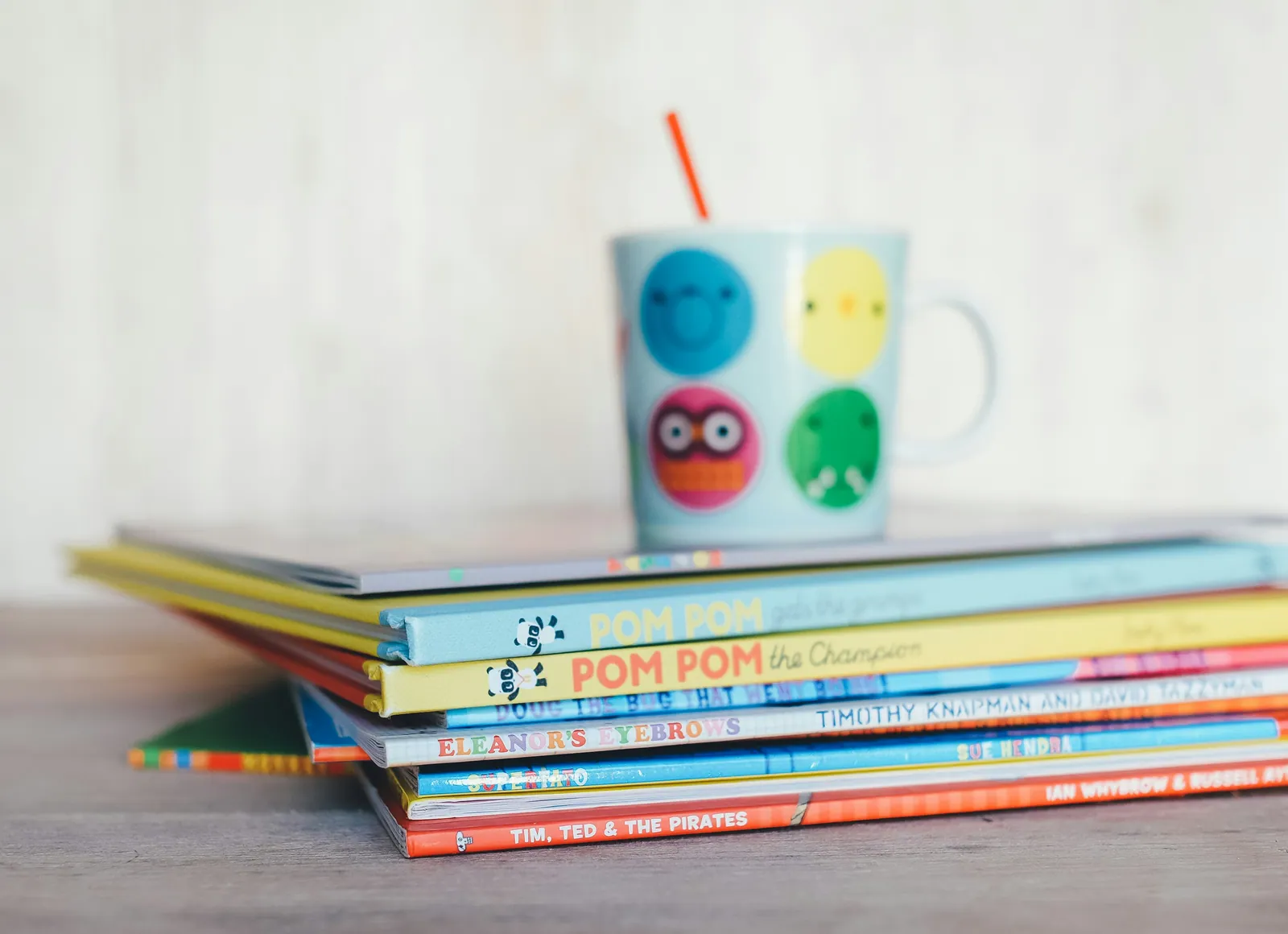
6 Picture Books That Help Children Understand Anxiety
Therapist-recommended stories for talking about worry, brave feelings and what happens in our bodies when we're anxious.
Reviewed by Sian Trombley, CCCFounder, Thrive Family Company
9 min read
Best for parents of children who are…
- worrying often, or asking the same question again and again
- needing extra emotional support at the moment
- going through a change at home or at school

Share this
There is a particular kind of stuck that happens when you try to talk to a worried child directly. You ask what's wrong and they say nothing. You offer a reason not to worry and they find a better reason to keep worrying. The conversation closes before it opens.
A book changes the geometry of that conversation. Instead of sitting opposite your child, examining them, you sit beside them and both look at someone else's worry. That small shift — from being the subject to being the observer — is what therapists call externalising, and it is one of the most reliable ways to make anxiety discussable for a child who cannot yet describe it.
Picture books do something else too. They give a child language before they need it. A four-year-old who has met a worry that grows when it is ignored has a concept waiting for them at seven, when the stomach aches start before school. That is not a small thing.
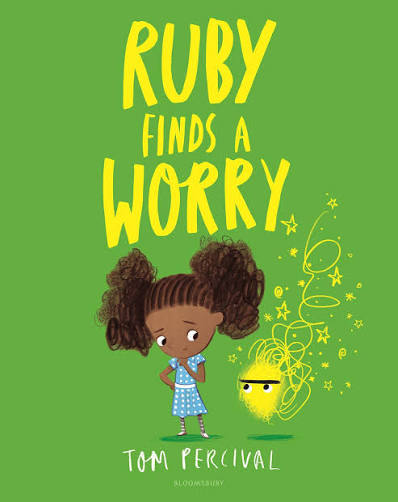
Ruby Finds a Worry
Ruby's worry appears as a small yellow shape that grows every time she keeps it to herself. It is the clearest picture-book rendering of the mechanism that keeps childhood anxiety going: worry fed by silence and avoidance gets bigger, worry that is spoken aloud gets smaller.
The resolution matters as much as the metaphor. Ruby does not defeat her worry — she talks to someone, and the worry shrinks to a manageable size. That is an honest model of what actually helps, and it is the model most children's books get wrong.
Ages 3–7 · Children who go quiet · First conversations about worry
Ask what colour and size their worry would be today. Draw it together. Then ask what makes it bigger and what makes it smaller — and write both lists down. You now have a plan disguised as a drawing.
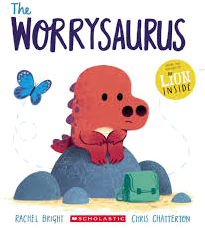
The Worrysaurus
A small dinosaur sets out for a perfect day and a butterfly of worry starts fluttering in his tummy, growing louder until the day is nearly ruined. The rhyme carries young children through it easily, but the mechanism underneath is precise: the worry is a physical sensation first and a thought second.
What makes it useful is the tin. Worrysaurus keeps a box of small comforting things and uses it when the flutter starts — a concrete, portable coping plan rather than a promise that nothing bad will happen.
Ages 3–7 · Tummy worries · Children who need something to hold
Make the tin. A photo, a smooth stone, a note in your handwriting, one joke. Pack it together on a calm afternoon and let your child choose everything that goes in it.
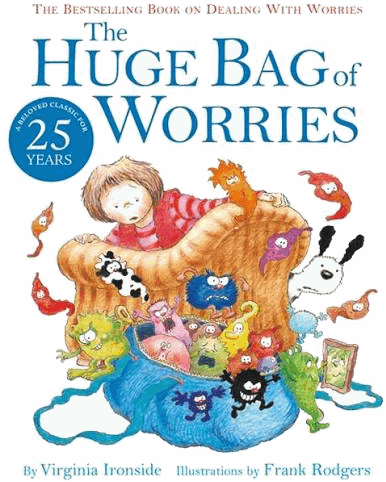
The Huge Bag of Worries
Jenny drags a bag of worries everywhere until an older neighbour helps her take them out and look at each one. Several turn out to belong to somebody else. Several are not worth keeping.
This is the closest a picture book comes to a genuine cognitive exercise, and it lands especially well with children who carry other people's stress — the ones who worry about money, or about you.
Ages 5–9 · Over-responsible children · Worry that piles up
Empty the bag literally. One worry per scrap of paper, then three piles: mine to solve, mine to carry for now, not mine at all. Keep the last pile somewhere out of the bedroom.
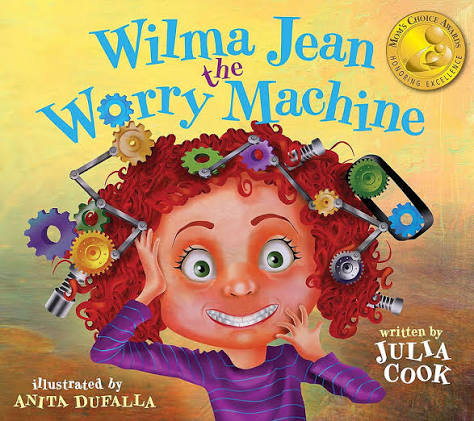
Wilma Jean the Worry Machine
Wilma Jean worries about everything, and her teacher and mother do something unusually sensible: they help her sort worries into the ones she can do something about and the ones she cannot. The second pile gets handed over rather than argued with.
It is the most explicitly instructional book here, written by a school counsellor, and it suits the child whose anxiety has already spread across school, friendships and home. The back of the book includes strategies you can use verbatim.
Ages 5–10 · Generalised worry · School anxiety
Draw two circles: things I control, things I do not. Sort this week's worries into them out loud. Then work only on the first circle — and give the second one somewhere to live, like a jar on a shelf.
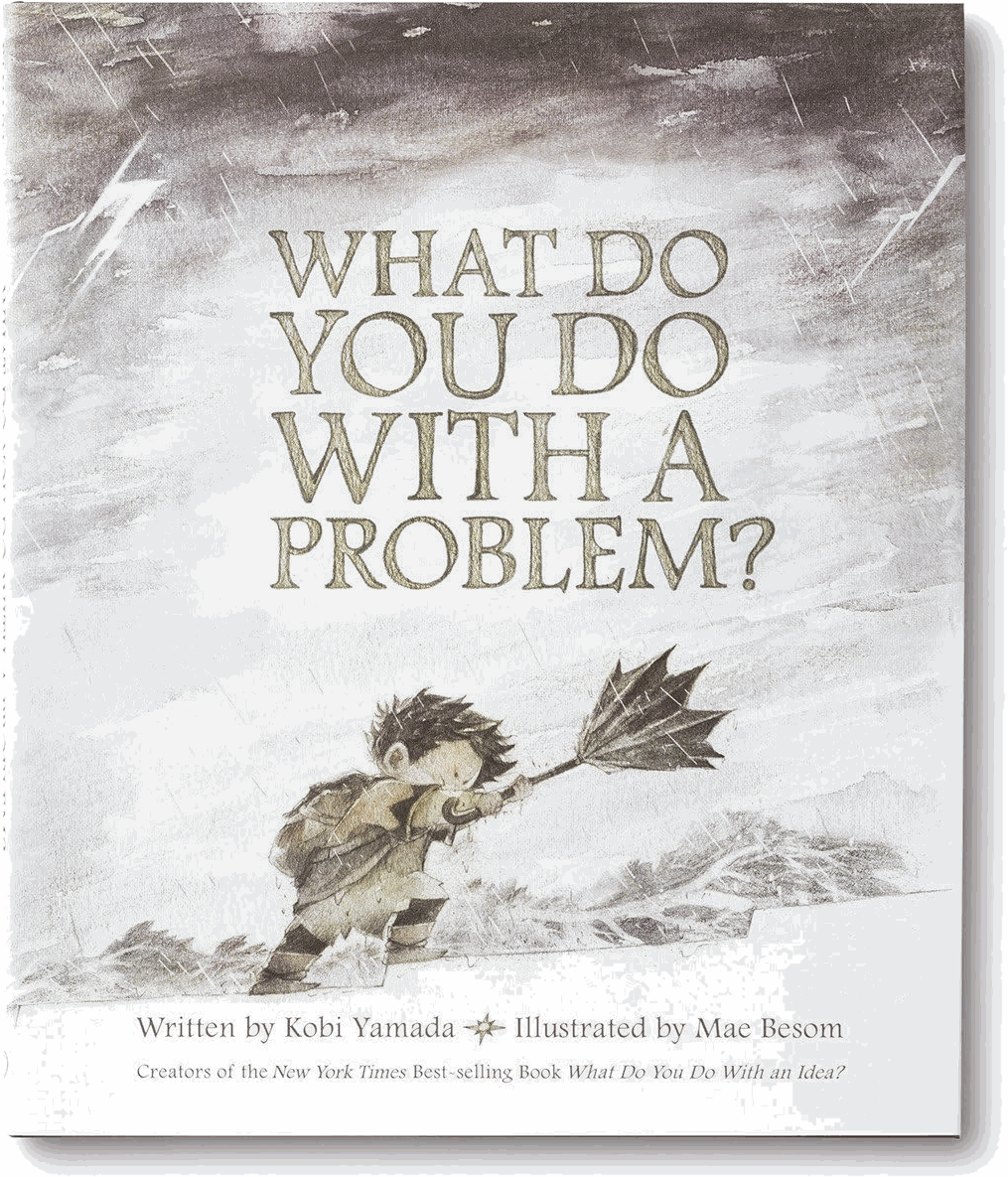
What Do You Do With a Problem?
A child is followed by a problem that grows the longer it is avoided — and shrinks the moment it is faced. The illustrations do most of the work, moving from storm-grey to light as the child turns around.
This is the avoidance book. For an older child who has learned to dodge anything difficult, it makes the cost of avoidance visible without a single word of lecture, and it ends with the idea that the problem contained something useful.
Ages 6–11 · Avoidance · Perfectionism
Name one thing they have been walking around all week and do the smallest possible piece of it together — five minutes, timed. Facing it partly is still facing it.
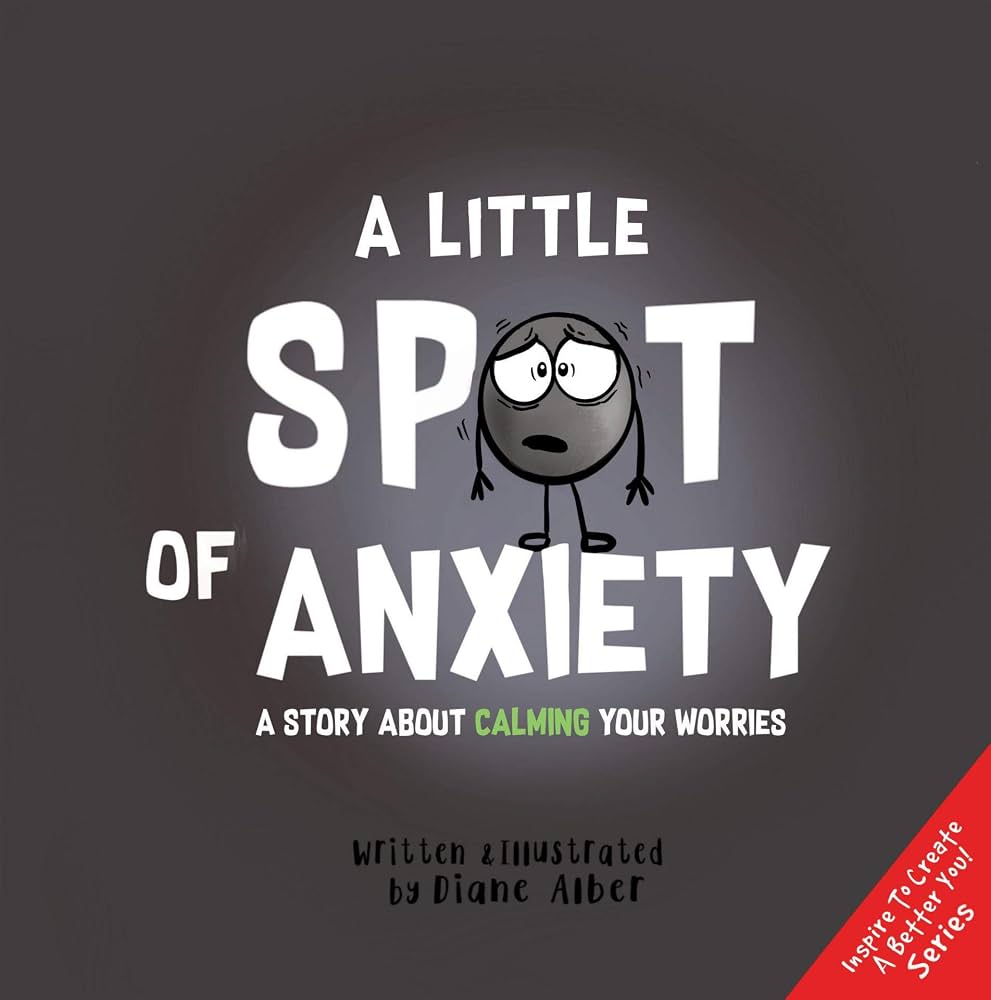
A Little Spot of Anxiety
The simplest and most concrete of the six. Anxiety is a scribbly spot that can be calmed with practical strategies a young child can actually perform — breathing, grounding, naming what is around them.
Where the other books build understanding, this one builds a toolkit, and it does so without asking a five-year-old to hold an abstraction. For a child mid-spiral, that is often what is needed.
Ages 4–8 · Children who want something to do · Building a calm-down plan
Choose one strategy from the book — just one — and practise it daily when your child is calm. Skills learned in calm are the only skills available in panic.
Books do not treat anxiety. What they do is give a family shared language, and shared language is what makes the harder work possible — the graded steps, the tolerated discomfort, the parent who stays warm while declining to remove the thing their child is afraid of. That work is easier to start when everyone in the house already agrees on what the worry is called.
Children do not need a perfect parent. They need a predictable one who returns after hard moments.
Sian Trombley, Canadian Certified Counsellor
What you can try this week
Choose one moment
Pick a single recurring flashpoint this week rather than reforming everything at once.
Name it out loud
Put language to what you notice: “Your body looks like it's had enough of today.”
Repair afterwards
Return once everyone is settled. Repair, not the rupture, is what children remember.
Track it lightly
Note what happened before and after. Patterns show up within about a week.
- The behaviour you are seeing is a nervous system doing its best with the skills it currently has.
- Small, repeated responses change more than one big conversation ever will.
- Your calm is the intervention — regulation is caught before it is taught.
- Avoidance shrinks a child's world; graded practice grows it back.
- Repair after a hard moment matters more than preventing every hard moment.
Which moment in this article felt most familiar in your own home?
What is one response you would like to change this week?
What support would make that change realistic rather than aspirational?
Printable resources
Recommended Thrive courses
This article is educational and is not a substitute for individual clinical advice. Comments are closed so the Journal stays a calm place to read.
Share this
Keep going
You may also like
Courses, worksheets and pathways from the same part of the library.
- Learning PathwayAnxiety & WorryA guided Learning Pathway from Thrive Family Company.Read
- CollectionAnxiety & WorryEverything Thrive publishes on anxiety & worry — articles, courses, worksheets and research.Read
- Thrive Resource GuideAnxiety & WorryTherapist-reviewed books, apps, websites and tools for anxiety & worry.Read
- JournalSeparation Anxiety in Children: Why Longer Goodbyes Make It WorseReassurance relieves the next ninety seconds and funds the next ninety mornings.Read
- JournalThe Weather Inside: Helping Children Carry Anxiety About the WorldYou cannot promise a child that the world will be fine. You can promise that they will not be carrying it alone.Read
- WorksheetAnxiety Bravery LadderA graded plan for facing one fear, one small rung at a timeRead