The Conversation Before the Party
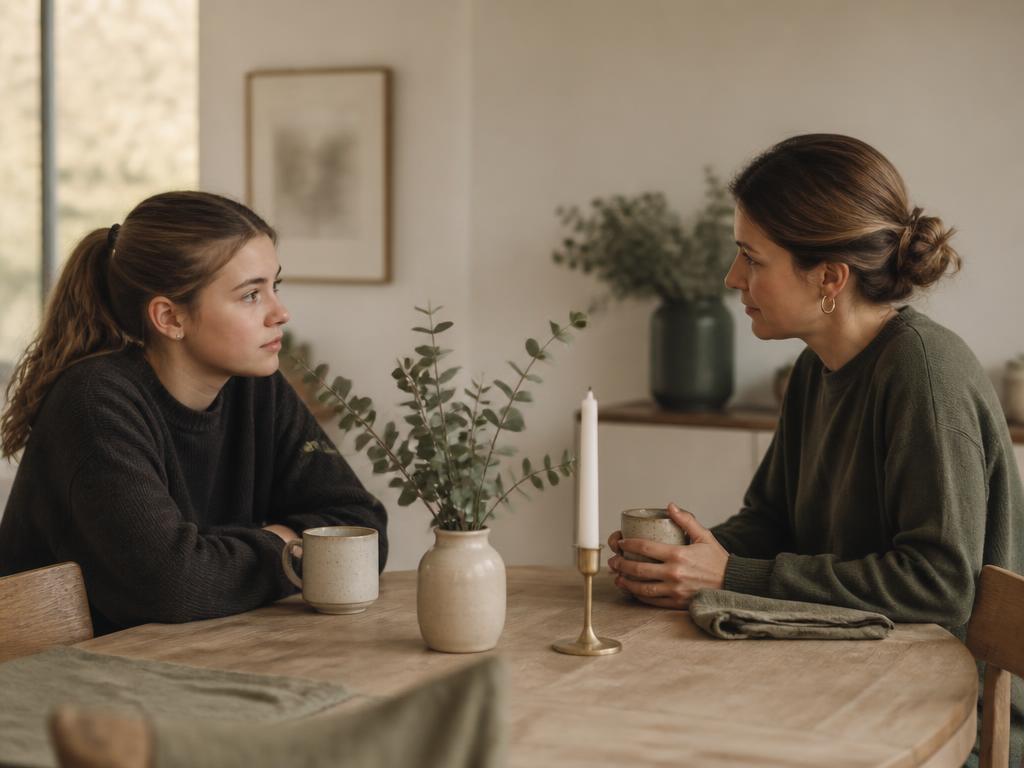
The talk that changes behaviour is not the warning. It is the plan.
Written by Sian Trombley · BEd, MACP, CCC
There is a party on Saturday. You know there will be alcohol, they know you know, and both of you are hoping the other one raises it first. That standoff is where most of the risk lives.
Parents tend to prepare the wrong conversation. The instinct is to assemble evidence — liver damage, statistics, the story about someone's cousin. Teenagers discount all of it, not because they are reckless but because risk feels abstract at sixteen and social exclusion does not.
What the evidence supports
- State your position clearly — ambiguity reads as consent
- Pair the rule with warmth; strictness without connection predicts concealment
- Do not supply alcohol to 'teach moderation'
- Know the address, the adults present and the return plan
- Agree a collection time before they leave, not by text at midnight
- Keep one unconditional amnesty rule and never break it
Common parental mistakes
The five-minute version
- 01Pick a side-by-side moment
Driving, walking the dog, washing up. Eye contact raises the stakes unnecessarily.
- 02State your view once
Briefly, without escalation. Repetition converts a position into nagging.
- 03Ask what's likely
'What do you think will actually happen on Saturday?' Listen without correcting.
- 04Build the exit
Who is with them, how they get home, what they say to leave early, and what they do if a friend is unwell.
- 05Give the amnesty
One sentence. Then let it be tested and honour it without a single follow-up question that night.
Children do not need a perfect parent. They need a predictable one who returns after hard moments.
Sian Trombley, Canadian Certified Counsellor
What you can try this week
Say the position out loud
'I don't want you drinking at fifteen, and here's why.' Vagueness is read as permission.
Rehearse the exit line
Give them a phrase they can use with friends — 'my mum's collecting me at eleven, she's unbearable' — and let yourself be the excuse.
Set the amnesty rule
'If you're ever unsafe, call me. I'll collect you, no questions that night.' Then honour it exactly once and it becomes real.
- Clear disapproval plus warmth lowers risk; either alone does not.
- Supplying alcohol to 'teach moderation' increases harm.
- Rehearsed exit plans work better than warnings.
- One amnesty rule matters more than ten regular rules.
- Talk before the event, not after it.
Does my teenager know my actual position, or only that I'd be disappointed?
If they were stuck somewhere unsafe at midnight, would they genuinely call me?
What am I modelling about alcohol on an ordinary Friday?
Printable resources
Recommended Thrive courses

Share this article
This article is educational and is not a substitute for individual clinical advice. Comments are closed so the Journal stays a calm place to read.
Keep going
You may also like
Courses, worksheets and pathways from the same part of the library.
- JournalThe First Ninety SecondsYou do not have to have the right words. You have to have a warm face and an open door — the rest can be built over months.Read
- ResearchThe Research LibraryPeer-reviewed parenting and child mental health research, translated into plain language.Read
- Thrive GuideThrive GuideAsk a question and get warm, evidence-informed guidance drawn from the Thrive library.Read
- Thrive Care PlanThrive Care PlanA short check-in that turns how your week actually went into one focused plan.Read
- Thrive ToolThrive ToolsPremium printable workbooks and therapeutic tool kits.Read
- CollectionThe Resource LibraryFree printable worksheets, scripts and planners for families.Read