The Child Who Cannot Lose
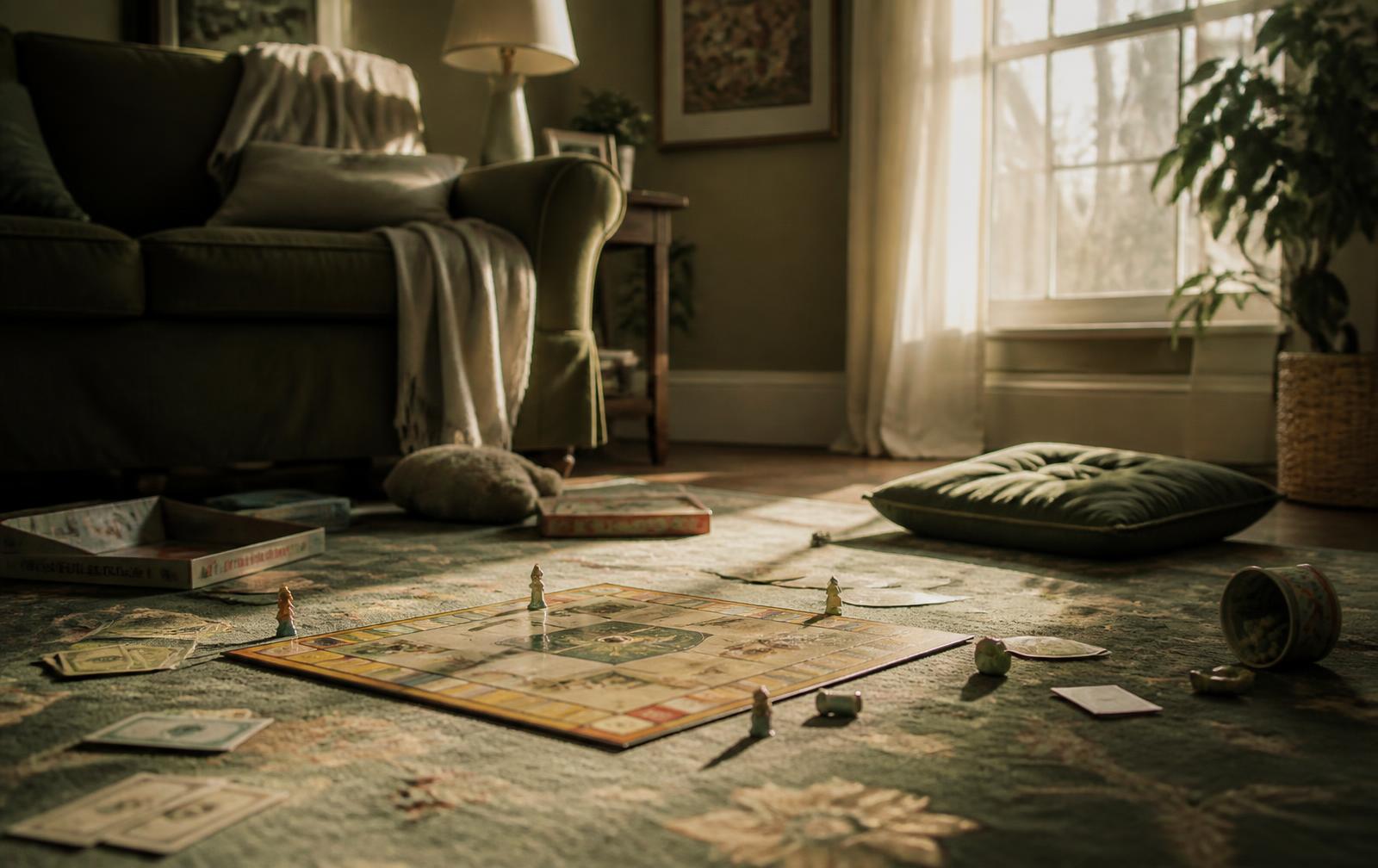
The board goes flying, the game is over, and everyone is upset. Poor losing is not bad sportsmanship. It is a frustration-tolerance skill that has not been built yet.
Written by Sian Trombley · BEd, MACP, CCC
Four minutes into a card game the cards are on the floor, someone is crying, and an evening that was meant to be pleasant has ended in negotiation. The temptation, every time, is to let them win. It buys peace and it costs something.
Losing is genuinely difficult for young children, and for a good structural reason: the emotion arrives instantly and the regulation arrives slowly. What looks like arrogance or spoilt behaviour is nearly always a nervous system meeting a strong feeling with tools it has not finished building.
What is actually happening in the moment
Games compress a lot into a small space: hope, effort, public performance, and an outcome you cannot control. For a child who links being good at things with being loved, losing at Snap is not trivial. It is a small, sharp piece of evidence about their worth, delivered in front of the people whose opinion matters most.
Why letting them win backfires
Children detect engineered wins far earlier than adults believe, usually around five or six. When they do, two things happen: the win stops feeling like anything, and they learn that adults consider their distress too dangerous to allow. Meanwhile the school playground does not throw games, and that is where the skill will be tested.
“You are not protecting them from losing. You are postponing it to a place where you cannot help.”
Teach the recovery as a sequence
- 01Predict it
Before the first card is dealt: 'Someone loses this in five minutes. Might be you, might be me.' Expected disappointment is far smaller than ambushed disappointment.
- 02Give the feeling a shape
'That's the losing feeling. It's hot, it's fast, and it goes in about a minute.' Naming the duration is often more useful than naming the emotion.
- 03Agree the exit move
One rehearsed action: hands on the table, a breath, walk to the kitchen and back. A physical script is easier to run than a decision.
- 04Return and close it
'Good game' — said, not felt. Sincerity comes later. The behaviour is the skill; the feeling catches up over months.
What to say when the board goes flying
One firm rule is worth holding: a thrown board ends the game. Not as punishment, but as a natural, predictable consequence delivered without a lecture. And the game returns tomorrow, which matters more — a child who cannot lose must not also learn that losing badly means never playing again.
Praise the right thing
After a hard-won recovery, resist commenting on how well they played. Comment on the recovery: 'You wanted to throw that and you didn't. That's the hardest part and you did it.' Over a season of games, this is what shifts — not the wanting to win, which never fully goes, but the twenty seconds afterwards.
Children do not need a perfect parent. They need a predictable one who returns after hard moments.
Sian Trombley, Canadian Certified Counsellor
What you can try this week
Play short, fast, luck-based games
Snap, dice games, anything under five minutes with a random outcome. Frequent tiny losses build tolerance; one long game with a devastating ending does not.
Rehearse the ending before you start
'One of us will lose in about four minutes. What's your plan for that moment?' Deciding in advance is far easier than deciding while flooded.
Lose out loud yourself
Narrate your own frustration and recovery: 'Ugh, I really wanted that. Okay — deep breath. Good game.' You are demonstrating the exact sequence you want copied.
- Poor losing is a skills gap, not a character flaw.
- Letting a child win removes the practice they need.
- The recovery is the skill — not the not-minding.
- Short games with fast rounds build tolerance faster than long ones.
- Praise the recovery, not the performance.
Do we play games often enough for losing to be ordinary?
Am I letting them win to avoid the meltdown, or to protect them from it?
What do I do when I lose in front of my children?
Printable resources
Recommended Thrive courses

Share this article
This article is educational and is not a substitute for individual clinical advice. Comments are closed so the Journal stays a calm place to read.
Keep going
You may also like
Courses, worksheets and pathways from the same part of the library.
- JournalTantrums, Meltdowns and Shutdowns: Telling Them ApartOne is about a goal. One is about capacity. One is a nervous system going offline. Reading them correctly is the difference between a hard ten minutes and a hard evening.Read
- JournalAnger Is Not the ProblemYou cannot teach a skill to a child who is already shouting. Everything that works is taught long before the moment it is needed.Read
- CollectionEmotional RegulationEverything Thrive publishes on emotional regulation — articles, courses, worksheets and research.Read
- ResearchThe Research LibraryPeer-reviewed parenting and child mental health research, translated into plain language.Read
- Thrive GuideThrive GuideAsk a question and get warm, evidence-informed guidance drawn from the Thrive library.Read
- Thrive Care PlanThrive Care PlanA short check-in that turns how your week actually went into one focused plan.Read