The Class Clown: What the Performance Is Hiding
The child who is always funny is not always fine. For some, performing is the safest way to be seen.
Reviewed by Sian Trombley, CCCFounder, Thrive Family Company
8 min read
Best for parents of children who are…
- worrying often, or asking the same question again and again
- finding school days hard to get through
- being hard on themselves
- finding friendships difficult

Share this
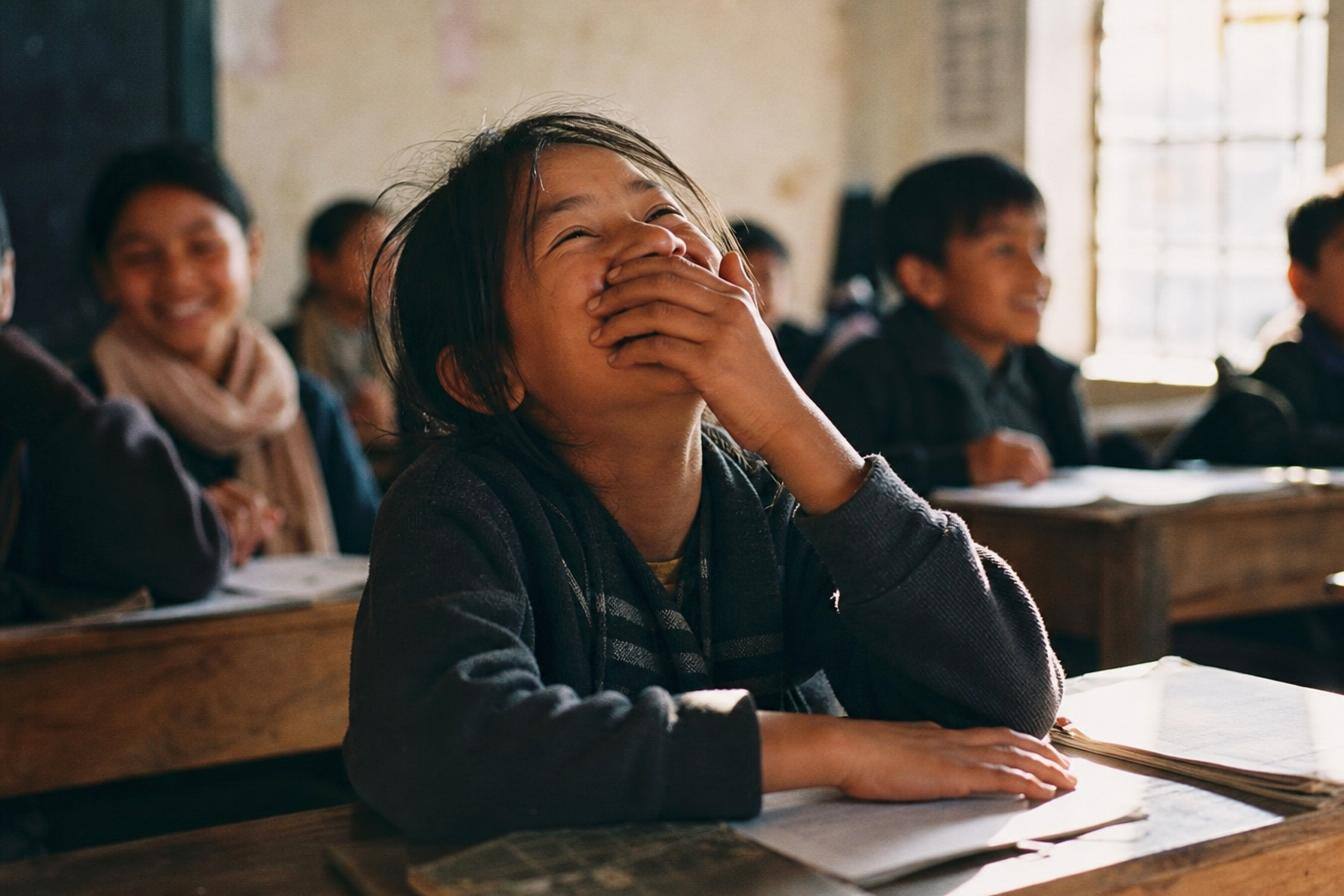
They are the first to answer back, the quickest with a silly voice, the child who turns a spelling mistake into a stand-up routine. The teacher laughs, the class laughs, and the worry underneath gets no airtime at all.
Why laughter is sometimes armour
Children who feel socially unsafe often discover that being funny is a reliable way to control the room. If everyone is laughing, they are not being judged. If they are the source of the noise, they cannot be its target. The joke becomes a shield.
Over time, that shield can become heavy. The child may notice that people only know the funny version of them. They may start to believe that the quiet, uncertain, ordinary parts are not worth showing. And because the performance is rewarded so warmly, they have little evidence to the contrary.
What the performance is hiding
Not every funny child is anxious. Some are simply funny. The difference is flexibility. A child who can be funny, quiet, grumpy, playful and still feel accepted is not the one we worry about. The child who seems unable to stop performing is.
- 01Watch the transitions
Does the energy drop the moment the audience leaves? That crash is often the first clue.
- 02Listen to the sleep report
Children who perform all day often take the mask off at night, which can mean bedtime worries, stomach aches or difficulty settling.
- 03Ask about quiet friends
Who do they sit with when no one is watching? A funny child with only an audience has a social network, not friendships.
- 04Notice the jokes after mistakes
If humour is always used to recover from embarrassment, failure may feel unbearable without it.
- 05Track the weekends
A child who is exhausted after two days of social performance may be working harder than they let on.
How to help without killing the joke
Do not try to remove the humour. It is a genuine strength and, for now, a survival strategy. Instead, make the non-funny version of your child equally acceptable. The goal is not to turn the volume down; it is to make silence safe.
Building a life that does not need a warm-up act
Start at home, where the audience is smallest and most forgiving. Protect small moments of ordinariness: a car ride without music, a walk where neither of you has to be interesting, a bedtime where the only requirement is presence. Over time, these moments become evidence that the child is enough without the show.
Children do not need a perfect parent. They need a predictable one who returns after hard moments.
Sian Trombley, Canadian Certified Counsellor
What you can try this week
Notice the quiet moments
When your child is not performing, simply stay nearby without asking for a show. Comfort in silence is the goal.
Name the other feelings
'You are brilliant at making people laugh. I also wonder if sometimes your body feels busy even when your mouth is funny.'
Create a no-joke zone
One small daily ritual — breakfast, a walk — where funny is not the currency. Be plain together.
- The class clown is often managing anxiety, not seeking attention.
- Humour can become a mask that makes the child feel unseen underneath.
- Quiet moments can feel more dangerous than noisy ones for a performing child.
- Home is the place to practise being boring and still loved.
- Never shame the performance; build a relationship that does not require it.
Do I laugh at my child's jokes even when they feel compulsive?
When did I last see my child simply be, without entertaining?
What might my child be afraid would happen if they were not funny?
Printable resources
Recommended Thrive courses
This article is educational and is not a substitute for individual clinical advice. Comments are closed so the Journal stays a calm place to read.
Share this
Keep going
You may also like
Courses, worksheets and pathways from the same part of the library.
- JournalThe Edge of the Playground: Social Anxiety in ChildrenEvery time we let them skip the thing, we teach them the thing was genuinely dangerous.Read
- JournalThe Party They Will Not Go To: When a Child Refuses Birthday PartiesThe present is wrapped. The coat is on. And your child has decided, with total conviction, that they cannot walk through that door.Read
- ResearchThe Research LibraryPeer-reviewed parenting and child mental health research, translated into plain language.Read
- Thrive GuideThrive GuideAsk a question and get warm, evidence-informed guidance drawn from the Thrive library.Read
- Thrive Care PlanThrive Care PlanA short check-in that turns how your week actually went into one focused plan.Read
- Thrive ToolThrive ToolsPremium printable workbooks and therapeutic tool kits.Read